
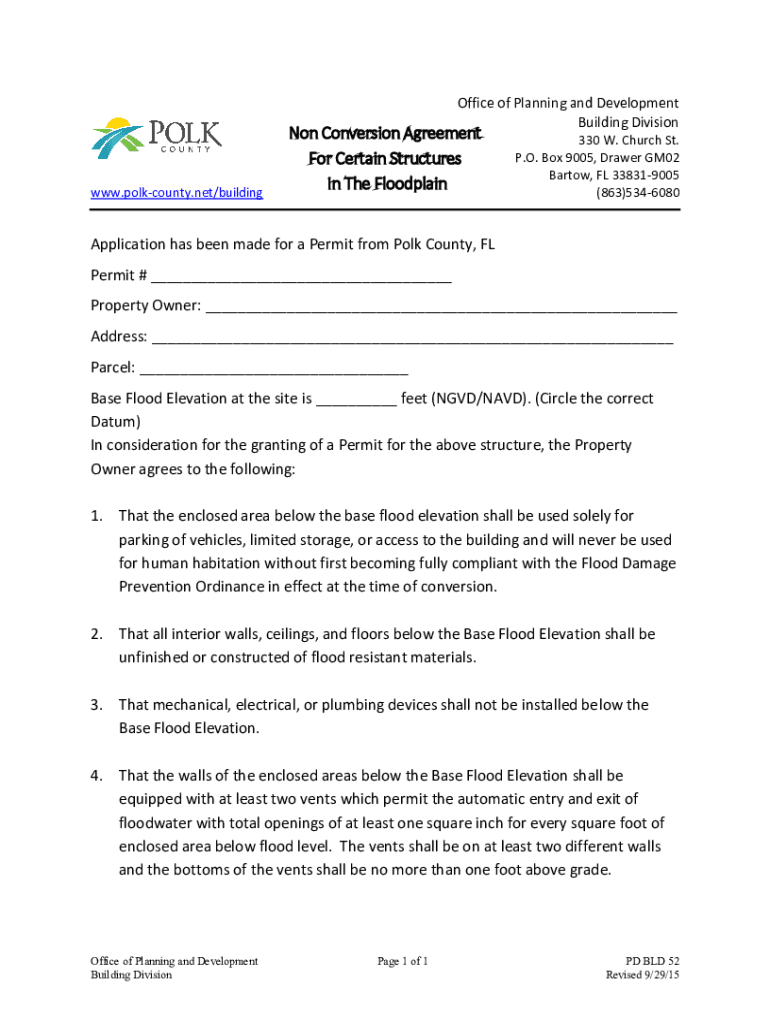







Definition and Meaning of Non-Conversion Agreement
A Non-Conversion Agreement is a legal document often utilized in areas prone to flooding, particularly in the United States. It specifies the conditions under which an enclosed area below the base flood elevation of a structure can be utilized. The primary stipulation of the agreement is that these areas cannot be converted into living spaces unless they comply with flood prevention regulations. This document is central to ensuring structures remain safe and minimize risk in flood-prone areas.
Key Elements of the Non-Conversion Agreement
The Non-Conversion Agreement encompasses several critical elements that stakeholders must consider:
- Flood-Resistant Materials: Structures below the base flood elevation must utilize materials that can withstand flood conditions.
- Venting Requirements: Proper venting is essential to ensure that floodwaters can flow freely and reduce potential water pressure on structures.
- Usage Restrictions: The agreement prohibits the installation of utilities like bathrooms or kitchens in these regions to prevent their conversion into habitable spaces.
How to Use the Non-Conversion Agreement
Implementing a Non-Conversion Agreement involves clear steps to ensure all parties understand their obligations:
- Review Requirements: Assess the local and federal guidelines regarding non-conversion to understand specific mandates.
- Draft Agreement: Collaborate with legal professionals to draft the agreement in compliance with applicable laws.
- Inspection and Compliance: Ensure the structure adheres to specified requirements before signing the agreement.
Steps to Complete the Non-Conversion Agreement
Completing the Non-Conversion Agreement involves:
- Gather Necessary Information: Collect details about the property and its location within the floodplain.
- Prepare the Agreement: Work with legal counsel to prepare a detailed agreement that reflects the necessary compliance requirements.
- Sign and File: Both parties sign the agreement, which is then filed with the appropriate local authorities to ensure legal recognition.
Importance of the Non-Conversion Agreement
This agreement plays a crucial role in:
- Risk Management: Prevents structures from being used in ways that would increase flood risk.
- Safety Assurance: Ensures that structures are optimized for flood conditions, thereby safeguarding occupants and property.
- Regulatory Compliance: Helps property owners comply with federal and local regulations.
Who Typically Uses the Non-Conversion Agreement
The primary users of these agreements include:
- Property Owners: Particularly those owning property in flood-prone areas.
- Local Governments: Ensuring structures within their jurisdiction comply with safety and zoning regulations.
- Insurance Companies: Verifying that properties meet specific safety standards to qualify for coverage.


Legal Use of the Non-Conversion Agreement
From a legal perspective, the Non-Conversion Agreement serves to:
- Establish Compliance: Acts as evidence that a property owner agrees to maintain specific conditions to prevent flood damage.
- Mitigate Liability: Legal coverage for personal or environmental harm stemming from non-compliance.
- Enforce Restrictions: Enables local authorities to enforce usage restrictions to ensure safety.
State-Specific Rules for the Non-Conversion Agreement
While the fundamental principles of the Non-Conversion Agreement apply broadly, certain state-specific laws might affect its implementation:
- Varying Requirements: Different states may have unique requirements regarding flood-resistant materials or venting systems.
- Filing Procedures: States may dictate different filing procedures and regulations regarding who needs to sign the agreement.
- Local Adaptations: Adjustments in the agreement wording to reflect local zoning laws and environmental concerns.
Examples of Using the Non-Conversion Agreement
Practical examples illustrate how these agreements are applied:
- Residential Communities: Implementing agreements to protect homes and maintain safety standards required by local ordinances.
- Commercial Properties: Ensuring businesses in flood zones comply with requirements to protect assets and continue operations post-flood.
Required Documents for the Non-Conversion Agreement
Several documents typically accompany the agreement to authenticate its terms:
- Property Blueprints: Schematics that highlight at-risk areas susceptible to flooding.
- Flood Zone Certifications: Documentation from relevant authorities categorizing the property within a flood zone.
- Materials Invoices: Proof of usage of flood-resistant materials in construction or renovation.
Each block above provides an extensive overview of various aspects of the Non-Conversion Agreement, highlighting its critical role in flood-prone regions, particularly within a U.S. context.




