




01. Edit your form online
Type text, add images, blackout confidential details, add comments, highlights and more.

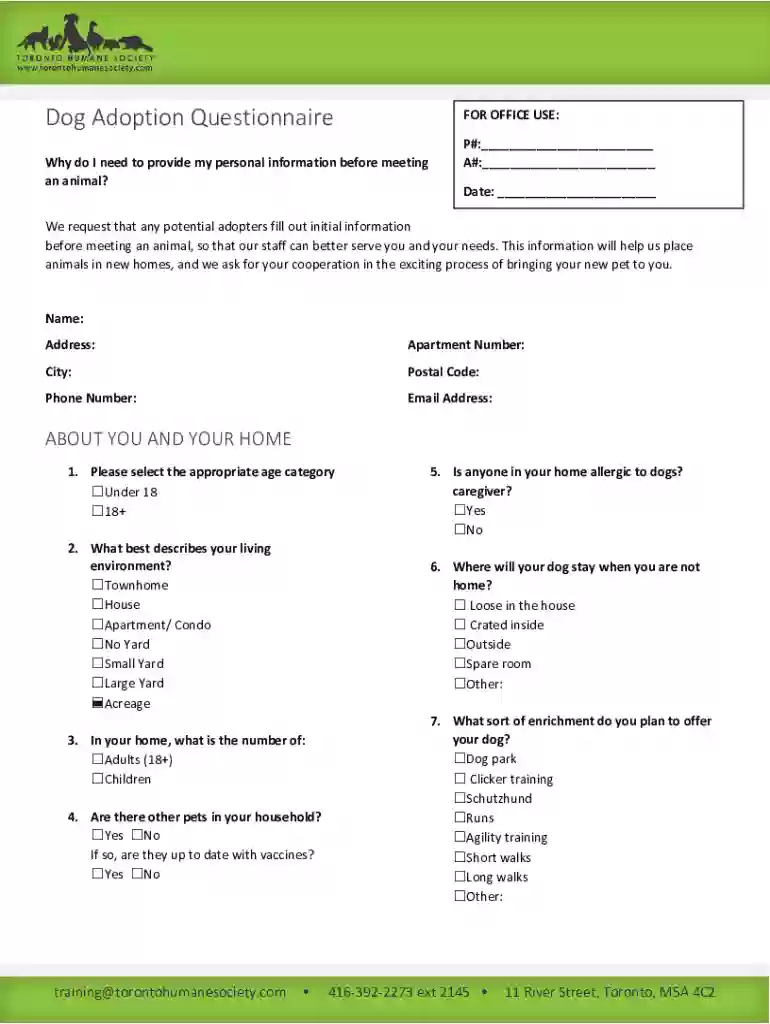
Type text, add images, blackout confidential details, add comments, highlights and more.

Draw your signature, type it, upload its image, or use your mobile device as a signature pad.

Send it via email, link, or fax. You can also download it, export it or print it out.
The "Why Did You Choose This Pet?: Adopters and Pet Selection" form is designed to gather insights into the decision-making process of potential pet adopters. It aids in understanding the preferences, expectations, and specific traits that adopters seek in a pet. This form serves as a tool for adoption agencies to better match pets with adopters, ensuring that both the animal's needs and the adopter's desires align for a successful adoption experience.
Personal Information: Begin by entering basic details such as the adopter's name, contact information, and household members. This section might also include questions about lifestyle and daily routines to gauge compatibility with pet care responsibilities.
Pet Preferences: Specify desired characteristics in a pet, such as size, breed, age, and temperament. This helps adoption agencies identify animals that match the adopter’s criteria.
Experience with Pets: Include previous pet ownership experience, types of pets cared for, and any specific skills related to pet care. This information can highlight the adopter’s readiness and capability to take on the responsibilities of a new pet.
Household Environment: Provide details about the home environment, such as the presence of other pets, living space, and yard availability. Understanding the household conditions ensures that the selected pet can thrive in its new surroundings.
Pet Care Plans: Describe plans for pet care and management, including feeding, exercise, grooming, and healthcare routines. Additionally, outline the plans for vacations or emergencies when alternate care may be required.
Matching Criteria: Highlight the key factors considered when choosing a pet, such as lifestyle compatibility and specific behavioral traits.
Adopter Insights: Capture the reasons behind choosing a particular pet, ranging from emotional connections to practical considerations like size or breed.
Readiness for Adoption: Assess the adopter's preparedness in terms of time, resources, and knowledge necessary for responsible pet ownership.
Temperament: A term used to describe an animal's personality and behavioral tendencies. It can include traits like energy level, social disposition, and trainability.
Compatibility: The degree to which the pet's characteristics align with the adopter's lifestyle and household environment.
Surrender History: Information about whether the adopter has previously surrendered a pet, which could be an important consideration in the adoption decision.
Adoption Agencies: Organizations that facilitate pet adoptions often use this form to streamline the matching process between adopters and pets.
Prospective Pet Owners: Individuals or families considering adoption can use this form to clarify and communicate their preferences and readiness to shelters and agencies.


Consider a family with young children looking to adopt a dog. They might specify a preference for a breed known for gentle temperaments and mention a desire for a pet that is good with kids. An adoption agency could use this information to introduce the family to dogs with compatible traits, leading to a more successful adoption.
While not legally binding, this form provides important data that can be used in contractual agreements during the adoption process. It reflects the mutual expectations and understandings between the adopter and the agency, which can facilitate a smoother transition for the pet into its new home.
Some states might have specific regulations regarding pet adoption and ownership. For instance, states with stringent animal welfare laws may require additional questions on the form to ensure compliance with local regulations. Agencies should adjust their forms to align with these state-specific requirements.
We've got more versions of the Why Did You Choose This Pet?: Adopters and Pet Selection form. Select the right Why Did You Choose This Pet?: Adopters and Pet Selection version from the list and start editing it straight away!
At DocHub, your data security is our priority. We follow HIPAA, SOC2, GDPR, and other standards, so you can work on your documents with confidence.
by A Bauer Cited by 4 Vela,. 2012: Why did you choose this pet?: Adopters and pet selection preferences in five animal shelters in the. United States. Animals, 2, 144-159.Read more
by E Weiss 2012 Cited by 295 This study examined reasons why adopters chose their pet in an animal shelter, what behaviors were first exhibited by the pet to the adopter.Read more


