




01. Edit your form online
Type text, add images, blackout confidential details, add comments, highlights and more.

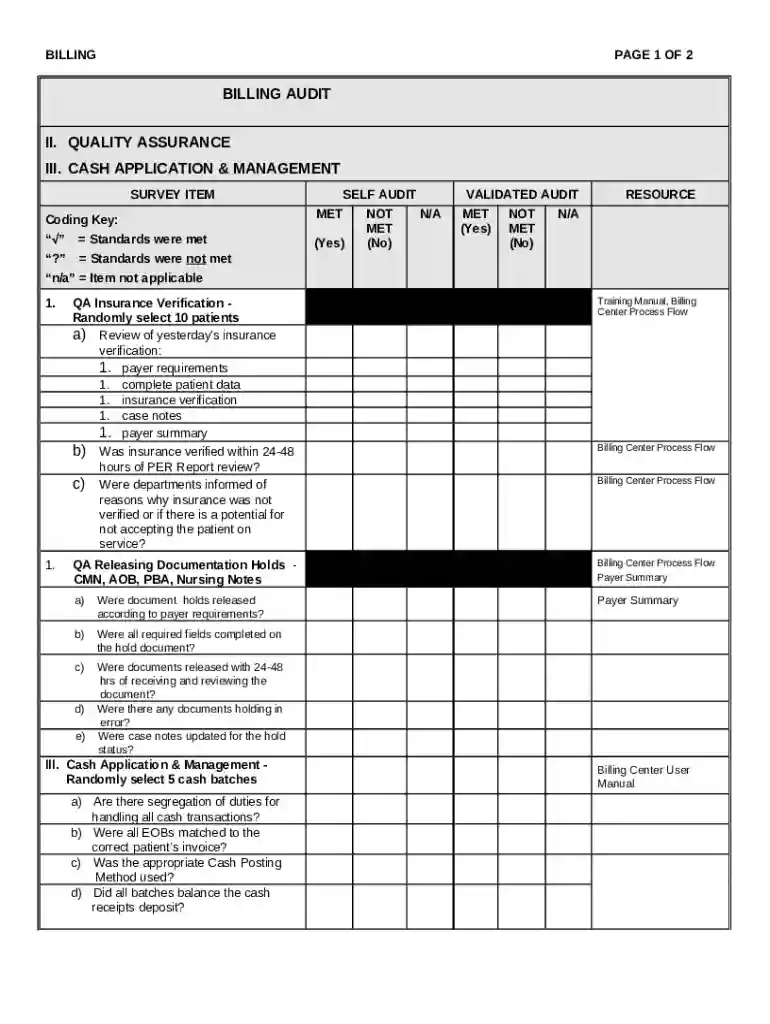
Type text, add images, blackout confidential details, add comments, highlights and more.

Draw your signature, type it, upload its image, or use your mobile device as a signature pad.

Send it via email, link, or fax. You can also download it, export it or print it out.
Quality Assurance (QA) is a systematic process designed to determine whether products or services meet established quality standards. In a business context, QA involves processes that aim to enhance the reliability, efficiency, and performance of operational practices to ensure that they align with industry standards. This is achieved through a series of planned and systematic activities focused on meeting customer requirements and enhancing satisfaction. QA is critical in various industries, including software development, manufacturing, and service delivery, where ensuring the consistent quality of products or services is paramount.
Quality assurance begins with careful planning. This phase involves establishing quality objectives based on the needs and expectations of customers and setting benchmarks for measuring quality. Developing a comprehensive quality assurance plan requires an understanding of the processes involved in production or service delivery, identifying potential risks, and devising strategies to mitigate them.
Implementation involves executing the planned quality assurance activities. Regular monitoring at this stage is essential to ensure compliance with quality standards. Key monitoring activities include conducting audits, inspections, and tests to evaluate performance against established criteria. This helps in early detection of issues that could lead to quality failure.
The final phase involves reviewing the outcomes of the quality assurance activities. Analyzing audit results and customer feedback provides insights into areas of improvement. Continuous improvement is a core aspect of QA, where feedback loops are used to refine processes, adapt to changes, and improve overall product or service quality over time.
Statistical process control (SPC) is a method used in QA to monitor and control a process through the use of statistical tools. It helps in identifying trends, patterns, and variations in processes which can lead to potential issues. SPC is especially useful in manufacturing environments to ensure the consistency and quality of the products.
Root cause analysis (RCA) is a structured approach used to identify the underlying causes of defects or problems. By focusing on the root cause rather than symptoms, RCA helps in implementing effective solutions that prevent recurrence of the issue. This method is widely used in industries aiming for long-term quality improvements.
Quality audits involve systematic examination of a quality system carried out by an internal or external auditor. Audits are essential for assessing the effectiveness, efficiency, and reliability of quality assurance processes. They serve as a reliable means to ensure compliance with established standards and provide a basis for continuous improvement.
In software development, QA is pivotal in ensuring that software products are secure, functional, and free from defects. This is achieved through unit testing, code reviews, and user acceptance testing. Ensuring the software meets user needs and complies with security standards is a key focus in software QA processes.
In manufacturing, QA ensures the production of high-quality goods that meet consumer expectations. Processes such as Six Sigma and Total Quality Management (TQM) are employed to reduce defects and achieve operational excellence. Regular inspections, quality checks, and adherence to industry standards are crucial components.
QA involves compliance with predefined standards and procedures. These standards provide a benchmark for quality and consistency, such as ISO 9001 for quality management systems. Adhering to these standards ensures that products or services consistently meet quality requirements.
Proper documentation is vital in QA for tracking processes, changes, and improvements. It serves as evidence of compliance and provides a basis for audits and reviews. Documentation must be accurate, comprehensive, and accessible to all stakeholders involved in the quality assurance process.
Quality assurance processes are used across a wide range of industries, including healthcare, food and beverage, automotive, and IT. Each industry has specific requirements and standards that QA processes must address to ensure product or service quality and customer satisfaction.
Professionals working as quality assurance analysts, quality control managers, and auditors are typically responsible for implementing and managing QA processes. These roles require a keen understanding of industry standards, problem-solving skills, and an ability to ensure compliance with quality requirements.
In modern quality assurance, digital tools and platforms are increasingly used to streamline QA processes. Digital solutions offer benefits such as real-time data analysis, easier access to documentation, and improved collaboration among teams. However, paper-based systems may still be preferred in environments with limited digital infrastructure or where physical documentation is a regulatory requirement.
Quality assurance in technologically advanced industries often involves the use of specialized software tools. These tools need to integrate seamlessly with existing platforms like ERP systems, CRM solutions, and analytics software. Compatibility with widely-used software such as QuickBooks, TurboTax, and Microsoft Office can enhance the efficiency of QA processes and data management.
In the United States, certain industries may have state-specific QA requirements and standards. For instance, food and beverage industries might require compliance with local health regulations in addition to federal standards. Understanding and adapting QA processes to meet both state and federal requirements is essential for nationwide operations.
We've got more versions of the What is Quality Assurance(QA)? Process, Methods, Examples - Guru99 form. Select the right What is Quality Assurance(QA)? Process, Methods, Examples - Guru99 version from the list and start editing it straight away!
| Versions | Form popularity | Fillable & printable |
|---|---|---|
| 2022 | 4.9 Satisfied (27 Votes) |
At DocHub, your data security is our priority. We follow HIPAA, SOC2, GDPR, and other standards, so you can work on your documents with confidence.
by B Rajput 2016 Cited by 3 This chapter provides a detailed description of the methodology used for the study such as how QA process works in assessment industry by using agile software.Read more
A QA interview is a process where candidates are assessed for their understanding of quality assurance principles and practices. You can expect questions onRead more


