




01. Edit your form online
Type text, add images, blackout confidential details, add comments, highlights and more.

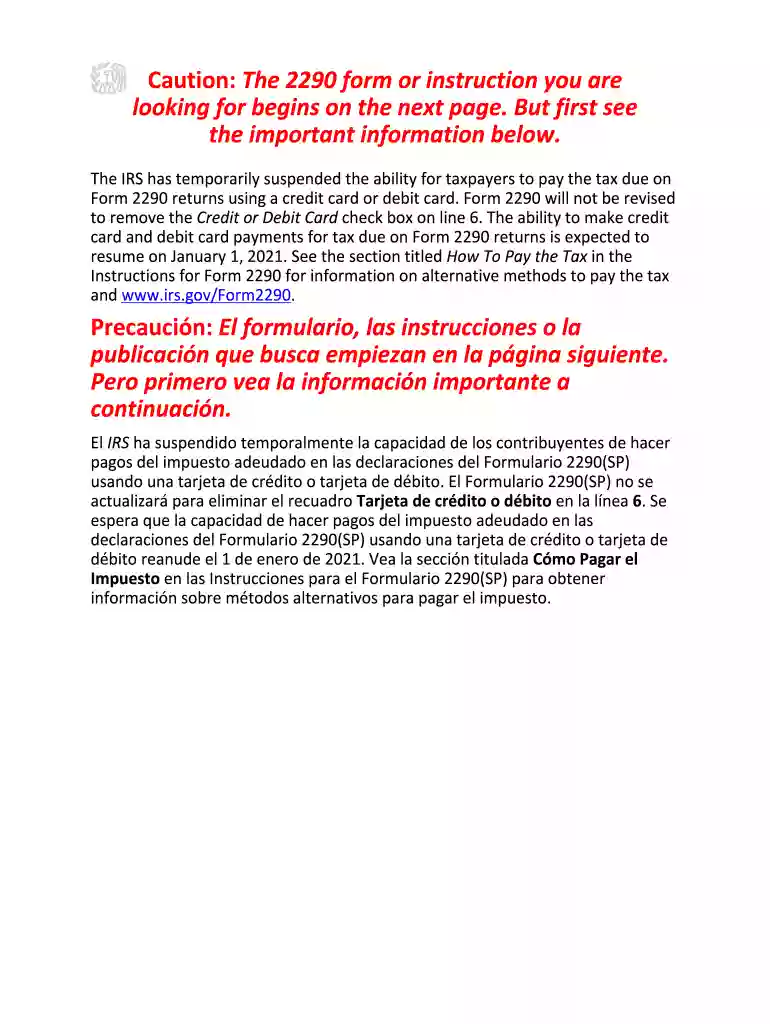
Type text, add images, blackout confidential details, add comments, highlights and more.

Draw your signature, type it, upload its image, or use your mobile device as a signature pad.

Send it via email, link, or fax. You can also download it, export it or print it out.
Form 2290 is a tax form that must be filed by individuals or businesses that operate heavy highway vehicles with a taxable gross weight of 55,000 pounds or more. Primarily used to report and pay the Heavy Highway Vehicle Use Tax (HVUT), it seeks to ensure that those using public highways contribute to their maintenance. The form captures details such as the number of vehicles owned, their weights, and other relevant data necessary for tax computation and compliance.
The 2290 form can be obtained directly from the Internal Revenue Service (IRS) website, ensuring you have the most current version. Alternatively, physical copies can be requested from local IRS offices or ordered by phone. Taxpayers who prefer digital solutions can use trusted tax software that supports Form 2290, offering both the document and comprehensive guidance on its completion.
For a truck weighing 60,000 pounds with a first use in September, a business would use the proration table to calculate a reduced tax rather than the full annual amount.
The filing deadline for Form 2290 is August 31 each year, covering the tax period from July 1 of the current year through June 30 of the next year. New vehicles purchased after July must have Form 2290 filed by the end of the month following the month of first use.
Failure to file Form 2290 by the deadline or to pay the correct tax amount can result in penalties. These include fines based on the number of days the payment is late and interest fees that accumulate over time. For filing errors or missing information, corrections should be submitted as amendments to prevent penalties.
Both digital and paper versions of Form 2290 are accepted by the IRS. Electronic filing is encouraged for businesses with 25 or more vehicles as it speeds up processing. E-filing offers advantages like automatic error checking and a faster receipt of the Stamped Schedule 1, which serves as proof of payment necessary for vehicle registration.
Entities required to file Form 2290 include:


Form 2290 can be submitted in various ways:
Designed to streamline highway maintenance funding, Form 2290 ensures operators of heavy vehicles contribute fairly to infrastructure costs.
We've got more versions of the 2290 tax form 2019Caution: The 2290 form or instruction form. Select the right 2290 tax form 2019Caution: The 2290 form or instruction version from the list and start editing it straight away!
At DocHub, your data security is our priority. We follow HIPAA, SOC2, GDPR, and other standards, so you can work on your documents with confidence.
This program was initiated in. 1937 as the Federal Aid in Wildlife Act and created a system where by taxes are paid on firearms, ammunition and archery.Read more
by SE McDonald 2021 Cited by 1 Insufficient funding for schools based on property taxes underpins the very curricular and infrastructure issues articulated by Kozol (1991)Read more


