
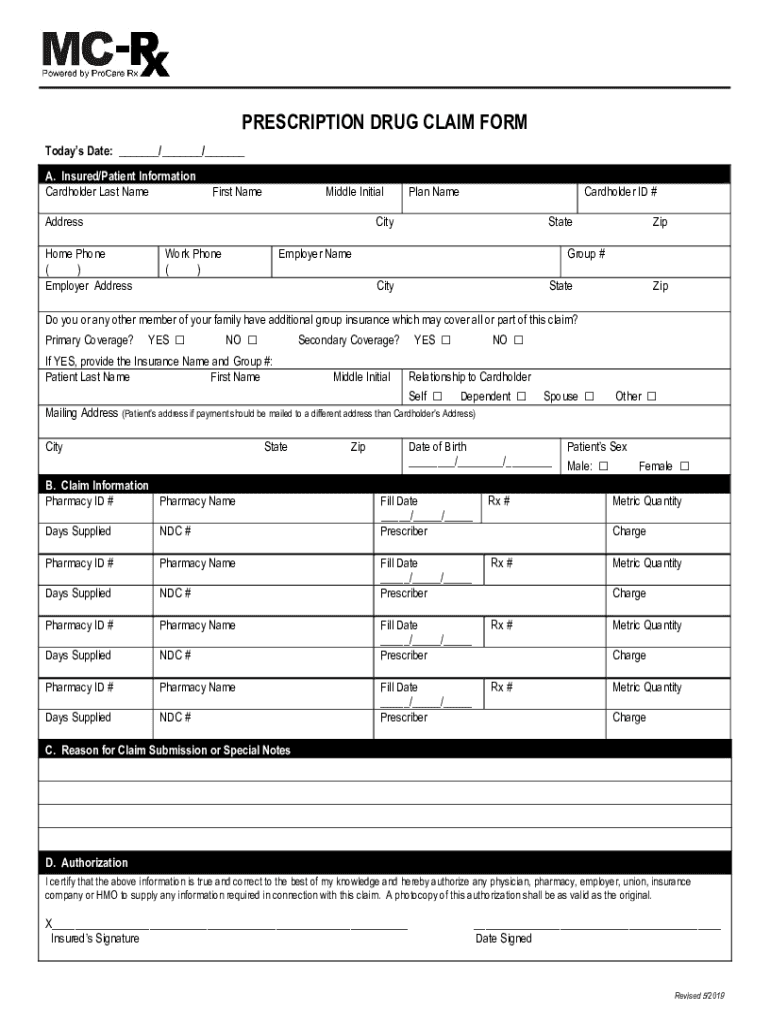







Definition and Purpose of the Prescription Drug Claim Form
The Prescription Drug Claim Form is a critical document used to request reimbursement for expenses incurred on prescription medications. Predominantly utilized in the United States, this form is essential for insured patients who pay out-of-pocket for prescription drugs and seek to claim these expenses from their insurance provider. It contains detailed sections that capture patient information, medical claim details, and an authorization for the insurance company to process the reimbursement. By ensuring accurate completion of this form, patients can efficiently receive compensation for their prescription costs.
How to Use the Prescription Drug Claim Form
Filling out the Prescription Drug Claim Form correctly is crucial for a swift and successful claims process. Here's a guide to using the form:
- Obtain the form from your insurance provider's website, office, or authorized pharmacies.
- Read the instructions carefully before beginning. Each insurance company may have specific guidelines.
- Gather all necessary information, such as prescription receipts, personal identification, and your insurance policy details.
- Fill out each section thoroughly, ensuring there are no omissions which could delay processing.
- Submit the form as per the instructions, which may include mailing, online submission, or in-person delivery to an insurance office.
Steps to Complete the Prescription Drug Claim Form
-
Start with Personal Information:
- Enter your full name, contact details, insurance policy number, and any additional identifiers required by your insurer.
-
Provide Prescription Details:
- List the prescribed medications, dosage, and the prescribing physician's details. Include any prescription ID numbers.
-
Attach Receipts:
- Include copies of all pharmacy receipts, ensuring they clearly show the amount paid and the pharmacy's information.
-
Authorization Section:
- Sign and date the section authorizing the release of medical information to the insurance company, which is crucial for verifying your claim.
-
Review the Form:
- Double-check all entries for accuracy and completeness before submission.
-
Submit the Form:
- Depending on your insurer's preferences, you may need to send the form online, via postal mail, or deliver it in person.
Key Elements of the Prescription Drug Claim Form
The form includes several key sections:
- Patient's Personal Information: Full name, address, insurance policy number.
- Prescription Details: Medication names, dosages, and prescribing doctor's information.
- Pharmacy Information: Name and contact details of the dispensing pharmacy.
- Receipts and Payment Proof: Attached copies of all relevant payment documents.
- Authorization and Signatures: Patient's consent to process the claim and release necessary medical information.
Who Typically Uses the Prescription Drug Claim Form
This form is typically used by:
- Insured Patients: Individuals who have insurance coverage and pay for prescription drugs out-of-pocket before claiming reimbursement.
- Caregivers: Individuals acting on behalf of a patient, provided they have the necessary authorization.
- Pharmacies: Occasionally engage with this form to assist customers in processing claims.


Important Terms Related to Prescription Drug Claim Form
Understanding specific terminology associated with the form is essential:
- Reimbursement: The process of getting paid back by an insurance provider for expenses incurred.
- Policy Number: Unique identifier for your insurance policy.
- Prescribing Physician: The medical professional who recommended the medication.
- Authorization: Consent given by the patient for the insurance company to access their medical records.
Legal Use of the Prescription Drug Claim Form
Correct use of the Prescription Drug Claim Form involves adhering to privacy laws and insurance guidelines. For example:
- ESIGN Act Compliance: If signing electronically, the signature must meet requirements to be considered valid and legally binding.
- HIPAA: Ensure that any sharing of medical information complies with the Health Insurance Portability and Accountability Act, maintaining patient confidentiality.
State-Specific Rules for Prescription Drug Claim Forms
While the form generally follows a standard structure, some states in the U.S. may have specific requirements or additional steps, such as:
- California: May require additional documentation for state compliance.
- New York: Often has specific guidelines on electronic submissions.
- Texas: Might necessitate specific forms of identification for processing claims.
Required Documents for Filing
When submitting the Prescription Drug Claim Form, ensure to include:
- Itemized Pharmacy Receipts: Detailed proof of purchase.
- Insurance Information: Copies of your insurance card.
- Identification: State-issued ID or driver's license for verification.
- Additional Medical Documentation: If requested, provide doctor’s notes or scripts.
By comprehensively filling out the form and including all necessary documentation, you can help ensure a smooth reimbursement process.




