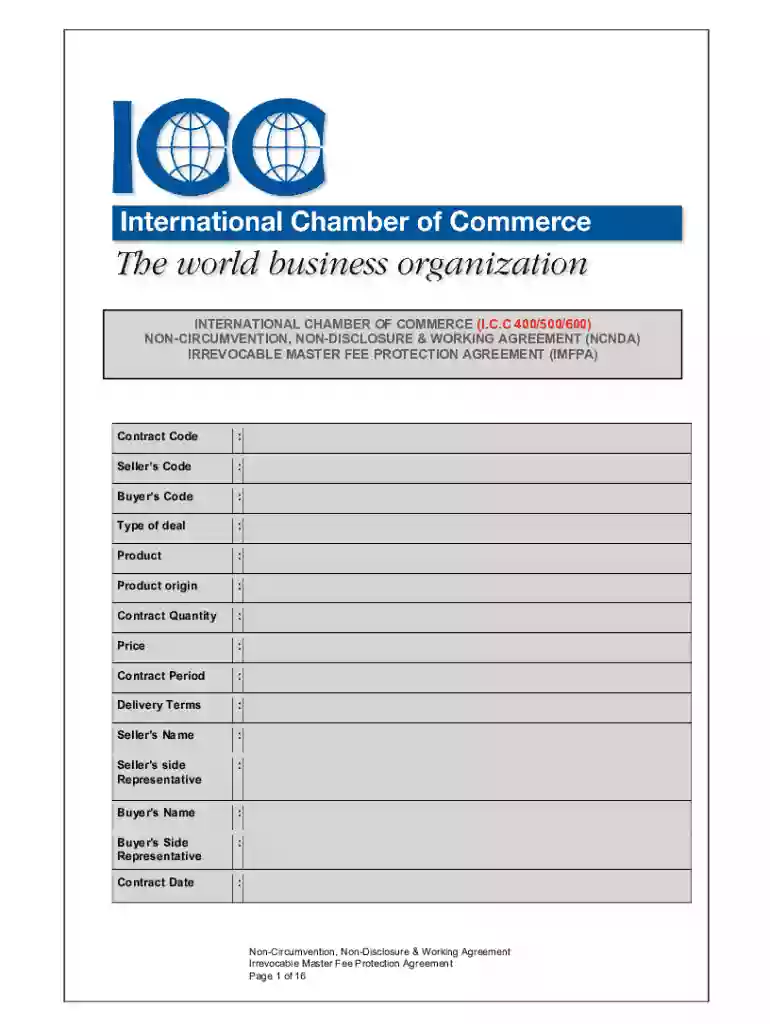
Understanding the Irrevocable Master Fee Protection Agreement (IMFPA)
The Irrevocable Master Fee Protection Agreement (IMFPA) serves as a critical component in international trading transactions, particularly between buyers and sellers. This formal contract outlines the payment obligations towards intermediaries and ensures that all parties involved respect confidentiality terms. A well-structured IMFPA is essential for safeguarding financial agreements and protecting the interests of all parties.
Key Features of the IMFPA
- Non-Circumvention Clause: This clause prevents sellers from bypassing intermediaries and paying them directly, ensuring that all parties receive their entitled fees.
- Confidentiality: The agreement enforces strict confidentiality, prohibiting any party from disclosing sensitive information without consent.
- Payment Obligations: Clearly defined payment obligations specify how and when payments to intermediaries should be executed to prevent misunderstandings.
- Dispute Resolution: Provisions for arbitration dictate how disputes should be resolved, emphasizing the importance of a fair process in case of disagreements.
The relevance of these features cannot be overstated as they form the backbone of trust in financial transactions where multiple stakeholders are involved.
How to Utilize the IMFPA Effectively
Using the IMFPA involves several structured steps to ensure all parties are aligned and comply with the terms set forth in the agreement.
- Drafting the IMFPA: Start with a legally sound template which can be customized to reflect specific transaction details. It is advisable to use documents that meet ICC standards.
- Review Terms: All parties should review the terms of the agreement to ensure clarity regarding payment structures, confidentiality clauses, and obligations.
- Obtain Signatures: Use legally compliant electronic signatures to ensure the agreement is binding. Platforms like DocHub facilitate this process seamlessly.
- Store the Agreement: Securely store signed copies of the IMFPA, ensuring all parties have access to the document.
This process ensures that all participants in the financial transaction are protected and can reference the agreement as needed.
Steps for Completing the IMFPA
Filling out the IMFPA involves careful attention to detail to ensure compliance with the stipulated terms.
- Identify the Parties: Clearly define all parties involved, including buyers, sellers, and intermediaries.
- Input Financial Terms: Specify payment amounts, due dates, and the conditions under which payments will be made.
- Outline Confidentiality Obligations: State what constitutes confidential information and the obligations each party has towards maintaining that confidentiality.
- Define Dispute Mechanisms: Include clauses that outline how disputes will be addressed, and if needed, specify the legal jurisdiction.
- Get Legal Approval: Before finalizing, consult with legal counsel to ensure the agreement meets all regulatory standards.
These steps help in mitigating potential risks associated with international trade transactions and protect the investments of all involved parties.
Who Typically Uses an IMFPA?
The IMFPA is widely utilized across various sectors, particularly in international trade and finance. Its users typically include:
- Small Business Owners: They may engage intermediaries for trade deals and require protection to ensure payments are honored.
- Importers and Exporters: Entities involved in international trade heavily rely on IMFPA to secure their transactions and payment rights.
- Consultants: Professionals who mediate deals often need such agreements to safeguard their fees against circumvention.
- Legal Firms: They may implement the IMFPA on behalf of clients to ensure all legal and financial obligations are met.
Understanding the diverse usage of the IMFPA illustrates its importance in fostering trust and secure business operations across borders.
Important Terms Associated with the IMFPA
Familiarity with specific terminology associated with the IMFPA is essential for effective communication and understanding within the legal and financial frameworks. Key terms include:
- Non-Circumvention: Ensures that intermediaries are compensated and have legal recourse if the buyer or seller bypasses them.
- Fee Protection: Guarantees that agreed-upon fees are paid to intermediaries, preventing disputes over payments.
- Irrevocability: Implies that once the agreement is executed, it cannot be unilaterally revoked by any party without mutual consent.
- Arbitration: A method of resolving disputes outside the court system, which is quicker and often less costly.
Understanding these terms enhances the ability to navigate the complexities of international transactions effectively.
Examples of IMFPA in Use
To illustrate the practical applications of the IMFPA, consider the following scenarios:
- Real Estate Transactions: In international real estate deals, the IMFPA protects agents and brokers from being circumvented once their services have been engaged.
- Import/Export Businesses: An importer may utilize the IMFPA with a supplier overseas to ensure that the freight forwarder is compensated for their services post-transaction.
- Consultation Services: A consultant involved in negotiations between companies could use the IMFPA to protect their fees, ensuring they are paid regardless of how the deal concludes.
These examples underscore the IMFPA's versatility and crucial role in safeguarding various business interests during international transactions.