
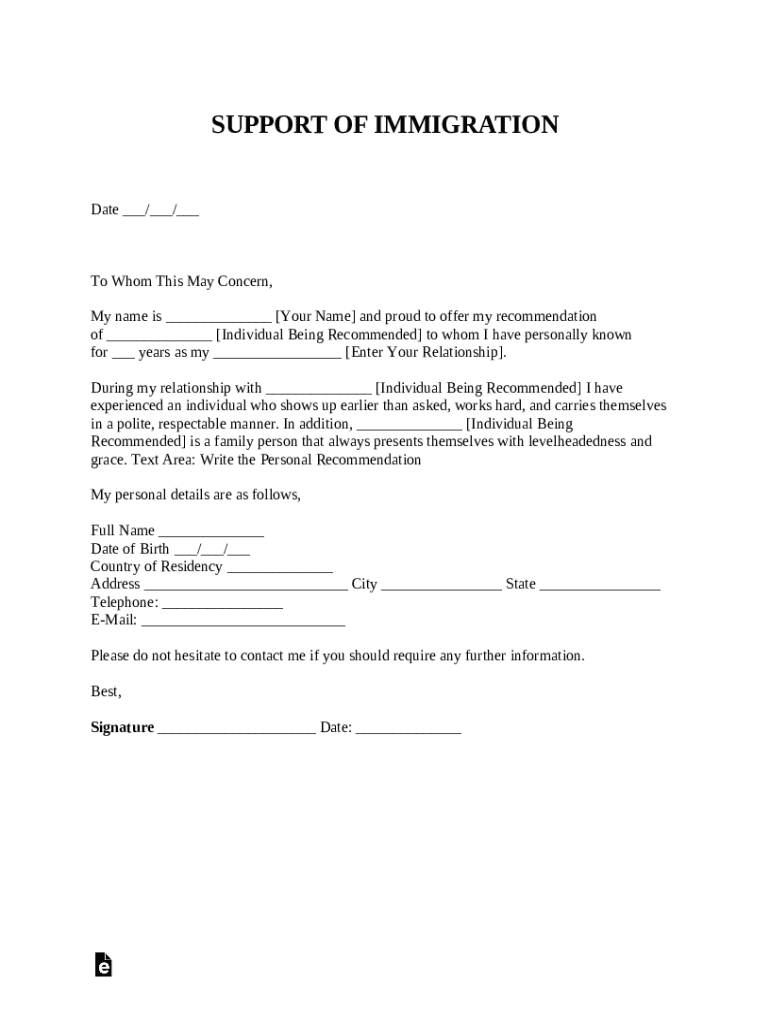







Definition and Purpose of Immigration Reference Letters
An immigration reference letter is a formal document that provides a personal endorsement for someone's immigration application. It is usually written by someone who knows the applicant personally, such as a friend, family member, or employer. The letter highlights the applicant's positive attributes and contributions to the community, which can support their case for immigration. In the United States, this type of letter is often included in applications for visas, permanent residency, or citizenship.
Key Elements of an Effective Immigration Reference Letter
When crafting an immigration reference letter, several essential components should be included to ensure it is effective and comprehensive:
- Introduction: Introduce the author and their relationship with the applicant, establishing credibility and context.
- Character Testimony: Highlight specific traits and qualities of the applicant, such as honesty, reliability, work ethic, and community involvement.
- Personal Anecdotes: Include real-life examples or stories that illustrate the applicant's character and contributions.
- Conclusion: Summarize the endorsement and offer to provide further information if needed, signifying the author's willingness to vouch for the applicant's character.
Steps to Write an Immigration Reference Letter
- Identify the Relationship: Clearly outline how the author knows the applicant and the duration of their acquaintance.
- Collect Relevant Details: Gather specific examples and anecdotes that showcase the applicant's positive qualities and achievements.
- Draft the Introduction: Begin with a formal greeting, followed by an introduction of the author and the purpose of the letter.
- Describe Character and Contributions: Provide detailed accounts of the applicant's character, community involvement, and any professional achievements.
- Conclude with an Endorsement: Reiterate the applicant's suitability for immigration and close with an offer to discuss their candidacy further.
- Proofread and Edit: Review the letter for clarity, coherence, and grammatical accuracy.
Importance of the Immigration Reference Letter in the Application Process
The immigration reference letter is a critical component of many applications as it offers a personal perspective on the applicant's suitability for immigration. It provides immigration officials with insight beyond formal metrics and qualifications, illustrating the applicant's character and community contributions. A well-written letter can enhance the credibility of the application and positively influence the decision-making process.
Who Commonly Utilizes Immigration Reference Letters
Typically, individuals applying for visas, permanent residency, or citizenship in the United States use immigration reference letters. These letters are often requested by:
- Employers: To support work visa applications by emphasizing the applicant's professional skills and work ethic.
- Family Friends: To vouch for the applicant's character and community involvement during family-based immigration applications.
- Community Leaders: To highlight the applicant's contributions to local organizations or initiatives.
Legal Considerations and Use of Immigration Reference Letters
While the immigration reference letter is largely informal, it must adhere to certain legal standards to be considered valid:
- Truthfulness: All statements in the letter must be honest and verifiable.
- Signatory Information: The author should provide their full contact details and be willing to confirm the information if contacted by immigration authorities.
- Confidentiality: The letter should respect the privacy of the applicant, avoiding unnecessary disclosure of sensitive personal information.
Examples and Scenarios for Immigration Reference Letters
Here are a few scenarios illustrating the use of immigration reference letters:
- Family-Based Visa: A letter from a family friend emphasizing the applicant's stability and family orientation, supporting their bid for a family-based visa.
- Employment-Based Application: A letter from an employer detailing the applicant's contributions to a company and industry, underscoring their value as a skilled worker.
- Community Contribution: A letter from a nonprofit director recognizing the applicant's volunteer work and positive impact on local initiatives, reinforcing their community ties.
Variations and Alternatives to Immigration Reference Letters
While the traditional immigration reference letter is common, alternatives or complementary documents can also be utilized:
- Character Affidavits: These are legally sworn statements that offer similar endorsements, often used in formal legal settings.
- Professional Recommendations: Letters from industry professionals or mentors can bolster employment-based applications.
- Community Letters of Support: Statements from community organizations or leaders can provide additional context and support for the applicant's community involvement.
These blocks present a comprehensive view of immigration reference letters, focusing on their importance, structure, and utility within the immigration process in the United States.