
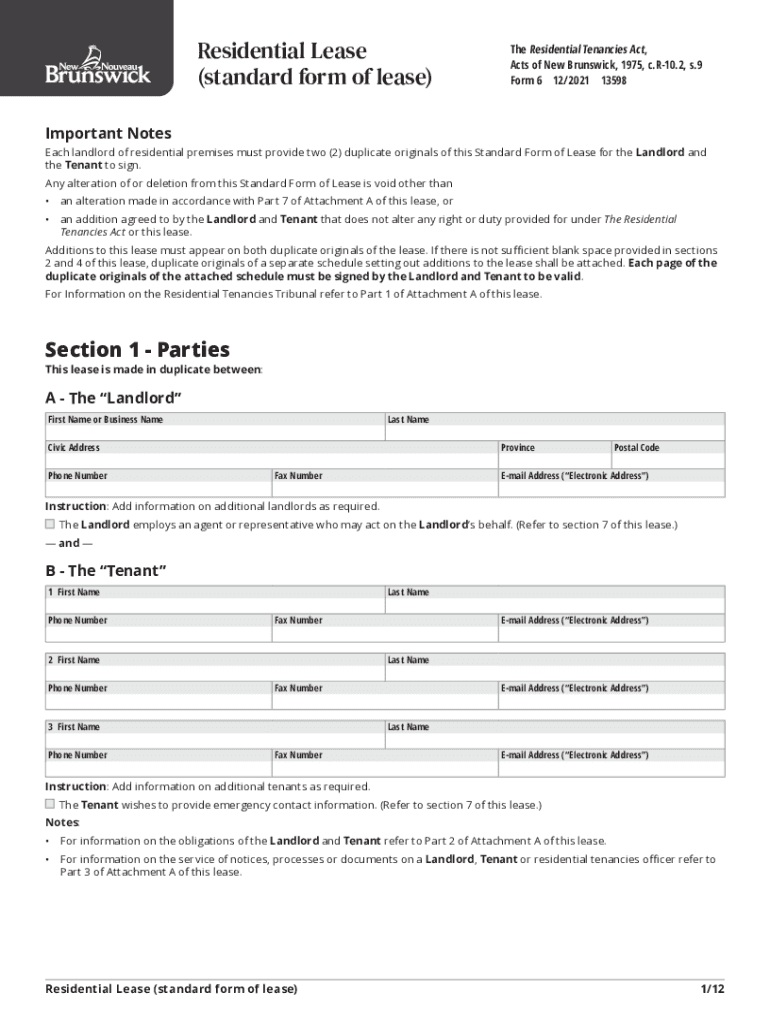







Definition and Meaning
A New Brunswick Lease Agreement (Official) is a legal document that sets forth the terms and conditions under which a tenant rents a residential property from a landlord in New Brunswick. This lease is governed by the Residential Tenancies Act, which outlines the rights and responsibilities of both parties. The agreement serves as a binding contract to uphold mutual obligations, such as rent payment, maintenance responsibilities, and adherence to property-related rules.
The document typically includes several key components: the names of the landlord and tenant, the property's address, the duration of the lease, and the agreed rent amount. Additionally, it encompasses clauses related to security deposits, processes for altering the lease, dispute resolution methods, and protocols for property entry and lease termination. Overall, the lease ensures clarity and legal protection for both parties involved in the rental agreement.
Important Terms in the New Brunswick Lease Agreement
Understanding the terms used in the New Brunswick Lease Agreement (Official) is crucial for tenants and landlords:
- Rent Payment: The agreed-upon amount paid by the tenant to the landlord for occupying the property. This includes details on the frequency and method of payment.
- Security Deposit: A sum paid by the tenant at the lease's inception as financial security against potential damages or unpaid rent.
- Lease Term: The duration for which the lease agreement is valid, typically expressed in months or years.
- Dispute Resolution: Procedures through the Residential Tenancies Tribunal to resolve conflicts regarding the lease.
- Termination Notice: The procedure and timeline required for either party to terminate the lease agreement legally.
Understanding these terms aids in abiding by the conditions set forth, preventing potential disputes.
Steps to Complete the New Brunswick Lease Agreement
Completing the New Brunswick Lease Agreement (Official) involves several steps to ensure accuracy and compliance:
- Gather Personal Information: Collect full names, contact information, and identification details for both landlord and tenant.
- Negotiate Terms: Discuss and finalize terms such as rent amount, lease duration, and maintenance responsibilities.
- Outline Specific Conditions: Include details about security deposits, rules regarding property use, and policies for alterations and repairs.
- Complete the Document: Fill out the lease form with all agreed-upon details, ensuring clarity and precision in language.
- Review and Sign: Both parties should thoroughly review the agreement to clarify any misunderstanding before signing in duplicate.
Completing these steps carefully can help prevent future disputes and ensure the lease serves as a constructive document.
Key Elements of the New Brunswick Lease Agreement
The New Brunswick Lease Agreement (Official) is composed of several critical elements:
- Parties Involved: Identifies the landlord and tenant with proper legal names.
- Property Description: Includes the full address and any specific descriptions of the rental property.
- Payment Terms: Specifies the rent amount, due dates, and payment method.
- Maintenance and Repairs: Outlines responsibility for property repairs and upkeep.
- Entry and Inspections: Details when and how the landlord may enter the property for inspections or repairs.
- Termination Clauses: Specifies the procedure for terminating the lease, including necessary notice periods.
These elements are quintessential to forming a complete and enforceable agreement.
State-Specific Rules for New Brunswick Lease Agreements
While many aspects of lease agreements are consistent, there are New Brunswick-specific regulations governed by the Residential Tenancies Act. The act dictates stipulations like:
- Security Deposit: Legal limits on the deposit amount and conditions for its return.
- Rent Increases: Regulations on when and how a landlord can increase rent.
- Eviction Notices: Specific procedures and valid grounds for eviction.
- Rental Inspections: Rights concerning routine and emergency inspections.
Compliance with these rules is mandatory to ensure the lease is enforceable under the law.
Legal Use of the New Brunswick Lease Agreement
The New Brunswick Lease Agreement (Official) serves various legal purposes beyond just documenting rental terms. It:
- Provides a legal basis for dispute resolution if terms are breached.
- Serves as evidence in court should legal action be necessary.
- Protects tenants against improper eviction through clear stipulated conditions.
- Restricts landlords from arbitrarily changing terms or increasing rent.
By adhering to the legal framework outlined in the lease, both parties are equally protected and accountable for their contract obligations.
Examples of Using the New Brunswick Lease Agreement
Here are a few scenarios where the New Brunswick Lease Agreement (Official) is applied:
- New Rental Agreements: Establishing terms for a newly rented residential property.
- Lease Renewals: Modifying and updating terms for an existing tenant who wishes to continue occupancy beyond the current lease term.
- Conflict Resolution: Using the document's clauses to address and mediate disagreements over maintenance issues or lease violations.
- Legal Proceedings: Presenting the lease in court to substantiate claims against unlawful eviction or rent disputes.
These examples demonstrate the lease's utility in various aspects of property rental management.




