Definition and Purpose of the Vehicle Theft and Recovery Damage Report
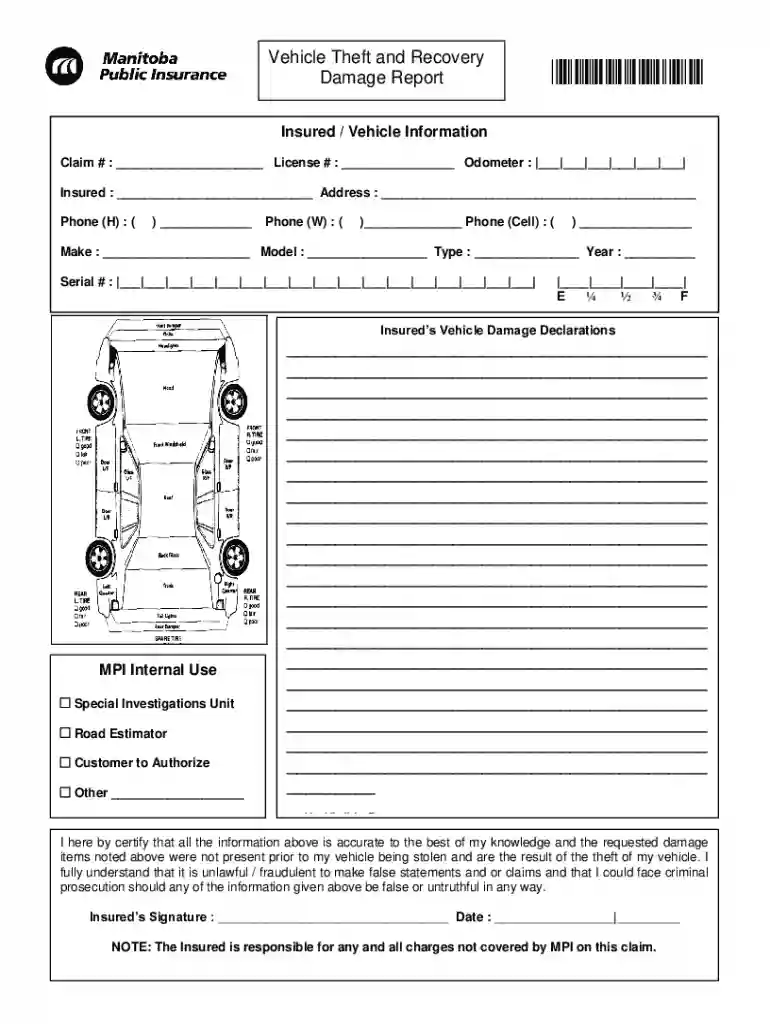
The Vehicle Theft and Recovery Damage Report (VTRDR) is a crucial document used in the insurance industry to document and validate claims related to vehicle theft and recovery. It serves as a formal declaration capturing key information about the insured vehicle, such as its claim number, license plate number, and odometer reading. This report is not only a tool to assess the damages incurred during the theft but also to confirm the accuracy of the details provided by the insured party. Given the legal implications, the document requires the insured to acknowledge the potential consequences of false statements, ensuring that all information is truthful and precise.
Key Elements of the Vehicle Theft and Recovery Damage Report
The VTRDR encompasses several critical components to ensure comprehensive coverage of the incident:
- Insured's Identification: Includes the insured's personal details such as name, address, and contact information. This ensures the correct identification of the policyholder associated with the claim.
- Vehicle Information: Document sections that specify the vehicle's make, model, year, license plate, and Vehicle Identification Number (VIN) to accurately define the vehicle involved in the theft.
- Damage Assessment: Detailed declarations of theft-related damages, potentially added during the recovery, thus providing a clear picture of the impact on the vehicle.
- Claim Validation: A segment where the insured certifies the report's accuracy and veracity, which helps protect against insurance fraud.
- Signature Section: The final part requiring the insured’s signature to authenticate the report legally.
Steps to Complete the Vehicle Theft and Recovery Damage Report
Completing the VTRDR requires precise input and careful verification of details:
- Gather Required Information: Collect all necessary vehicle and personal details, including insurance policy numbers and contact information.
- Describe the Theft Incident: Provide a thorough narrative of the theft event, including dates, times, and any witnesses, to ensure a factual representation of the incident.
- Detail Damage Observations: Record all observed damages to the vehicle following its recovery, supporting this section with photographs if available.
- Verify Entries: Double-check all information for accuracy to avoid discrepancies that could delay the claim process.
- Sign and Submit: After confirming the report's validity, sign and date the document. Submit according to your insurance provider's guidelines, either digitally or via mail.
How to Obtain the Vehicle Theft and Recovery Damage Report
Procuring a VTRDR typically involves contacting relevant parties:
- Insurance Provider: Start by reaching out to your insurance company. They usually supply the report as part of their claims process, either as an online form or a downloadable document.
- Law Enforcement or DMV: In some cases, local law enforcement or the Department of Motor Vehicles (DMV) may require or provide a specific template. It’s advisable to verify if any legal authority necessitates a standardized version.
- Download from Company Website: Many insurance firms offer downloadable PDFs or online forms via their websites, providing a convenient and quick retrieval method.
Important Terms Related to the Report
Understanding specific terminology is essential for accurately completing a VTRDR:
- Claim Number: A unique identifier assigned by the insurance company to track the claim.
- Odometer Reading: The numerical display that indicates the distance the vehicle has traveled, which can provide insights into unauthorized use during theft.
- Deductible: The amount paid out of pocket by the policyholder before insurance coverage kicks in.
Who Typically Uses the Vehicle Theft and Recovery Damage Report
Several parties rely heavily on the VTRDR:

- Policyholders: Insured individuals seeking compensation following a vehicle theft and recovery.
- Insurance Adjusters: Professionals tasked with assessing the validity and value of the claim based on provided documentation.
- Law Enforcement Officers: Sometimes involved in verifying the theft reports and ensuring that all legal procedures align with local and federal laws.
Legal Use of the Vehicle Theft and Recovery Damage Report
The VTRDR serves a legal purpose in the context of insurance claims:
- Fraud Prevention: Ensures that all stated details are accurate and truthful, mitigating insurance fraud risks.
- Evidence in Disputes: Provides documented evidence in case of legal disputes or inquiries regarding the theft and recovery process.
- Compliance with State Regulations: Each document must meet specific legal standards and be in compliance with state regulations to be valid.
Penalties for Non-Compliance or False Statements
Failure to comply with the accuracy and truthful completion of a VTRDR can lead to severe consequences:
- Denial of Claim: False entries or omitted information can result in denied insurance claims, leaving the insured responsible for repair and recovery costs.
- Legal Actions: Deliberately misleading or false submissions may attract legal actions, including criminal charges for fraud.
- Fines and Penalties: Depending on state laws, penalties may also include fines and mandatory restitution.
Each section of the VTRDR plays a significant role in ensuring a just resolution for stolen and recovered vehicles, reflecting the importance of accuracy and thoroughness in every report filed.