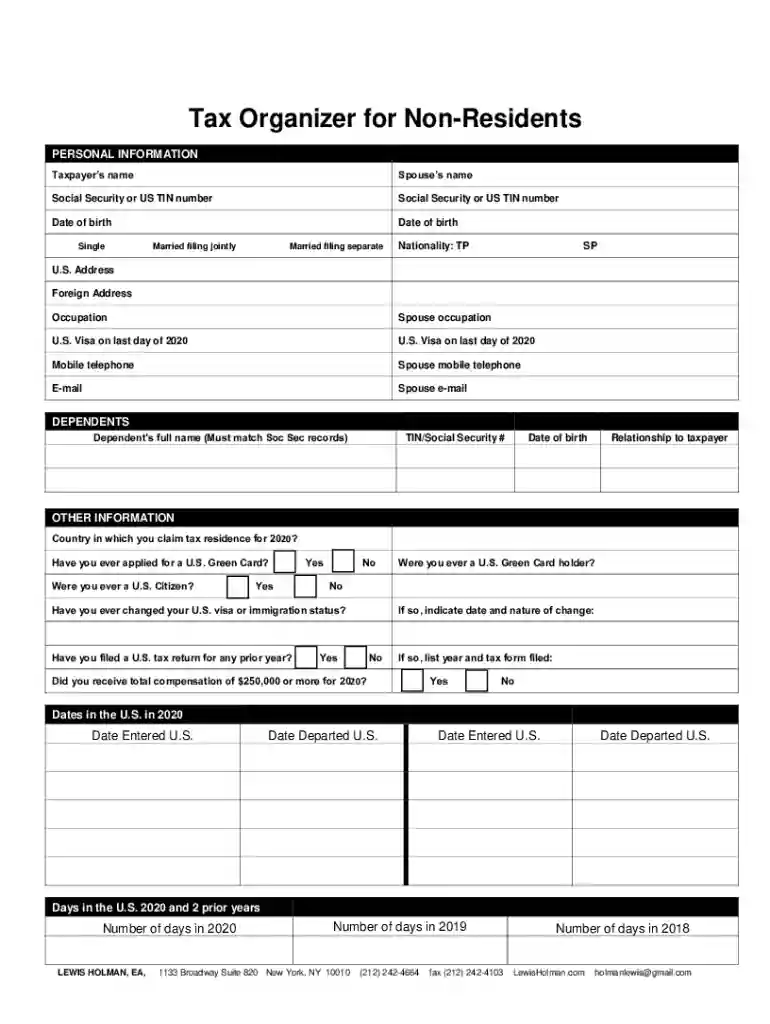
Tax Worksheet for 2002-2026

Get Form
Tax Worksheet for 2002 Preview on Page 1

Here's how it works

01. Edit your form online
Type text, add images, blackout confidential details, add comments, highlights and more.

02. Sign it in a few clicks
Draw your signature, type it, upload its image, or use your mobile device as a signature pad.

03. Share your form with others
Send it via email, link, or fax. You can also download it, export it or print it out.

Definition & Meaning

The "Tax Worksheet for 2002" refers to a document used to calculate and organize financial information required for filing U.S. tax returns for the tax year 2002. It serves as a guide for taxpayers to accurately report income, deductions, credits, and other tax-related details to the Internal Revenue Service (IRS). This worksheet is particularly valuable for ensuring compliance with IRS regulations and minimizing errors on tax filings. By consolidating financial data systematically, it helps prevent common mistakes that could result in penalties or underpayment of taxes.

How to Use the Tax Worksheet for 2002

To effectively use the Tax Worksheet for 2002, taxpayers should follow a systematic approach to ensure that all relevant information is correctly recorded. Begin by gathering all necessary financial documents, including income statements, deduction records, and supporting documents for credits. Use the worksheet sections to input necessary details such as wages, interests, dividends, and other income sources. Additionally, document itemized deductions and applicable tax credits to optimize the tax return. Always double-check your entries against supporting records to ensure accuracy and compliance with tax regulations.

Practical Steps:

  1. Collect Financial Documents: Gather W-2s, 1099s, receipts for deductions, and proof of any credits claimed.
  2. Enter Income Details: Add wages, salary, interests, dividends, and other revenue sources into the appropriate sections.
  3. Record Deductions and Credits: Carefully input qualified deductions and credits following the IRS guidelines for 2002.
  4. Review and Verify Information: Confirm all entries are accurate and supported by documentation to avoid issues with the IRS.
  5. Prepare for Filing: Once completed, use the information on the worksheet to fill out the actual tax forms for submission.

Steps to Complete the Tax Worksheet for 2002

Completing the Tax Worksheet for 2002 involves several detailed steps to ensure all financial data is captured correctly. Begin with a careful review of personal information, ensuring compliance with provided instructions. Follow this with a systematic breakdown of income and adjustments.

Detailed Steps:

  1. Personal Information: Confirm that all personal data, such as name, Social Security Number, and filing status, are correct.
  2. Wages and Income: Report all income types, including wages, salaries, tips, business income, and investment returns.
  3. Adjustments to Income: Note any eligible adjustments, such as IRA contributions and student loan interest.
  4. Deductions and Credits: Itemize eligible deductions and credits, supported by valid documentation, and record accordingly.
  5. Calculate Tax: Use the tax table for 2002 to determine tax liability based on your taxable income.
  6. Final Review: Ensure all calculations align with entries and IRS expectations before proceeding to file the return.

Important Terms Related to Tax Worksheet for 2002

Understanding key terms associated with the Tax Worksheet for 2002 is crucial for accurately completing the form. These terms relate directly to income, deductions, and credits applied during the tax filing process.

Key Terms:

  • Adjusted Gross Income (AGI): Total income minus specific deductions, determining tax liability.
  • Taxable Income: The portion of earnings subject to income tax after deductions and exemptions.
  • Itemized Deductions: Specific expenses that can be subtracted from AGI to lower taxable income.
  • Tax Credit: Direct reduction in tax liability, which diminishes the amount owed rather than taxable income.
  • Exemption: A set amount that can be deducted for oneself, spouse, and dependents.

Key Elements of the Tax Worksheet for 2002

The Tax Worksheet for 2002 includes several critical components that guide taxpayers through the process of calculating their tax liability.

Core Components:

  • Income Reporting Section: Captures all sources of income, including wages, business income, and investment returns.
  • Adjustments Section: Accounts for eligible adjustments such as retirement contributions and education expenses.
  • Deductions Section: Details itemized deductions or summarizes standard deduction use.
  • Credit Calculation: Includes sections for applicable tax credits, reducing overall tax responsibility.

IRS Guidelines

IRS guidelines provide specific instructions on how to correctly file taxes using the Tax Worksheet for 2002. These guidelines ensure compliance with federal tax laws and help identify applicable deductions, credits, and filing requirements.

Compliance Requirements:

  • Follow instructions to ensure accurate calculation of AGI and taxable income.
  • Use the tax tables for 2002 to correctly compute tax obligations.
  • Include all necessary documentation with your submission to support claims of deductions and credits.

Filing Deadlines / Important Dates

Being aware of important dates and deadlines is crucial to avoid penalties for late filing or payments.

Key Dates:

  • April 15, 2003: Standard deadline for filing federal tax returns for the 2002 tax year.
  • October 15, 2003: Deadline for those who filed for a six-month extension.

Required Documents

Completing the Tax Worksheet for 2002 requires various documents to substantiate income and deduction claims.

Necessary Documentation:

  • W-2 Forms: For wage and salary information.
  • Form 1099: Reporting of miscellaneous income such as dividends and interest.
  • Receipts and Records: Supporting documentation for itemized deductions and credits.
  • Previous Year's Tax Return: To assist in comparison and accuracy checks.

These structured guidelines provide a comprehensive overview for efficiently completing the Tax Worksheet for 2002, ensuring adherence to legal standards and maximizing accuracy in tax reporting.

See more Tax Worksheet for 2002 versions

We've got more versions of the Tax Worksheet for 2002 form. Select the right Tax Worksheet for 2002 version from the list and start editing it straight away!
Versions Form popularity Fillable & printable
2020 4.6 Satisfied (59 Votes)
2013 4.4 Satisfied (50 Votes)
be ready to get more

Complete this form in 5 minutes or less

Get form

Got questions?

We have answers to the most popular questions from our customers. If you can't find an answer to your question, please contact us.
Contact us
The law also allowed dependents who do not qualify for the $2,000 credit to qualify for a nonrefundable credit worth up to $500 per dependent. This credit is often referred to as the other dependent tax credit or ODTC. The laws changes to the credit were temporary and originally scheduled to expire after 2025.
The Tax Cuts and Jobs Act of 2017 doubled the tax credit to $2,000 and made limits to the refundable amount of up to $1,400 per child. It also introduced phaseout thresholds and rates for higher-income taxpayers.
Form 1040 is used by U.S. taxpayers to file an annual income tax return. Form 1040-SR is available as an optional alternative to using Form 1040 for taxpayers who are age 65 or older. Form 1040-SR uses the same schedules and instructions as Form 1040 does.
Families must have at least one qualifying child under 6 years old at the end of the tax year, must file a California state tax return, and meet the requirements of the CalEITC. Taxpayers do not need to have earned income to be eligible however, you must otherwise meet CalEITC and YCTC requirements.
Part of this tax act included a provision which increased the child tax credit from $600 per child to $1,000 per child. As a result, over the next few weeks, the government is sending checks for up to $400 per child (age 16 and younger in 2002) to families who claimed a child tax credit on their 2002 tax returns.

Security and compliance

At DocHub, your data security is our priority. We follow HIPAA, SOC2, GDPR, and other standards, so you can work on your documents with confidence.

Learn more
ccpa2
pci-dss
gdpr-compliance
hipaa
soc-compliance
be ready to get more

Complete this form in 5 minutes or less

Get form

People also ask

EGTRRA temporarily increased the per-child credit amount to $600 (for 2001-2004) with scheduled increases thereafter to a maximum of $1,000 per child by 2010. EGTRRA also temporarily made the credit available to certain low-income families as a refundable tax credit.
The law raised the maximum value of the credit in 2021 to $3,600 per child age 0-5 and $3,000 for other qualifying children. The increase in the maximum value over $2,000 (i.e., $1,600 per young child and $1,000 per other child) phased out at a rate of 5% of the income a household had over certain thresholds.
6. Standard Deduction Heads of Households ( Section 1(j)(2)(B) ) Tax YearStandard Deduction 2002 $6,900 2001 $6,650 2000 $6,45031 more rows

Related links