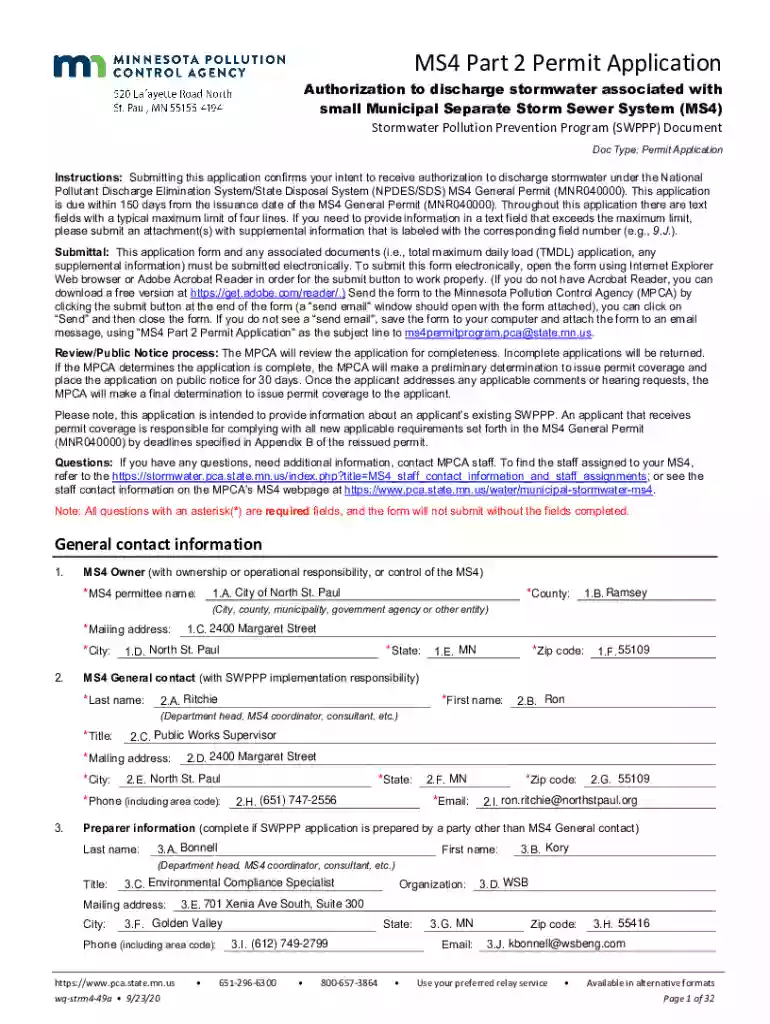
Definition and Meaning of MS4 Part II Application Requirements - Minnesota
The MS4 Part II Application Requirements in Minnesota are part of a broader regulatory framework under the National Pollutant Discharge Elimination System (NPDES) and the State Disposal System (SDS) permits. Specifically, they pertain to the authorization process for municipalities to discharge stormwater through small municipal separate storm sewer systems (MS4s). These requirements aim to ensure that municipalities adhere to specific practices that safeguard water quality and prevent stormwater pollution. They include a comprehensive approach to managing stormwater runoff from urban areas, focusing on minimizing pollutants entering waterways.
Key Components:
- Public education and participation initiatives aimed to increase community awareness and support for stormwater management practices.
- Illicit discharge detection systems to identify unauthorized discharges into the municipal separate storm sewer systems.
- Construction site runoff control measures to curb pollution during and after construction activities.
- Post-construction management obligations to ensure that long-term stormwater controls are in place.
- Pollution prevention strategies for municipal operations to minimize discharge of pollutants from government activities.
How to Use the MS4 Part II Application Requirements - Minnesota
Engaging with the MS4 Part II Application Requirements involves several phases, which municipalities must undertake to ensure compliance. This formal application process is designed to certify that all stormwater outfalls, facilities, and practices meet the necessary regulatory standards.
Steps:
- Review the Guidance Documents: Begin by reviewing the official guidance documents provided by Minnesota's Pollution Control Agency. These documents outline the necessary steps to complete the application correctly.
- Public Involvement: Organize public outreach programs to educate residents about stormwater management and garner public input.
- Develop a Stormwater Management Program: Prepare a detailed stormwater management program plan that addresses each component of the application requirements.
- Fill the Application: Complete the application form by providing detailed information about how your municipality will meet each criterion.
- Submit the Application: Submit the completed application to the Minnesota Pollution Control Agency for review and approval.
Steps to Complete the MS4 Part II Application Requirements - Minnesota
For municipalities looking to comply with the MS4 Part II requirements, an organized and systematic approach ensures the application is comprehensive and meets all regulatory expectations.
Steps Breakdown:
- Inventory of MS4 Facilities: Conduct an inventory to document the size, function, and location of all MS4 facilities operated by the municipality.
- Evaluation of Stormwater Controls: Analyze existing stormwater control measures to determine their effectiveness and establish improvements where necessary.
- Drafting Regulations: Draft local regulations that align with state compliance requirements, focusing on pollution prevention measures.
- Plan for Public Education and Involvement: Develop a plan for ongoing public education and involvement, ensuring citizens understand the importance of clean stormwater practices.
- Implementation of Illicit Discharge Detection Systems: Establish a framework for detecting and addressing illicit discharges.
- Periodic Review and Update: Incorporate a schedule for regular review and update of the stormwater management practices to maintain relevancy and effectiveness.
Who Typically Uses the MS4 Part II Application Requirements - Minnesota
The primary users of the MS4 Part II Application Requirements are municipalities within Minnesota that operate a Municipal Separate Storm Sewer System. These entities are responsible for managing and restricting the discharge of stormwater runoff within their jurisdictions.

User Groups:
- Local Governments: Cities, towns, and counties that manage stormwater infrastructures.
- Environmental Engineers: Professionals who design and improve stormwater systems and compliance measures.
- Urban Planners: Specialists who ensure urban development projects integrate efficient stormwater management systems.
- Public Works Departments: Municipal units tasked with maintaining infrastructure, including stormwater facilities.
Legal Use of the MS4 Part II Application Requirements - Minnesota
Operating under the NPDES/SDS framework, the MS4 Part II Application Requirements ensure that municipalities manage stormwater in a way that complies with national and state environmental laws. These legal directives help protect water resources from contamination by controlling volume and quality of runoff.
Key Legal Aspects:
- Adherence to clean water standards by minimizing pollutant loads in stormwater discharge.
- Assurance that all actions comply with the Clean Water Act and Minnesota's state-specific environmental regulations.
- Regulatory oversight by the Minnesota Pollution Control Agency, which enforces compliance and issues penalties for deviations.
State-Specific Rules for the MS4 Part II Application Requirements - Minnesota
Minnesota has tailored its state-specific requirements under the MS4 program to address unique geographic and climatic conditions that can affect stormwater management.
Special Conditions:
- Climate Considerations: Regulations account for Minnesota's specific climate, including seasonal variations affecting stormwater runoff.
- Local Water Quality Standards: Local water bodies have specific quality standards that MS4 plans must consider to minimize environmental impact.
- Innovative Technologies: The state encourages the adaptation of emerging and high-efficiency measures for stormwater management, rewarding municipalities implementing innovative stormwater technologies.
Key Elements of the MS4 Part II Application Requirements - Minnesota
Several critical elements comprise the application requirements, all designed to facilitate effective stormwater management and pollution prevention.
Elements:
- Pollution Prevention/Good Housekeeping Practices: Ensures that municipal operations reduce the discharge of pollutants.
- Public Education and Outreach: Develops programs to inform residents and businesses of stormwater impacts.
- Illicit Discharge Detection and Elimination: Establishes a framework for identifying and resolving unauthorized discharges.
- Construction Site Stormwater Runoff Control: Implements measures to limit pollution from construction activities.
- Post-Construction Stormwater Management: Mandates long-term planning and structures to handle runoff post-construction.
Penalties for Non-Compliance with MS4 Part II Application Requirements
Non-compliance with the MS4 Part II Application Requirements can result in significant penalties for municipalities, highlighting the importance of adherence.
Types of Penalties:
- Financial Penalties: Monetary fines imposed for failure to submit applications or comply with approved stormwater management plans.
- Regulatory Oversight: Enhanced scrutiny and more frequent inspections by regulatory bodies.
- Injunctions or Orders: Possible legal action requiring municipalities to take immediate corrective measures to address non-compliance.
By understanding and rigorously implementing the MS4 Part II Application Requirements, Minnesota municipalities can effectively manage stormwater, thus safeguarding state water quality while meeting legal obligations.