







Definition & Meaning
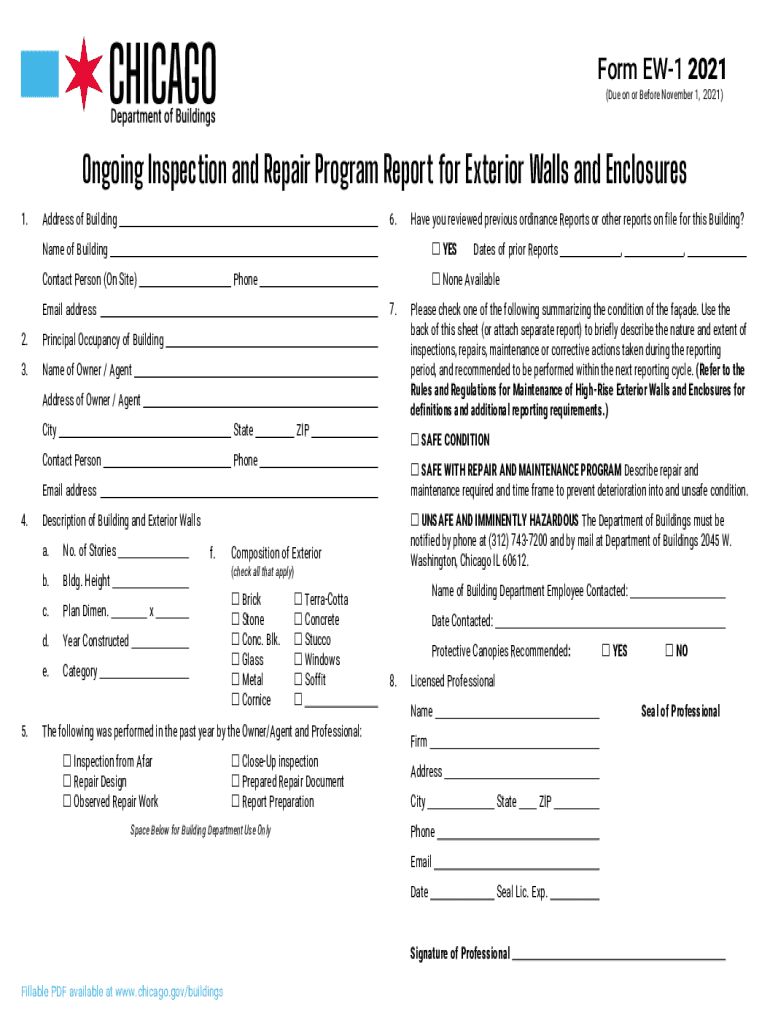
The "Ongoing Inspection and Repair Program Report for Exterior Walls and Enclosures" is a formal document, designated as Form EW-1 2021, crucial for managing and maintaining building safety. It mandates building owners or their appointed agents in the United States to report detailed information about building addresses, ownership details, occupancy status, and structural features. This report serves as a comprehensive record that encapsulates the building's inspection findings and the repairs undertaken within a specific period, usually the past year. By emphasizing critical maintenance activities and structural integrity assessments, this form aims to mitigate risks associated with deteriorating building facades, ensuring safety for both occupants and the surrounding community.
Key Elements of the Ongoing Inspection and Repair Program Report for Exterior Walls and
To properly fulfill the obligations of the Ongoing Inspection and Repair Program Report, several key elements must be included:
- Building Information: Details about the building location, ownership, and type of occupancy play a pivotal role in understanding the context of the inspection report.
- Inspection Details: Highlights of the inspections conducted, including dates, the scope of evaluation, and the findings regarding the structural stability and safety conditions of the exterior walls.
- Repair Information: Documentation of all repairs and maintenance work performed during the reporting period, specifying what was repaired, who carried out the repairs, and the methods used.
- Professional Involvement: Certifications and signatures from licensed professionals who conducted or supervised the inspections and repairs, emphasizing adherence to relevant building codes and standards.
Steps to Complete the Ongoing Inspection and Repair Program Report for Exterior Walls and
- Gather Essential Documentation: Collect all necessary information, including building plans, previous inspection reports, repair documentation, and ownership records.
- Conduct a Thorough Inspection: Engage a qualified professional to carry out a detailed assessment of the building’s exterior walls and enclosures.
- Compile Findings: Document the inspection results, noting any structural deficiencies, potential hazards, and recommended corrective actions.
- Detail Repair Activities: Record all maintenance activities undertaken, providing specifics on the scope, materials used, and personnel involved.
- Finalize the Report: Ensure all sections are complete, attach the professional certifications, and review for accuracy.
- Submit the Completed Form: Depending on jurisdictional requirements, submit the completed form to the appropriate municipal or governmental agency via the specified method (online or mail).
Legal Use of the Ongoing Inspection and Repair Program Report for Exterior Walls and
The Ongoing Inspection and Repair Program Report serves a legal function, ensuring compliance with local and state regulations concerning building safety and maintenance. This compliance is typically mandatory for maintaining valid occupancy permits and avoiding legal penalties. The report is also a proactive measure to mitigate liability in case of accidents or structural failures. It provides documented evidence that the building owner has adhered to the necessary safety measures and conducted routine inspections and repairs as required.
Who Typically Uses the Ongoing Inspection and Repair Program Report for Exterior Walls and
The primary users of this form are:
- Building Owners: Individuals or entities responsible for ensuring that their properties comply with safety standards.
- Property Managers: Professionals tasked with overseeing the maintenance and regulatory adherence of residential or commercial properties.
- Architects and Engineers: Professionals who conduct inspections or design solutions for repair and maintenance needs.
- Regulatory Authorities: Governmental bodies that enforce building codes and safety standards, ensuring the form is submitted timely and accurately.


Why Should You Submit the Ongoing Inspection and Repair Program Report for Exterior Walls and
Submitting this report is crucial for:
- Ensuring Safety: Protects the safety of occupants and bystanders by identifying and rectifying potential hazards.
- Maintaining Compliance: Meets regulatory requirements to avoid fines, legal action, or loss of occupancy permits.
- Preserving Property Value: Regular maintenance and systematic repairs help maintain the structural integrity and value of the property.
- Liability Management: Provides defense in legal situations by documenting that due diligence in safety and maintenance was performed.
State-Specific Rules for the Ongoing Inspection and Repair Program Report for Exterior Walls and
State requirements can vary significantly:
- Submission Frequency: Some states may mandate annual submissions, while others might require reports biannually or after significant weather events.
- Specific Professional Involvement: Certain jurisdictions may require the involvement of state-certified professionals for inspections and repairs.
- Additional Safety Checks: Some areas might necessitate additional criteria such as seismic assessments or energy efficiency evaluations as part of the report.
Examples of Using the Ongoing Inspection and Repair Program Report for Exterior Walls and
Real-world applications of this report include:
- Urban Mid-Rise Buildings: In cities like New York, local laws may require detailed façade inspections every five years, using this form to report compliance.
- Historic Renovations: For properties undergoing restoration, especially those designated as historical landmarks, the report ensures that all work adheres to safety and preservation standards.
- Corporate Complexes: Large corporate campuses use these reports to track ongoing maintenance and repair activities, ensuring a safe working environment.
In all instances, the utility of the report lies in its ability to document and assure regulatory bodies of the building's compliance with safety and structural standards.




