







Definition and Meaning
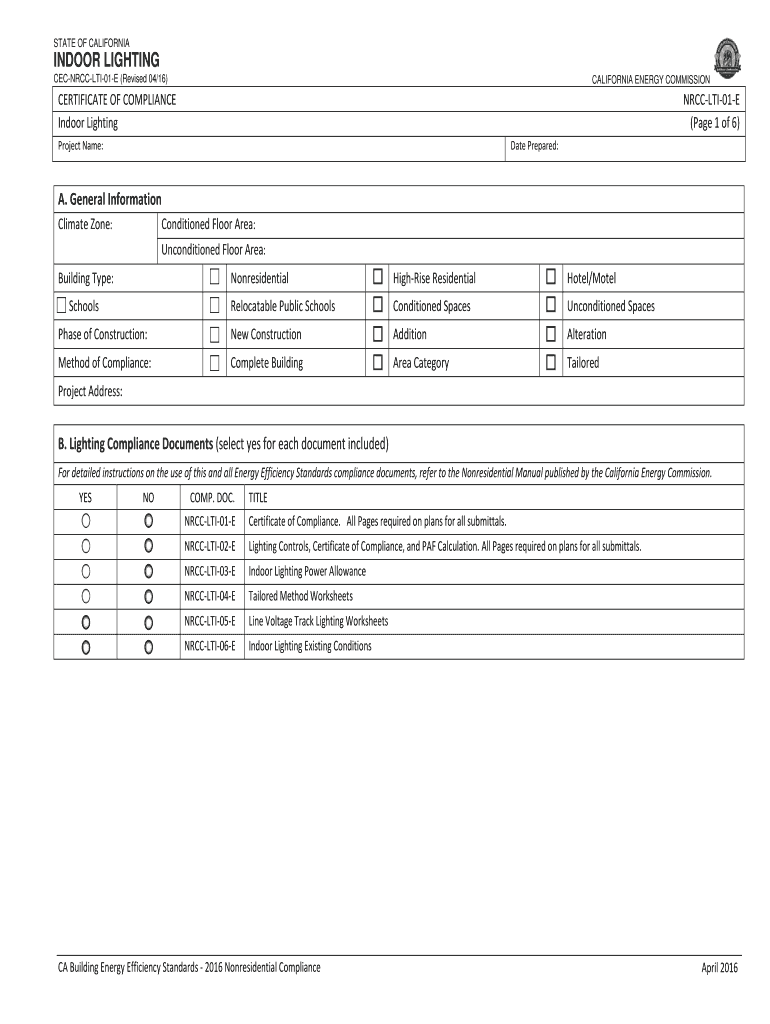
The Certificate of Compliance for Indoor Lighting, issued by the California Energy Commission, specifies the requirements for lighting power allowances in both conditioned and unconditioned spaces. This document is essential for constructing or renovating buildings in California, as it ensures adherence to the state's energy efficiency standards. The certificate serves as a critical guideline to promote energy efficiency by detailing how indoor lighting should be installed to meet regulatory criteria.
How to Use the Certificate
When working with the Certificate of Compliance for Indoor Lighting, it is crucial to understand its purpose and application. This document guides engineers, architects, and contractors through the process of ensuring that indoor lighting systems comply with California's energy efficiency standards. It includes methods for calculating lighting power allowances, compliance paths, and necessary documentation. By following these guidelines, professionals can avoid delays and ensure that their projects are in compliance with state regulations.
Obtaining the Certificate
To obtain the Certificate of Compliance for Indoor Lighting, individuals or businesses must coordinate with the California Energy Commission. The process typically involves submitting detailed plans and calculations that demonstrate compliance with lighting power allowances and efficiency standards. Applicants may need to provide specific documentation that outlines the lighting systems' adherence to state requirements, ensuring the project meets or exceeds California's energy standards.
Steps to Complete the Certificate
- Review the Requirements: Begin by thoroughly examining the requirements outlined in the certificate to understand what is needed for compliance.
- Gather Necessary Information: Collect all relevant data regarding the indoor lighting systems planned for installation, including plans and specifications.
- Calculate Lighting Power: Use the methods specified in the certificate to calculate the lighting power allowances for the project.
- Prepare Documentation: Compile the necessary documents, such as design plans and compliance calculations, to demonstrate adherence to the certificate's requirements.
- Submit to Energy Commission: Once all documentation and calculations are ready, submit them to the California Energy Commission for approval. Ensure timely submission to avoid project delays.
Key Elements of the Certificate
The Certificate of Compliance for Indoor Lighting includes several critical components necessary for demonstrating energy efficiency compliance. These elements encompass:
- Lighting Power Allowances: Specific limits on the amount of power that lighting systems can consume, calculated based on building type and usage.
- Compliance Paths: Various methods and approaches for meeting energy efficiency standards.
- Documentation Requirements: Necessary documentation to prove that lighting systems meet state standards, including design plans and energy calculations.
Important Terms Related to the Certificate
Understanding the terminology within the certificate is essential for proper compliance. Key terms include:
- Conditioned Spaces: Areas within a building that are heated or cooled for occupant comfort.
- Lighting Power Density (LPD): Measures the electrical power used for lighting, expressed in watts per square foot.
- Demand Response: The ability of lighting systems to reduce power usage during peak demand periods to maintain grid stability.
State-Specific Rules and Regulations
California has specific rules and regulations that govern energy efficiency in indoor lighting, as outlined in the Certificate of Compliance. These regulations are part of the broader Title 24, Building Standards Code, which sets energy efficiency benchmarks for new and existing buildings. Compliance with these regulations ensures that lighting systems not only adhere to power allowances but also contribute to reduced energy consumption and lower environmental impact.
Penalties for Non-Compliance
Non-compliance with the Certificate of Compliance for Indoor Lighting can result in significant penalties. These penalties may include fines, project delays, or even the requirement to modify or replace non-compliant lighting systems. Adherence to the standards is crucial not only for legal reasons but also to promote sustainable practices and energy efficiency across the state.




