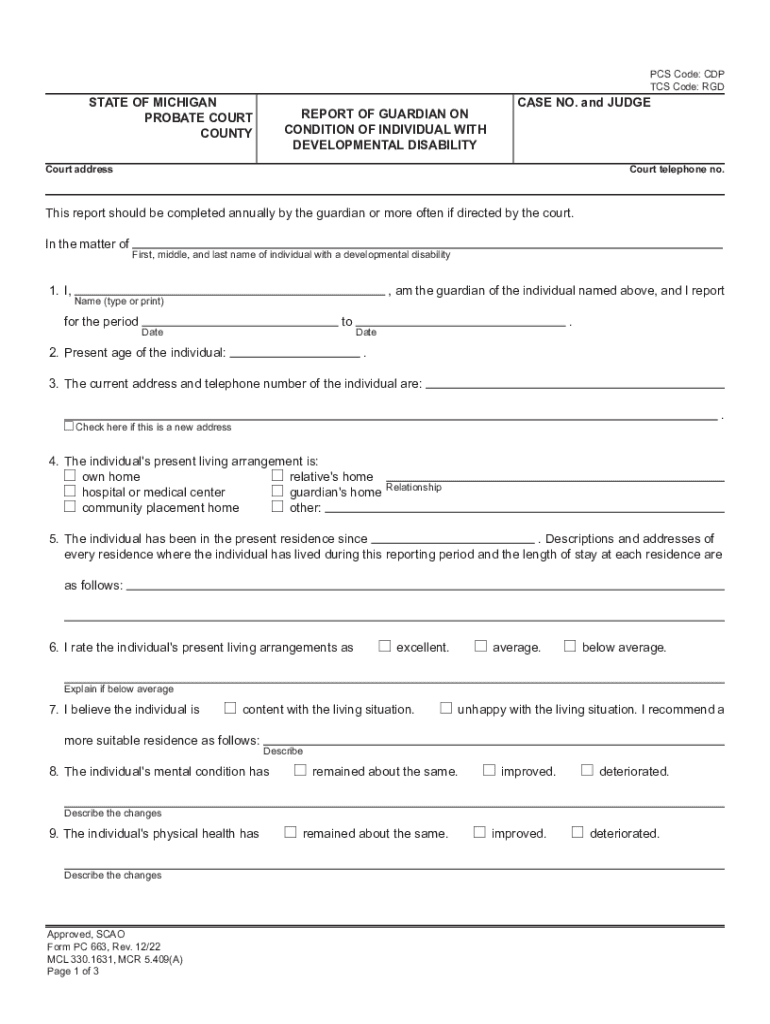







Overview of Guardianship Forms for Individuals with Developmental Disabilities
Guardianship forms for individuals with developmental disabilities are legal documents required to manage the personal and financial affairs of those who cannot do so independently. These forms must be completed with precision to ensure the court or relevant authority mandates the guardianship. Completing these forms correctly ensures that the guardian can make decisions in the best interest of the individual.
How to Use Guardianship Forms
Using guardianship forms involves filling out sections that detail the individual's personal and health information, living arrangements, and the guardian's observations. Once completed, these forms must be submitted to the court or relevant agency for review. Guardians must ensure all information is accurate and up-to-date, as this affects the individual's welfare and legal standing.
Obtaining Guardianship Forms
Guardianship forms can be obtained from state courts or official websites that handle developmental disability cases. Many jurisdictions offer downloadable forms, which can be filled digitally or printed for manual completion. It’s important to verify that the forms are current and correspond to the state in which the guardianship is being filed.
Steps to Complete Guardianship Forms
-
Gather Necessary Information: Collect personal, medical, and living arrangement details about the individual.
-
Fill Out Personal Details: Include full name, address, date of birth, and development disability status.
-
Document Health and Living Status: Clearly state the individual’s physical and mental health conditions and current living arrangements.
-
Provide Guardian Information: Include details about the guardian, such as name, relationship to the individual, and contact information.
-
Review and Sign: Ensure all information is correct, then sign the form along with any required witnesses.
-
Submit to the Relevant Authority: File the completed forms with the court or designated state agency.
Key Elements of Guardianship Forms
- Personal Information: Includes all identifying details about the individual requiring guardianship.
- Health Status: Details on the mental and physical health of the individual, alongside any relevant medical records.
- Guardian's Role: Clearly states the responsibilities and limitations of the guardian.
- Living Arrangements: Specifies current and future planned living situations.
- Guardian Observations and Recommendations: Input from the guardian on the individual's well-being and future needs.
Legal Use and Compliance
Forms for guardianship are used to legally appoint an individual to make decisions for a person who cannot. They adhere to state regulations and must comply with legal criteria. Non-compliance or incorrect filing can lead to delays or dismissal of the guardianship petition.
Important Terms
- Ward: The individual who is subject to the guardianship.
- Guardian: The person or entity appointed to manage the ward's affairs.
- Incapacitated: Legal term indicating the inability of an individual to care for themselves or manage their affairs.
State-Specific Rules
Each state in the U.S. may have different requirements and forms for guardianship. Guardianship laws can vary significantly, impacting the form submission process. Guardians should check specific state guidelines to ensure compliance with regional laws.
Digital vs. Paper Versions
Guardianship forms can be completed both digitally and on paper. Digital forms are often more convenient, allowing for easy editing and submission. However, some courts might still require paper submissions, necessitating printing and mailing after digital completion.
Required Documents for Submission
- Proof of Disability: Medical records or a statement from a healthcare professional.
- Verification of Current Living Situation: Lease agreements or residential paperwork.
- Guardian’s Identification: Government-issued ID or legal documents proving guardianship eligibility.
Examples of Guardianship Form Use
Guardianship forms are used in various scenarios such as:
- An elderly parent needing care due to Alzheimer's requiring a child to gain legal guardianship for decision-making.
- A young adult with developmental disabilities transitioning out of school programs needing a guardian to manage financial and personal matters.
Eligibility Criteria
To be eligible for guardianship, an individual must demonstrate their inability to make informed decisions owing to developmental disabilities. The guardian must show capability and a vested interest in the individual’s welfare, often needing to prove this through a court hearing or similar legal process.