







Understanding Legionnaires’ Disease Risk Assessment and Guidelines
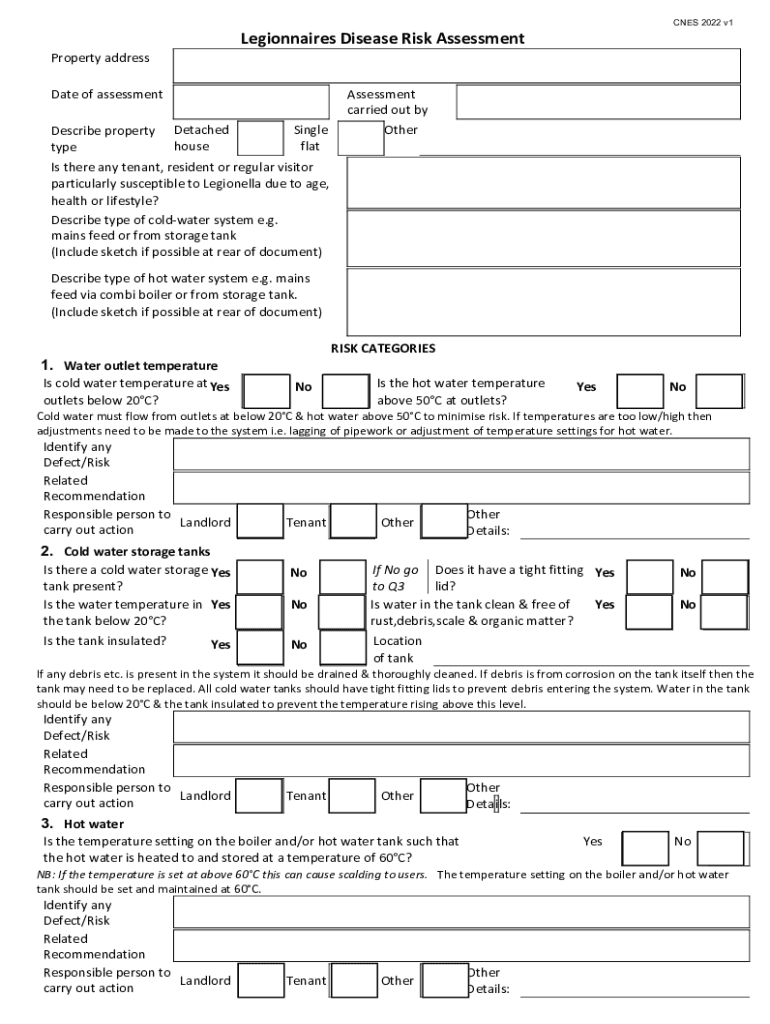
Legionnaires' disease risk assessments are designed to evaluate and manage the risks associated with water systems in buildings, particularly those that could promote the growth of Legionella bacteria. This involves identifying potential hazards, such as optimal temperature ranges for bacterial growth and system stagnation points. These guidelines serve as both preventive measures and safety protocols to protect community health.
What Is Legionnaires’ Disease?
Legionnaires' disease is a type of pneumonia caused by Legionella bacteria, commonly found in freshwater environments but can become a health issue in man-made water systems. Understanding the nature and transmission methods of this disease is crucial for conducting effective risk assessments and implementing guidelines.
Steps to Complete the Risk Assessment
Conducting a Legionnaires' disease risk assessment involves several critical steps. First, determine if your building's water systems are prone to conditions that Legionella bacteria thrive in, like stagnant water or pipes with optimal breeding temperatures. Here’s how you can detail the assessment process:
-
Identify Potential Hazards:
- Monitor water temperature, avoiding ranges between 68°F and 122°F, where Legionella thrives.
- Locate dead legs in plumbing where water can stagnate.
-
Evaluate System Components:
- Inspect cooling towers, hot water tanks, and other components.
- Ensure functioning scales, such as flow meters, to measure water movement.
-
Regular Maintenance and Testing:
- Schedule routine inspections and cleanings.
- Test for Legionella at specific intervals.
Compliance and Legal Use
Understanding legal obligations and ensuring compliance with local regulations is crucial. The guidelines specify serial tests and routine checks to be documented, which could be subjected to review by health authorities. Failure to comply might result in legal actions and penalties.
Key Elements of the Guidelines
The guidelines for assessing and managing risks are comprehensive, addressing areas such as equipment checks, regular assessments, and recordkeeping. Key elements include:
- Water System Management: Implement maintenance schedules for tanks, pipes, and cooling towers.
- Temperature Control: Maintain temperatures outside the 68°F to 122°F range.
- Risk Logbooks: Keep detailed records of water system maintenance and inspections.
Who Typically Uses These Guidelines?
The guidelines are primarily utilized by building managers, landlords, and health and safety professionals within residential complexes, hotels, healthcare facilities, and other settings with extensive water systems. These stakeholders ensure systems are compliant and safe.

Important Terms and Definitions
Understanding terminology specific to Legionnaires’ disease risk assessments enhances compliance and implementation of safety measures. Key terms include:
- Stratifaction: Variation of water temperature, affecting bacterial growth.
- Aerosolization: Process through which water droplets become airborne, posing inhalation risks.
State-Specific Variations
While federal guidelines provide a broad framework, state-specific requirements may exist, adding an additional layer of compliance. Each state may differ in documentation requirements and frequency of mandatory inspections.
Practical Implementation and Examples
Guidelines can be illustrated through practical examples, such as:
- Hospital Settings: Implementing strict water management protocols to protect immunocompromised patients.
- Residential Properties: Periodic checks in communal hot tubs and swimming pools.
Versions or Alternatives to the Guidelines
While the core guidelines remain consistent, alternate approaches or complementary procedures may exist, such as electronic monitoring systems that are integrated with other building management technologies.
Digital vs. Paper Guidelines
Digital documentation offers significant advantages in tracking and managing compliance compared to traditional paper formats. Utilizing software platforms for task assignments and inspection logs provides seamless tracking and historical data analysis.
This comprehensive outline provides a foundation for understanding the varied and essential components of conducting a Legionnaires' disease risk assessment and adhering to established guidelines. By ensuring thorough implementation, property managers and stakeholders can significantly reduce health risks and improve safety protocols.




