




01. Edit your 4 h secretary minutes template online
Type text, add images, blackout confidential details, add comments, highlights and more.

Type text, add images, blackout confidential details, add comments, highlights and more.

Draw your signature, type it, upload its image, or use your mobile device as a signature pad.

Send 4 h meeting minutes template via email, link, or fax. You can also download it, export it or print it out.
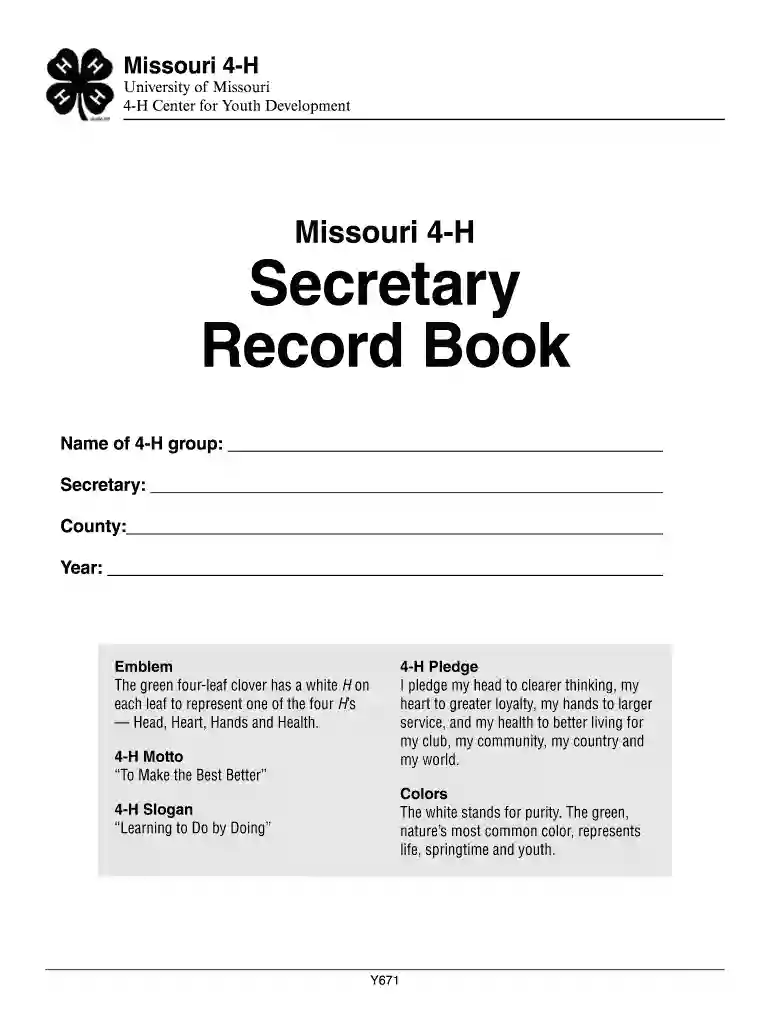
The Missouri 4-H book, often referred to as the 4-H secretary record book or the 4-H meeting minutes template, serves as an essential resource for participants in the Missouri 4-H program. This document acts as a comprehensive record of club activities, member involvement, and project management within the 4-H organization. It typically includes sections for documenting meeting minutes, project records, and important milestones throughout the 4-H membership year.
The aim of the Missouri 4-H book is to develop youth leadership and organizational skills among members. It allows for structured reflections on their learning experiences and community service contributions, aligning with the overall mission of 4-H to foster personal growth and citizenship among young people. By recording their activities in this manner, participants learn accountability, communication skills, and how to effectively manage tasks and deadlines.
Additional features of the Missouri 4-H book may include the official 4-H pledge, motto, and even space for the 4-H emblem, which symbolizes the program's dedication to head, heart, hands, and health. This book not only serves as a tool for record-keeping but also plays a pivotal role in the recognition of members’ achievements through the attainment of various awards and seals based on their performance.
Using the Missouri 4-H book effectively requires a systematic approach to record-keeping and participation tracking. Here are the key steps to consider:
Meeting Minutes Documentation: Each time your club holds a meeting, record the date, agenda, key discussions, decisions made, and attendance. It is essential to capture all significant points to ensure transparency and accountability. Utilize the 4-H meeting minutes template section within the book for this purpose.
Project Tracking: As projects progress, make sure to document objectives, challenges faced, and accomplishments. This section should include reflections on what was learned and how it applies to personal development and the broader community impact.
Activity Log: Keep a list of events participated in, whether they are club meetings, community service projects, or local fairs. Cite specific outcomes from these activities and how they align with the 4-H goals.
Goal Setting: Use your 4-H book to set specific, measurable goals for the year. This can include aspirations for personal growth, skill acquisition, or community involvement, allowing you to track your progress throughout the year.
Consistent use of the Missouri 4-H book enhances skills such as planning, organization, and reflection, which are vital for personal development.
The structure of the Missouri 4-H book encompasses several vital components designed to facilitate effective documentation and participation tracking. Here are the primary elements outlined in the book:
Personal Information: This section requires the member's name, age, and club affiliation. It helps to establish a foundation for all subsequent records.
Meeting Minutes Section: This is a formatted template for recording the details of each meeting, including date, topics discussed, decisions made, and members present. It ensures all activities are logged for future reference.
Project Record Section: Dedicated space for tracking individual projects, detailing goals, actions taken, and outcomes. This element is crucial for reflecting on what was learned and how these experiences contribute to personal development.
Awards and Recognitions: Documenting the achievements members have earned throughout the year allows for a clear overview of their progress and successes within the program.
Reflections and Feedback: This area encourages members to provide insights on their experiences in 4-H, helping them to articulate their growth and areas for improvement.
Incorporating these key elements supports the overarching goals of the 4-H program by enhancing organizational skills and fostering a commitment to personal and community development.
Familiarity with certain terminology enhances members’ understanding of their responsibilities and the resources available within the Missouri 4-H program. Some key terms include:
4-H Pledge: The promise made by members to uphold the ideals of the 4-H program, focusing on head, heart, hands, and health.
4-H Emblem: A symbol representing the 4-H program, signifying youth development and community service.
Secretary Minutes: Refers to the detailed record of meetings held by the club, capturing discussions, decisions, and members’ contributions.
Project Completion: A term used to signify the successful end of a specific project within the program, often requiring documentation in the 4-H book.
Recognition Seals: Awards given to members for achievements based on the documentation and engagement recorded in their 4-H book.
Understanding these terms is crucial for members to effectively navigate the documentation requirements and fully engage in their 4-H experience.
Completing the Missouri 4-H book involves several key steps to ensure that all necessary information has been recorded accurately and comprehensively. Here’s a breakdown of the process:
Gather Required Information: Before filling out the book, collect relevant documents, including prior meeting minutes, project outlines, and any recognitions received.
Fill in Personal Details: Start by entering personal information, including name and club affiliation. This establishes ownership of the records.
Document Meeting Minutes: After each club meeting, record the minutes using the designated template. Ensure that all discussions and decisions are captured clearly.
Record Project Information: As you work on projects, continuously update the project record sections with goals, activities, and results achieved.
Review and Reflect: At the end of the year or project, review all entries and reflect on the experiences documented. Summarize key learnings and consider areas for improvement in upcoming projects.
Submit for Recognition: If applicable, submit the completed 4-H book for awards consideration. This ensures a formal acknowledgment of your engagement and achievements throughout the year.
Completing the Missouri 4-H book is not a mere formality; it is a vital exercise in personal development and community involvement.
The Missouri 4-H book is primarily utilized by various stakeholders within the 4-H program. Here are the main users:
4-H Club Members: Youth participants actively involved in the program use the book to document their projects, activities, and achievements throughout the year.
Club Leaders and Advisors: Adult leaders can utilize the 4-H books to track member involvement and facilitate discussions during meetings, ensuring a structured approach to team engagements.
Parents and Guardians: Families may also find value in the 4-H book as a tool for supporting and encouraging their child's development and participation in 4-H activities.
County and State Extension Agents: These individuals often review the 4-H books during evaluations and award processes, helping to ensure that members are meeting program standards and goals.
Award Committees: Members of committees responsible for recognizing achievements within the 4-H program rely on the documentation in the 4-H book to decide on awards and honors.
The broad applicability of the Missouri 4-H book underscores its importance in fostering engagement across various stakeholders in the 4-H community.


Utilizing the Missouri 4-H book can be illustrated through practical examples showcasing its effectiveness in documenting experiences and achievements:
Project Management: A member undertaking a gardening project can use the Missouri 4-H book to track seed planting dates, growth milestones, and lessons learned about crop care. They can reference past meetings to narrate discussions about optimal planting strategies or share outcomes with peers, enhancing collaborative learning.
Community Service Documentation: Members involved in a community clean-up initiative can record the event details, including the date, actions taken, and feedback from participants in their 4-H book. This documentation serves not only to reflect on their contributions but also to prepare for future projects.
Recognition Application: At the end of the 4-H year, a member compiles their project's successes and community service activities into their 4-H book. By presenting a well-documented record of participation and achievements, they can submit their book for the opportunity to earn a seal or award, celebrating their dedication to the 4-H values.
These examples exemplify how the Missouri 4-H book serves as an educational tool and a formal record of accomplishments, helping participants achieve their personal and communal goals.
We've got more versions of the 4 h secretary minutes template form. Select the right 4 h secretary minutes template version from the list and start editing it straight away!
| Versions | Form popularity | Fillable & printable |
|---|---|---|
| 2002 | 4.8 Satisfied (100 Votes) |
Upload your h secretary book to DocHub (after you’ve set up an account for this). If you need to fill out fields in it, use proper tools from the top pane. For instance, drop Signature Fields, assign each to a particular party, and click on Sign → Request signatures from others. Personalize your message for your recipients and click Send Request. You can also send your form by fax or as a Signing link instead of using email (you’ll locate these options by navigating to the Menu → Send)
You can easily edit fill out your 4 h secretary record book on any iOS gadget. Open an internet browser of your choice, go to the DocHub website, authorize or create a new account, upload your file for editing, and make your desired alterations. Our service is mobile-friendly, so utilizing its functions on your phone will be a no-brainer, even on the first try.
At DocHub, your data security is our priority. We follow HIPAA, SOC2, GDPR, and other standards, so you can work on your documents with confidence.
This publication will explain the 4-H program and give you direction on how to get started or re-enroll in Missouri 4-Hs program. There are several ways toRead more
Brand Name: 4H Owner: Howard Steve AB11226 City in use: Dora 65637. Counties in use: Ozark Expiration Date: 03/01/2030. StatusRead more
New editions of this manual will incorporate all material updated since the previous edition. Update packages may be issued between editions and containRead more


