







Definition and Purpose of the Fillable EX107 Request
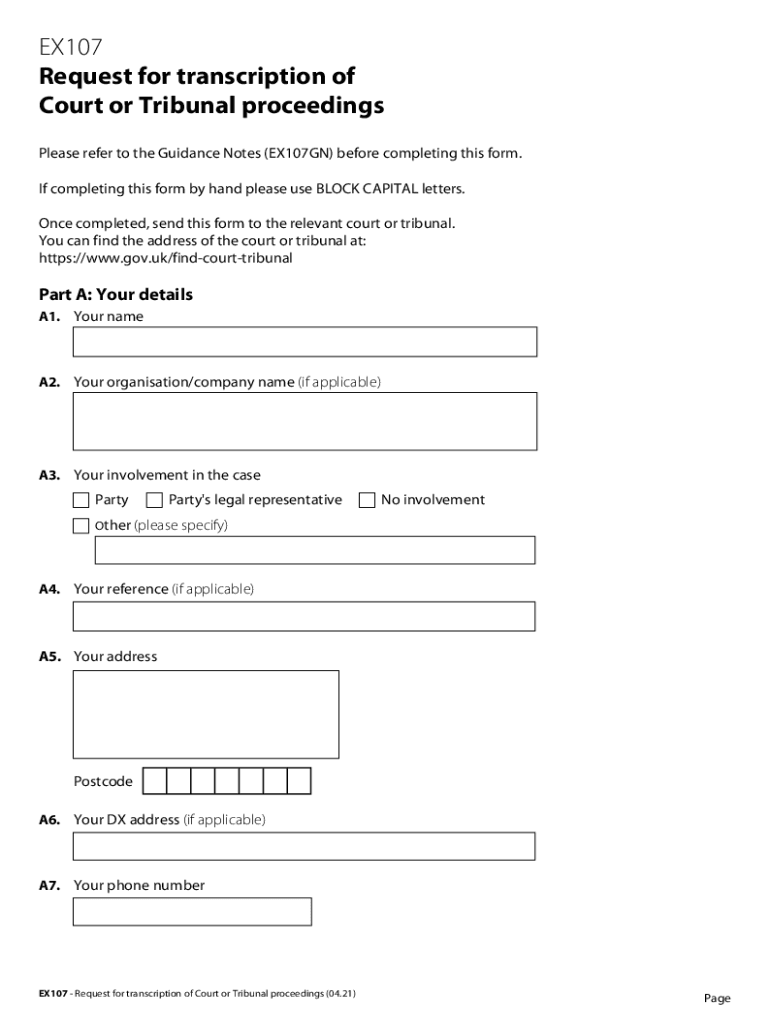
The Fillable EX107 Request for Transcription of Court or Tribunal Proceedings is a legal document used to formally request the transcription of recorded court or tribunal sessions. This form ensures that all procedural and legal requirements are met when obtaining a transcript, preserving the integrity and accuracy of the documented proceedings. It is crucial in maintaining an accurate record for appeals, legal reviews, or personal reference.
How to Use the Fillable EX107 Request
To effectively use the Fillable EX107 Request, you must begin by obtaining the form from either the court's website or a relevant legal document provider. Once acquired, carefully fill out each section of the form according to the instructions provided. Accurate completion is essential to ensure that the request is processed efficiently by the court.
Key Sections to Complete
- Requester’s Details: Provide your full name, contact information, and any relevant identification numbers.
- Case Information: Include the case number, names of the parties involved, and the specific court or tribunal.
- Transcription Details: Specify which dates or sessions you need transcriptions for and any preferred transcription company.
Steps to Complete the Fillable EX107
Completing the Fillable EX107 Request involves several methodical steps to ensure accuracy and compliance with legal standards.
- Obtain the Form: Access the form from a court's official website or legal document portal.
- Fill in Personal and Case Details: Start with your personal information and move on to detailed case information.
- Specify Transcription Requirements: Clarify the specific parts of the session you need transcribed and any preferences for transcription companies.
- Outline Payment Options: Indicate your payment method for the transcription service and whether the cost is covered by public funds.
Who Typically Uses the Fillable EX107 Request?
The Fillable EX107 Request is commonly used by legal professionals, such as attorneys and paralegals, who require accurate transcriptions for case preparation or appeals. Additionally, individuals who have represented themselves in court, known as pro se litigants, might use this form to ensure they have a record of their proceedings. Transcription companies might also process these requests on behalf of their clients to facilitate timely document delivery.


Legal Use of the Fillable EX107 Request
Using this form is essential for legal professionals seeking to maintain procedural integrity. Incomplete or incorrect requests can be rejected, delaying the availability of necessary transcripts for legal processes. The EX107 form also helps ensure compliance with any reporting restrictions that may apply, protecting sensitive information from unauthorized disclosure.
Submission Methods for the EX107 Request
The Fillable EX107 Request can be submitted through various methods, depending on the preferences and capabilities of the issuing court. While some courts may allow electronic submission via email or an online portal, others may require physical copies to be mailed or delivered in person. It is critical to confirm the accepted submission method to avoid processing delays.
Important Terms Related to EX107
Understanding key terms is vital for the proper completion and use of the EX107.
- Transcript: A verbatim record of court or tribunal proceedings.
- Requester: The individual or entity making the transcription request.
- Reporting Restrictions: Legal limitations on the sharing and publication of court proceedings.
Eligibility Criteria for Using the EX107
Eligibility to request transcription using the EX107 may vary by jurisdiction. Generally, participants or legal representatives involved in the case are authorized to request transcripts. However, in certain situations, additional permissions or court orders might be necessary to obtain sensitive or restricted portions of the proceedings.

Key Elements of the Fillable EX107 Request
Important elements captured in the EX107 form include sections for detailed requester information, case identifiers, transcription specifics, and acknowledgment of any required payments or public coverage options. Proper attention to these elements ensures the request is processed without unnecessary challenges.




