




01. Edit your form online
Type text, add images, blackout confidential details, add comments, highlights and more.

Type text, add images, blackout confidential details, add comments, highlights and more.

Draw your signature, type it, upload its image, or use your mobile device as a signature pad.

Send it via email, link, or fax. You can also download it, export it or print it out.
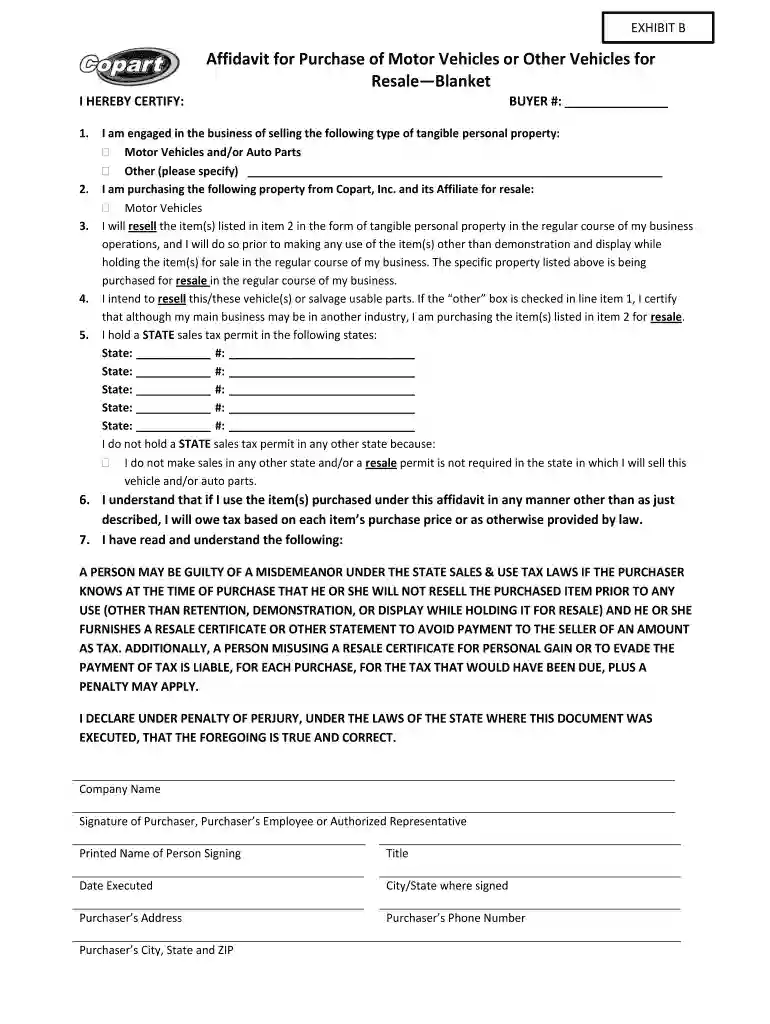
An affidavit for the purchase of motor vehicles or other vehicles is a sworn document affirming the buyer's intent to acquire vehicles for the purpose of resale. It serves as a formal declaration that the vehicles will not be used for personal use but will be held as inventory. This affidavit is a crucial component in regulatory compliance for businesses engaged in the trade of motor vehicles or auto parts. By providing this document, the buyer certifies their status as a reseller and confirms adherence to sales tax regulations pertinent to vehicle transactions.
Using this affidavit involves understanding its requirements and filling it out accurately. Upon purchasing a vehicle intended for resale, the buyer must:
Completing this affidavit requires precision and attention to detail. Follow these steps to ensure accuracy:
The primary users of this affidavit are automotive businesses and retailers involved in the sale of motor vehicles. This includes:
These entities utilize the affidavit to differentiate between regular vehicle purchases and those intended strictly for business inventory.


An affidavit of this nature comprises several critical components:
Regulations for using this affidavit can vary significantly from state to state:
Compliance with local requirements is essential, necessitating businesses to verify state-specific instructions before proceeding.
This affidavit functions within a legal context primarily for tax purposes. It helps establish the buyer's right to claim resale exemptions from sales tax and ensures legal compliance when acquiring inventory. Misuse of the form, such as false declarations, can result in legal consequences, including fines and legal action from tax authorities. It is paramount to ensure that every detail in the affidavit is truthful and accurate, reflecting legitimate business practices.
Non-compliance with rules related to the affidavit can lead to various penalties:
Understanding these penalties underscores the importance of proper completion and use of this affidavit to maintain the integrity of business practices and avoid legal issues.
We've got more versions of the Affidavit for Purchase of Motor Vehicles or Other Vehicles form. Select the right Affidavit for Purchase of Motor Vehicles or Other Vehicles version from the list and start editing it straight away!
At DocHub, your data security is our priority. We follow HIPAA, SOC2, GDPR, and other standards, so you can work on your documents with confidence.
On the one hand, Taylor restricts his comparison vehicles to a select handful of SUVs and, on the other hand, Marais uses broad groups of SUVs and cars. Also,Read more
A. A seller of a motor vehicle shall furnish at the time of sale of a motor vehicle an affidavit that states to the best of the sellers knowledge whetherRead more


