






Definition and Meaning
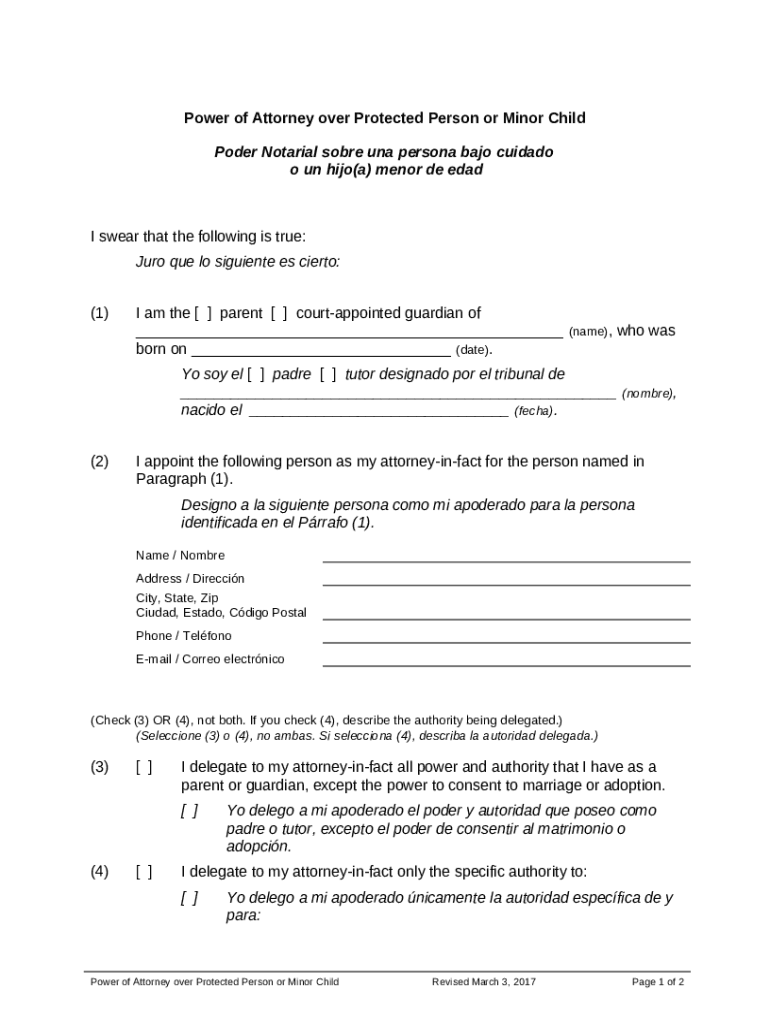
The "Poder Notarial sobre una persona bajo cuidado o un hijo(a) menor de edad" is a legal instrument allowing a parent or guardian to designate a trusted individual, known as the attorney-in-fact, to make decisions and take actions on behalf of a minor child or a protected person. This document grants specific or broad powers while setting limitations on actions such as consent to marriage or adoption. Its purpose is to ensure the interests of those who are not legally able to make decisions for themselves are safeguarded by an appointed representative.
How to Use the Poder Notarial
This form is utilized by parents or guardians who need to authorize someone else to make decisions for their minor children or wards in their absence. Common scenarios include a parent traveling abroad or being unavailable due to long-term illness. The designated attorney-in-fact can manage healthcare decisions, education-related matters, and other legal responsibilities specified in the document. Proper understanding of the scope of authority and the limitations set by the principal is crucial for the attorney-in-fact to act appropriately.
Steps to Complete the Form
-
Identify the Parties: Clearly specify the principal (parent or guardian) and the attorney-in-fact (the appointed representative). Include full legal names and addresses to avoid ambiguity.
-
Define the Scope of Authority: Decide on general or specific powers you wish to grant, detailing each area of responsibility, such as medical or educational decisions.
-
Set Duration and Revocation Terms: Indicate how long the power of attorney will be valid, and outline how and when it can be revoked or amended.
-
Sign and Authenticate: Both the principal and a notary public must sign the document to validate it. This step often requires witnessing and a formal notarization process.
Legal Use of the Poder Notarial
Under U.S. law, a power of attorney must strictly comply with state legal standards. For minors or protected individuals, the document is used in various legal contexts, including medical emergencies or educational matters. It ensures decisions are made in the ward's or child's best interest by a trusted proxy. It is essential for the attorney-in-fact to fully comprehend the legal responsibilities to avoid any liabilities or breaches of trust, ensuring adherence to the given directives.
Important Terms Related to the Form
- Principal: The individual who grants authority.
- Attorney-in-Fact: The person authorized to act on behalf of the principal.
- Scope of Authority: Defines which powers are granted or limited.
- Revocation: Termination of the power of attorney, either automatically after a term or voluntarily by the principal.
State-Specific Rules
Rules governing the power of attorney forms can vary by state. Some states might require additional documentation, specific wording, or procedures to ensure validity. It is recommended to consult state guidelines or legal counsel to adapt the form to meet all jurisdictional requirements, ensuring it complies with local laws and provides adequate legal protection.
Examples of Using the Form
Examples include a parent who will be abroad for an extended period granting authority to a relative to make school-related decisions for their child. Another scenario might involve a court-appointed guardian allowing a caregiver to authorize medical treatments for a disabled ward during times when the guardian is unavailable.
Who Typically Uses the Form
This form is primarily used by parents and legal guardians of minor children or individuals under protective care. It suits scenarios where temporary delegation of authority is required, such as extended travel, incapacitation, or military service. Guardians who foresee periods of unavailability also frequently employ this document to ensure continuity in care and decision-making for their charges.


Key Elements of the Form
- Identification: Clear details on all involved parties.
- Powers Granted: Specific actions authorized by the principal.
- Effective Dates: Start and expiry of the document's validity.
- Revocation Clause: Conditions under which the document is voided.
- Notarization: Formal authentication by a notary public to confirm its legality.
Eligibility Criteria
Eligible parties include legal guardians or parents of minors, or those responsible for individuals who cannot manage their affairs. The appointed attorney-in-fact must be a responsible adult capable of making decisions aligning with the best interests of the minor or ward. It is crucial to carefully select an individual who exhibits integrity and reliability.