




01. Edit your alberta bill of sale online
Type text, add images, blackout confidential details, add comments, highlights and more.

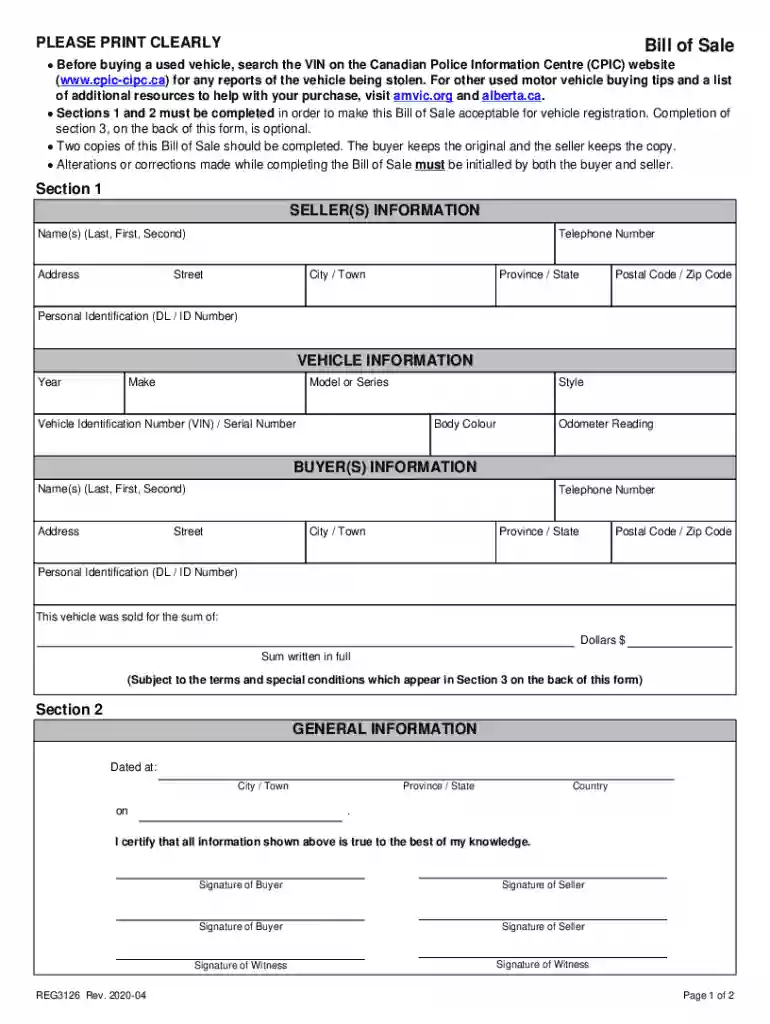
Type text, add images, blackout confidential details, add comments, highlights and more.

Draw your signature, type it, upload its image, or use your mobile device as a signature pad.

Send bill of sale alberta via email, link, or fax. You can also download it, export it or print it out.
A bill of sale in Alberta is a legal document used to transfer ownership of personal property from a seller to a buyer. This document serves as a receipt and proof of the transaction, detailing information about the item being sold, the purchase price, and the details of both the seller and the buyer. It is particularly important in transactions involving vehicles, trailers, or other high-value items to ensure clarity and legality in the execution of the transfer.
The bill of sale can cover various types of transactions, including but not limited to vehicles, personal property, and mobile homes. It provides a secure means for both parties to protect their interests, clarifying the terms and conditions of the sale. In Alberta, specific requirements must be fulfilled to ensure that the bill of sale is effective and legally binding.
Completing a bill of sale in Alberta involves several steps to ensure that all necessary information is accurately captured. The process can vary slightly depending on the type of property being sold, but the core elements remain consistent:
Gather Required Information:
Determine the Purchase Price:
Date and Signatures:
Provide Additional Documentation:
Optional: Witness Signature:
Several key elements should be included in a bill of sale to ensure it is comprehensive and legally binding:
The bill of sale is not just a formality; it serves distinct legal purposes in Alberta. First and foremost, it legally documents the transfer of ownership from one party to another. This is vital for protecting both the seller and the buyer in case of disputes regarding the transaction.
In Alberta, a bill of sale can also be used for various legal purposes, including:
For purchases that involve vehicles, it is essential to ensure that the document complies with Alberta's Transportation regulations to facilitate the vehicle registration process without complications.
There are several scenarios where a bill of sale is commonly used in Alberta, illustrating its practical application:
Selling a Vehicle: A seller completes an Alberta vehicle bill of sale to transfer ownership of a car to the buyer, ensuring both parties have recorded their agreement. The seller includes the VIN, make, model, and year, along with the agreed sale price.
Selling a Trailer: Similar to vehicles, the sale of trailers requires a bill of sale. The seller outlines specifics, including the trailer registration number and condition.
Personal Property Sales: For general personal property sales, such as furniture or electronics, using a bill of sale can help document the transaction. It ensures clarity regarding what was sold, the terms agreed upon, and the rights of ownership transferred.
In each case, the bill of sale acts as proof of transaction and provides legal backing for future claims related to ownership or transaction disputes.
We've got more versions of the alberta bill of sale form. Select the right alberta bill of sale version from the list and start editing it straight away!
At DocHub, your data security is our priority. We follow HIPAA, SOC2, GDPR, and other standards, so you can work on your documents with confidence.




Alberta Bill Of Sale Navigating Alberta Bill of Sale A DataDriven Guide to Secure. Transactions Albertas vibrant economy driven by energy agriculture and
by I Manual Please read also the following instruction manual (electronic version on PDF file). For further details refer to the installation guide.Read more


