
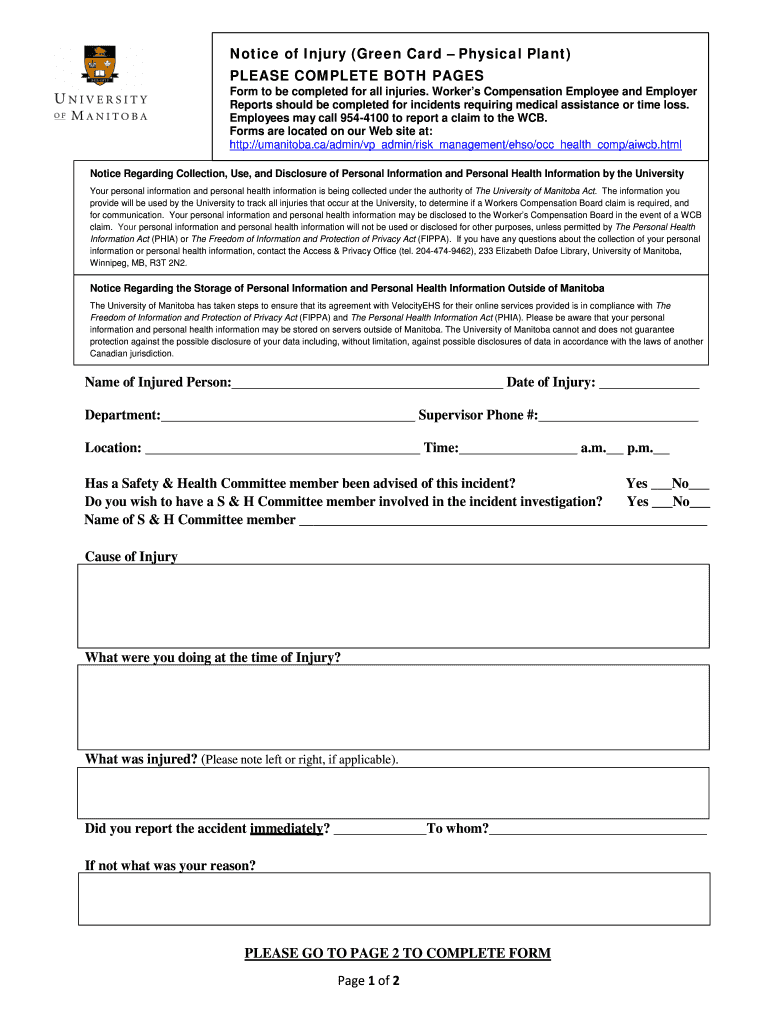







Definition and Meaning of Workers' Compensation Claim
A workers' compensation claim refers to a formal request made by an employee to receive benefits due to a work-related injury or illness. These claims are essential for ensuring that employees get proper medical treatment and financial support while recovering. In the United States, the process is regulated by state laws, and each state has its own specific rules and guidelines. Employers and employees need to understand their rights and responsibilities, including timely reporting and documentation.
Steps to Complete a Workers' Compensation Claim
- Report the Injury: Employees must inform their employer about the injury as soon as possible, often within a specific timeframe dictated by state law.
- Medical Treatment: Seek medical treatment immediately. Obtain documentation of the injury from a healthcare provider.
- Complete the Claim Form: Fill out the requisite claim form with accurate and comprehensive details about the incident.
- Submit the Form: The completed form must be submitted to the employer or the relevant workers’ compensation board, following state-specific submission processes.
- Follow-Up: Monitor the progress of the claim, responding to any requests for additional information.
- Appeal if Necessary: If denied, study the reasons and consider filing an appeal with assistance from a professional, such as an attorney specialized in workers' compensation.
Key Elements of a Workers' Compensation Claim Form
- Employee Information: Full name, contact details, and employment information.
- Incident Details: Date, time, location, and description of the incident causing injury.
- Medical Details: Description of injuries and medical treatment received.
- Witness Information: Details of any witnesses to the incident.
- Employer Section: Employer's acknowledgment and additional information required by state law.
Legal Use of the Workers' Compensation Claim
Workers' compensation systems are designed to provide a legal framework for compensating employees injured in the course of their employment. They offer protection for both employees and employers, with the latter often being required to carry insurance to cover potential claims. Using the provided documentation appropriately ensures legal compliance and just compensation, and prevents potential legal disputes.
Who Typically Uses the Workers' Compensation Claim Form
The form is primarily used by employees who have suffered work-related injuries or illnesses. However, employers, insurance companies, legal representatives, and the state’s workers’ compensation board also engage with the form as part of their roles in processing and adjudicating claims.


State-Specific Rules for Workers' Compensation Claims
Different states have unique rules regarding how workers' compensation claims are administered. For instance, timelines for reporting an injury, requirements for choosing medical providers, and specifics about the benefits provided can vary widely. Employers and employees should familiarize themselves with their state’s regulations to avoid pitfalls in the claims process.
Required Documents for Filing a Workers' Compensation Claim
- Medical Records: Documentation from healthcare providers detailing the injury and treatment.
- Employment Records: Proof of employment and statements regarding the incident.
- Incident Reports: Any documentation prepared at the workplace related to the incident.
- Witness Statements: Accounts from individuals present during the incident.
- Employer Documentation: Verification and acknowledgment from the employer regarding the claim.
Examples of Using the Workers' Compensation Claim Form
Consider the case of an assembly line worker who experiences a repetitive strain injury. They would need to promptly inform their employer, seek medical evaluation, and ensure the medical provider documents the work-related nature of the injury. The worker would then fill out the compensation claim form with details about the injury and submit it to the appropriate authority for processing.
In another example, a warehouse employee sustains an injury from a falling object. They report the incident immediately, obtain a medical report, and fill out the claim form to ensure their medical expenses and any lost wages are covered under the workers' compensation benefits provided by their state laws.




