
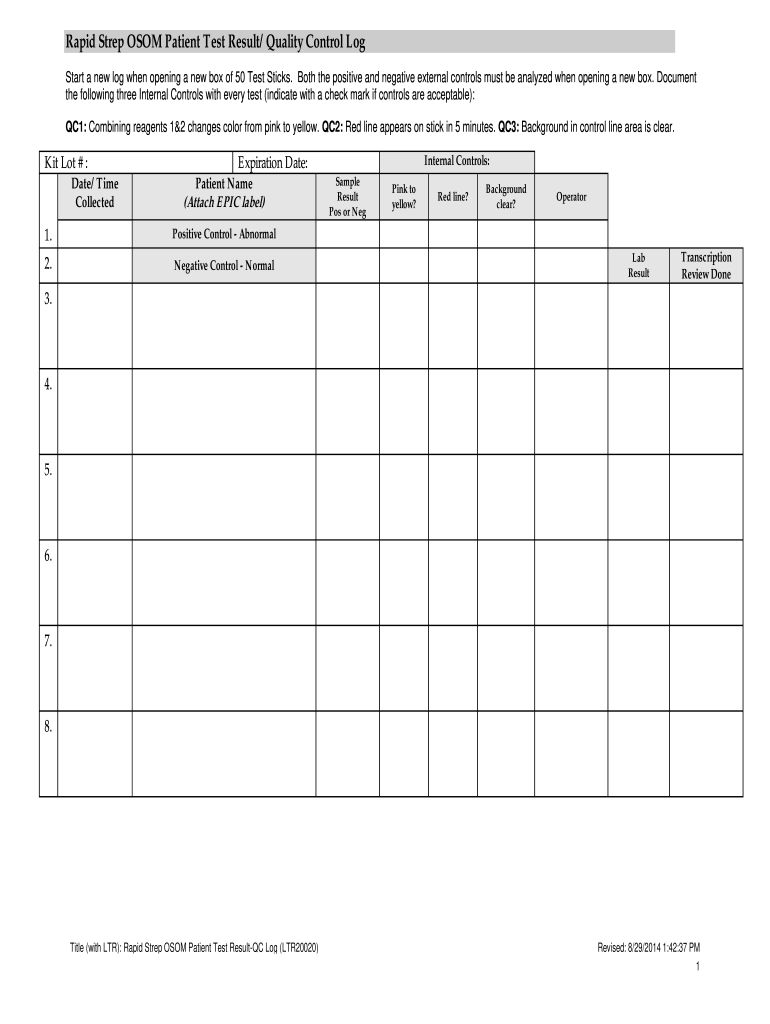







Definition & Meaning of Printable Controls for Strep Testing
Printable controls for strep testing refer to standardized documents or templates utilized to ensure quality control when performing strep throat tests. These controls are essential for healthcare providers to record test results accurately and maintain compliance with medical testing protocols. The printable controls serve as benchmarks against which the performance of rapid strep tests can be evaluated. They may include sections for entering patient information, documenting control results, and verifying test accuracy according to established guidelines.
These controls are designed to help healthcare professionals establish both internal and external quality assurance measures. A well-structured quality control log can enhance test reliability, ensuring that any strep testing is performed correctly and that the results are valid. By using printable controls, medical staff can adhere to best practices, thereby supporting patient safety and effective diagnosis of streptococcal infections.
How to Use the Printable Controls for Strep Testing
Utilizing printable controls for strep testing involves several key steps to ensure accurate results and proper documentation. Here are the main points to consider:
-
Prepare Your Materials: Before beginning any strep test, ensure you have your printable control log readily available. This log should be printed for each testing session.
-
Record Patient Information: Document essential details about the patient, such as their name, date of birth, and any relevant medical history. This background information is important for evaluating test results.
-
Perform the Strep Test: Conduct the rapid strep test following the manufacturer’s instructions precisely. This may involve swabbing a throat sample and mixing it with reagents.
-
Document Control Results: After completing the test, enter the results into the printable control log. Include both the test results for the patient and any control results specified by the log. This helps to verify the accuracy of the test performed.
-
Review for Accuracy: Double-check all entries for validity. Ensure that control results align with expected values, as these figures help uphold the integrity of the testing process.
-
Sign and Date the Log: Finally, sign and date the control log to confirm that you have completed the testing and documentation correctly. This ensures accountability and traceability in future assessments.
By following these steps meticulously, healthcare providers can maintain a standard of excellence in strep testing and uphold patient care protocols.
How to Obtain the Printable Controls for Strep Testing
Acquiring printable controls for strep testing can be straightforward, given the increasing availability of resources in digital formats. Here are several approaches to obtain these controls:
-
Healthcare Suppliers: Many medical supply companies provide printable control documents as part of their product offerings. Check with your suppliers to see if they offer specific controls tailored to the rapid strep testing kits you use.
-
Online Resources: Numerous websites dedicated to healthcare education and resources may offer free downloadable templates for strep testing controls. Ensure that these documents adhere to regulatory standards when using them.
-
Professional Organizations: Organizations such as the American Academy of Pediatrics or the American College of Pathologists may publish guidelines that include printable controls for strep tests. These resources may foster compliance with best practices.
-
Collaboration with Laboratories: Your facility can request control logs directly from laboratories that perform strep testing. These logs are often designed to comply with specific testing standards.
-
Customized Templates: If generic templates do not meet your needs, consider creating your own printable controls. Utilizing standard formatting and including necessary fields will help ensure adherence to relevant guidelines.
Having access to appropriate printable controls is vital for maintaining accurate records and meeting testing standards.
Steps to Complete the Printable Controls for Strep Testing
Completing the printable controls for strep testing involves systematically filling out the necessary documentation during and after testing. Here's a structured overview of the steps:
-
Initialization: At the start of each testing session, fill in fields such as the date and time of testing.
-
Collect Patient Information: Gather and enter the patient’s details, including name, age, and contact information. This is crucial for any follow-up regarding test results.
-
Testing Procedure: Conduct the rapid strep test according to the manufacturer's protocols. It's important to follow the steps carefully to ensure result reliability.
-
Log Control Results: Immediately after obtaining test results, note them in the control log. Include a section for control lot numbers, expiration dates, and any abnormalities observed during testing.
-
Quality Review: After recording, review the completed control log for completeness and accuracy. An oversight could lead to incorrect interpretations or diagnosis.
-
Sign-Off: The healthcare professional performing the test should sign and date the control log. This signifies that the information captured reflects the actual session conducted.
-
Archiving: Store completed control logs securely according to your facility's guidelines for record retention. This will assist in future audits and compliance checks.
By following these steps, healthcare professionals can ensure that their testing aligns with established protocols and maintains high standards of patient care.
Key Elements of the Printable Controls for Strep Testing
Understanding the key elements of the printable controls for strep testing is essential for effective implementation and documentation. Here are the important components to include:
-
Patient Information: Include identifiable fields for the patient’s name, date of birth, medical record number, and any other relevant details.
-
Test Information: Document specifics about the type of strep test performed. Various options exist, including antigen detection tests and culture methods.
-
Control Results Section: This portion should allow space for entering control lot numbers, timestamps of when controls were tested, and interpretation of those results against expected benchmarks.
-
User Information: Make provisions for the name or initials of the healthcare professional who conducted the testing, which ensures accountability.
-
Quality Control Measures: Include prompts or checkboxes to confirm that quality control procedures have been followed according to manufacturer guidelines.
-
Additional Notes: Create a section for any additional observations, anomalies, or follow-up actions required based on test results.
Incorporating these key elements into your printable controls will ensure comprehensive and accurate testing procedures in strep testing scenarios.
Examples of Using the Printable Controls for Strep Testing
Utilizing printable controls for strep testing can take various forms depending on the clinical environment. Here are practical examples that demonstrate their application:
-
Routine Testing in a Clinic: In a pediatric clinic, every time a child presents with symptoms consistent with strep throat, a healthcare professional follows the established protocol. They use the printable control log to record patient details and results, ensuring that testing quality is maintained.
-
Quality Assurance Audits: A hospital laboratory may regularly review its practices and results. By collecting completed control logs over time, management can analyze trends in accuracy and identify areas requiring further training or adjustment.
-
Research Settings: In academic studies on the efficacy of rapid strep tests, researchers could gather numerous control logs from varied testing environments. By analyzing this data, they can draw conclusions about the test performance across demographics.
-
Legal Compliance: A healthcare provider facing scrutiny due to a patient complaint can reference their printable controls to demonstrate adherence to testing protocols, safeguarding them against potential liabilities.
These examples illustrate how printable controls can function as critical tools for enhancing test reliability and ensuring compliance across varied healthcare contexts.




