
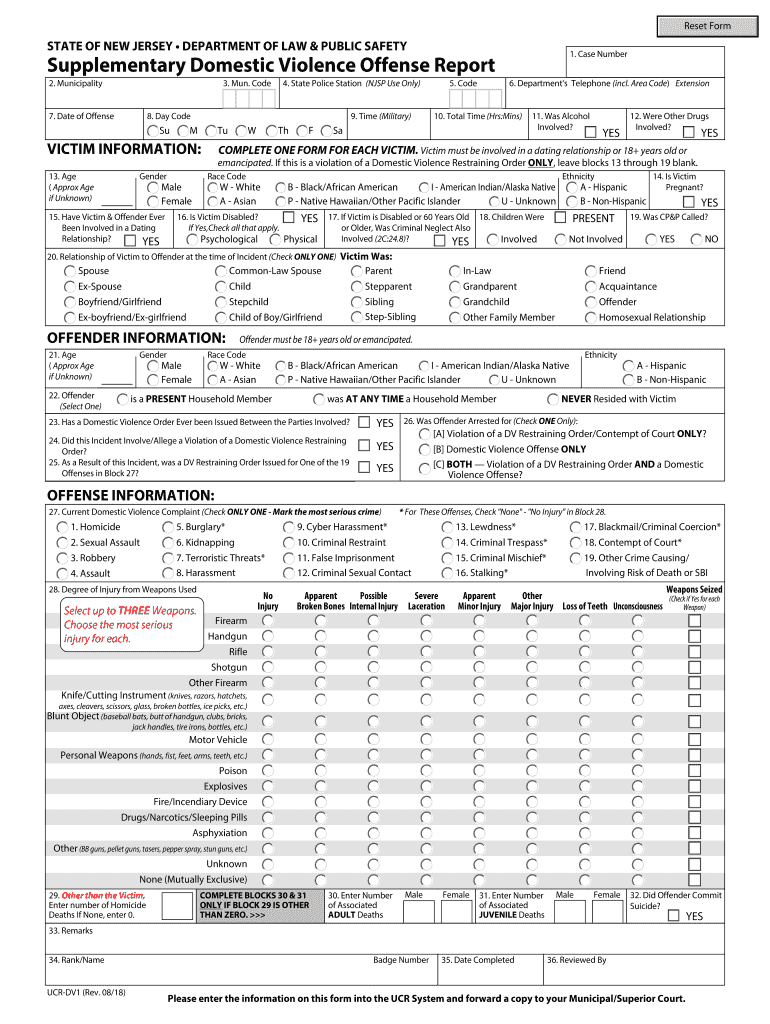







Definition and Meaning of the UCR Domestic Violence Form
The Uniform Crime Reporting (UCR) Domestic Violence Form is a standardized form used to document incidents related to domestic violence. Maintained by law enforcement agencies nationwide, this form captures essential details regarding each domestic violence occurrence. It includes data about the victim and offender, the nature of the offense, and any contributing factors, such as the involvement of alcohol or drugs. This form is integral to the national effort to collect consistent and reliable crime statistics for analysis and policy-making.
How to Use the UCR Domestic Violence Form
The use of the UCR Domestic Violence Form involves accurately capturing data related to specific incidents of domestic violence. This process entails detailing relevant personal information about the individuals involved, including names, ages, and relationships. Officers must describe the nature of the incident, specifying the type of violence, whether physical, emotional, or psychological. Additionally, the form requires information about the time, location, and any witnesses present during the event. Officers need to ensure all sections of the form are completed to maintain the integrity of the data collected.
Steps to Complete the UCR Domestic Violence Form
- Record Basic Information: Start by filling out the date, location, and time of the incident. Clearly state the names, ages, and genders of both the victim and the alleged offender.
- Detail the Offense: Describe the type of domestic violence, whether physical assault, harassment, or threats, and note any weapons involved.
- Document Circumstances: Include any relevant information about prior disputes, if known, and substance use by either party during the incident.
- Identify Witnesses: List any individuals who witnessed the incident, along with their contact information for follow-up if necessary.
- Submit the Form: Ensure that the form is signed and submitted promptly, following the local department's protocol for filing.
Key Elements of the UCR Domestic Violence Form
- Incident Details: Date, time, and precise location of the violence.
- Personnel Data: Information about all involved parties, including victims, offenders, and witnesses.
- Nature of Offense: Specific description of the violence or threats involved.
- Contributing Factors: Any substances like drugs or alcohol that may have been used.
- Follow-up Actions: Notes on any protective actions taken or suggested, such as restraining orders.
Who Typically Uses the UCR Domestic Violence Form
The primary users of the UCR Domestic Violence Form include law enforcement officers who respond to domestic violence calls. They utilize this form to systematically record and report incident data. Additionally, legal professionals and researchers may use the aggregated data from these forms to analyze trends in domestic violence, which assists in policy formation and intervention strategies. Social service providers might also refer to this form to understand better the experiences of victims and offer tailored support services.


Legal Use of the UCR Domestic Violence Form
The UCR Domestic Violence Form serves as an essential legal document, ensuring that all domestic violence incidents are officially recorded. This documentation can be critical in legal proceedings, as it provides an evidence-based account of the incident. The form supports the enforcement of laws related to domestic violence, including the issuance of protective orders and the prosecution of offenders. Moreover, by maintaining these records, law enforcement agencies can identify patterns and provide targeted intervention.
State-Specific Rules for the UCR Domestic Violence Form
While the UCR Domestic Violence Form follows a national standard, states may implement specific rules or additional fields based on local legal requirements. These variations could include state-specific definitions of domestic violence, unique reporting timelines, or additional data points required by state law. Therefore, law enforcement officers must be aware of their state’s specific guidelines when completing the form to ensure compliance and accuracy.
Examples of Using the UCR Domestic Violence Form
Consider a situation where a police officer responds to a domestic disturbance call. Upon arrival, the officer observes visible injuries and interviews both parties involved. Utilizing the UCR Domestic Violence Form, the officer records detailed accounts from the victim and suspect, notes any evidence of substance use, and lists witnesses. This comprehensive documentation aids in the subsequent judicial process and supports the needs assessment for victim assistance programs.
Form Submission Methods and Requirements
The UCR Domestic Violence Form is submitted following local law enforcement agency protocols. While many agencies offer options for electronic submission through secure databases, some may still use paper forms. Regardless of the method, ensuring data security and confidentiality is paramount. Agencies must provide training on the correct submission procedures, guaranteeing that all reported information contributes to the accurate national crime statistics necessary for effective policing and policy-making.




