Definition and Meaning
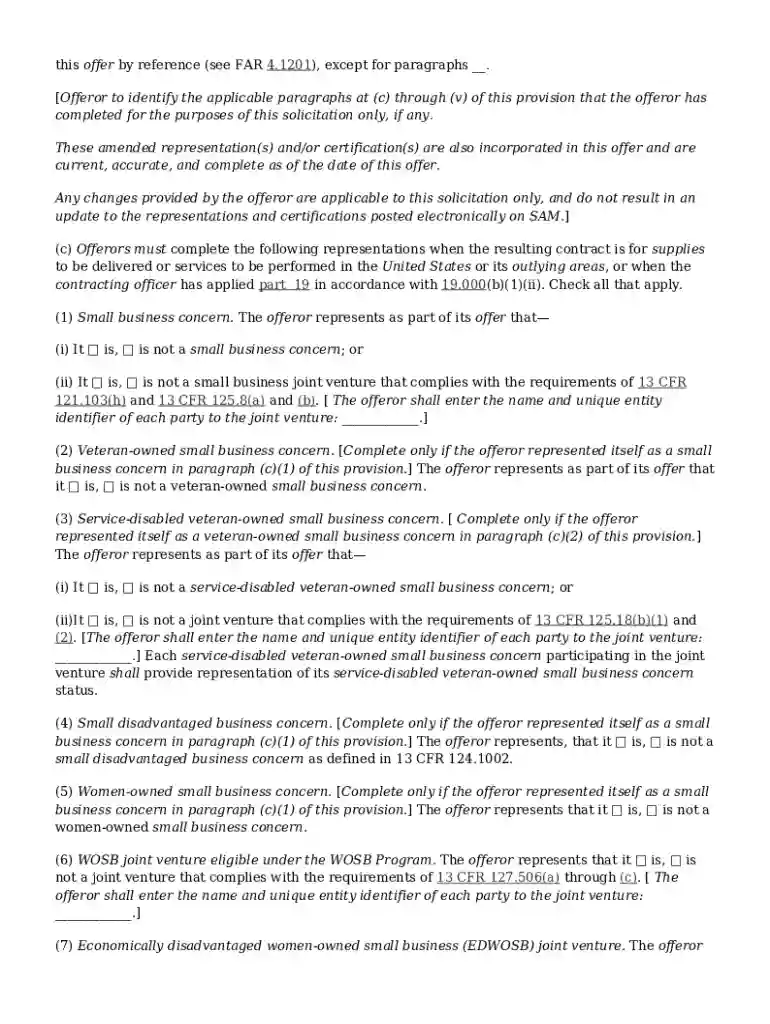
Solicitation provisions and contract clauses are essential components of government procurement processes in the United States. They outline the specific terms and conditions applicable to a government contract. These clauses and provisions ensure that both the government and the contractor understand their obligations, rights, and the regulatory framework governing the contract. The document serves as a legal foundation, specifying the performance requirements, deliverables, and compliance with federal regulations. Understanding these clauses is critical for contractors who wish to engage in government projects, as they provide the structured guidelines necessary for legal and operational compliance.
Key Elements of Solicitation Provisions and Contract Clauses
The document typically includes several critical elements that contractors must adhere to:
- Definitions and Conditions: Explains key terms used in the contract, such as what constitutes acceptable performance and delivery standards. This section sets the stage by clarifying terminologies to avoid future disputes.
- Performance Requirements: Details what is expected from the contractor in terms of quality, scope, and deadline of deliverables.
- Compliance Obligations: Outlines necessary adherence to federal guidelines, such as labor laws, environmental regulations, and non-discrimination policies.
- Payment and Compensation Details: Specifies how and when the contractor will be compensated for their services or products.
- Modification and Termination Clauses: Describes the conditions under which the contract may be modified or terminated by either party, including breach of contract scenarios.
Important Terms Related to Solicitation Provisions and Contract Clauses
Familiarity with specific terms is essential for contractors working with solicitation provisions:
- RFP (Request for Proposal): A document issued by an agency inviting proposals from potential contractors.
- SAM (System for Award Management): A system where entities must register to be eligible for government contracts.
- Compliance Clauses: Reflect obligations regarding adherence to relevant laws and regulations.
- Liquidated Damages: Predetermined damages specified in the contract for any delays or failures in performance.
How to Use Solicitation Provisions and Contract Clauses
Navigating these provisions effectively requires careful review and understanding of each clause:
- Read Thoroughly: Analyze each provision to comprehend its implications on the contract execution.
- Consult Experts: Engage with legal experts specializing in government contracts to interpret complex clauses.
- Align Operations: Ensure that internal processes and procedures comply with the specified requirements and obligations within the document.
- Prepare Responses: Draft proposals or responses in accordance with the solicitation provisions, ensuring complete alignment with stated requirements.
Who Typically Uses Solicitation Provisions and Contract Clauses
Several entities frequently engage with these provisions:
- Government Agencies: Issue these documents to solicit bids for products or services.
- Contractors and Vendors: Respond to these solicitations by demonstrating their qualifications and compliance capabilities.
- Legal Advisors: Assist in navigating the complexity of the provisions to minimize risk and ensure adherence.
- Procurement Specialists: Facilitate the process from solicitation to contract award, ensuring compliance throughout.
Steps to Complete the Solicitation Provisions and Contract Clauses
Completing the requirements involves multiple sequential steps:
- Register in SAM: Ensure your business is registered in the System for Award Management.
- Review Solicitation Document: Study the solicitation carefully, identifying mandatory clauses and conditions.
- Prepare Documentation: Gather necessary certifications, compliance documents, and financial records outlined in the provisions.
- Draft Proposal or Bid: Develop a comprehensive response or bid aligning with solicitation requirements.
- Submit Proposal: Follow the specified method of submission—online, mail, or in-person—and adhere to stated deadlines.
Legal Use of the Solicitation Provisions and Contract Clauses
Certain legal implications must be considered:
- Contractual Binding: Once a contract is formed based on these provisions, it becomes a legally binding document.
- Dispute Resolution: Provisions often include arbitration or mediation clauses in event of a dispute, outlining the process and jurisdiction.
- Liability and Indemnification: Specifies liabilities and indemnification clauses protecting the interests of both parties.
Examples of Using Solicitation Provisions and Contract Clauses
Practical examples can provide clarity:
- Case Study 1: A small business uses solicitation clauses to understand payment timelines, ensuring they budget operations effectively.
- Case Study 2: A veteran-owned enterprise leverages preference-related clauses to gain competitive advantage during the proposal development phase.
- Case Study 3: A supplier adjusts their compliance procedures as per the contractual provisions to avoid penalties and secure continued partnerships.
These structured insights into solicitation provisions and contract clauses offer essential guidance for entities engaging within the government contracting ecosystem, ensuring proper readiness and compliance.