







Definition & Meaning
The Virginia State Corporation Commission (SCC) is a regulatory authority in Virginia responsible for overseeing a variety of state-regulated sectors, including business registration and operation. Established to regulate economic activity and protect the public, the SCC handles the registration of business entities such as corporations, limited liability companies (LLCs), partnerships, and cooperatives. It ensures these entities comply with state laws and maintain transparency in their operations.
Different business structures, including for-profit, non-profit, and professional organizations, utilize the SCC for registration, compliance, and reporting of business activities. Companies registering in Virginia are required to adhere to certain regulations and submit documentation to the SCC. Understanding the function and authority of the SCC is vital for smooth business operation within the state, as it impacts a variety of business processes like formation, dissolution, and changes to business structure.
How to Use the VA State Corporation Commission
Using the Virginia State Corporation Commission involves several key steps to register and manage business entities within the state. Initially, prospective business owners choose the type of business structure that best suits their needs, such as a corporation, LLC, or partnership. Then, they must check the availability of their desired business name using the SCC's name search tool.
-
Business Entity Registration:
- Use the SCC's online system, known as the Clerk's Information System (CIS), to submit formation documents.
- Pay the required filing fees, which vary depending on the entity type.
- Obtain a Certificate of Authority if you are an out-of-state business looking to operate in Virginia.
-
Ongoing Compliance:
- File annual reports to maintain entity status and keep information up-to-date.
- Pay annual registration fees.
-
Business Amendments:
- Submit changes to business structure or information via the CIS to avoid penalties.
-
Dissolution Procedures:
- Follow the legally prescribed process for dissolving a business entity in Virginia.
Steps to Complete the VA State Corporation Commission Forms
Filing forms with the SCC can be accomplished through the CIS platform, allowing for seamless submission and tracking of documents. The following outlines the general process:
-
Create an Online Account:
- Register on the CIS platform for access to electronic filing services.
-
Access the Required Forms:
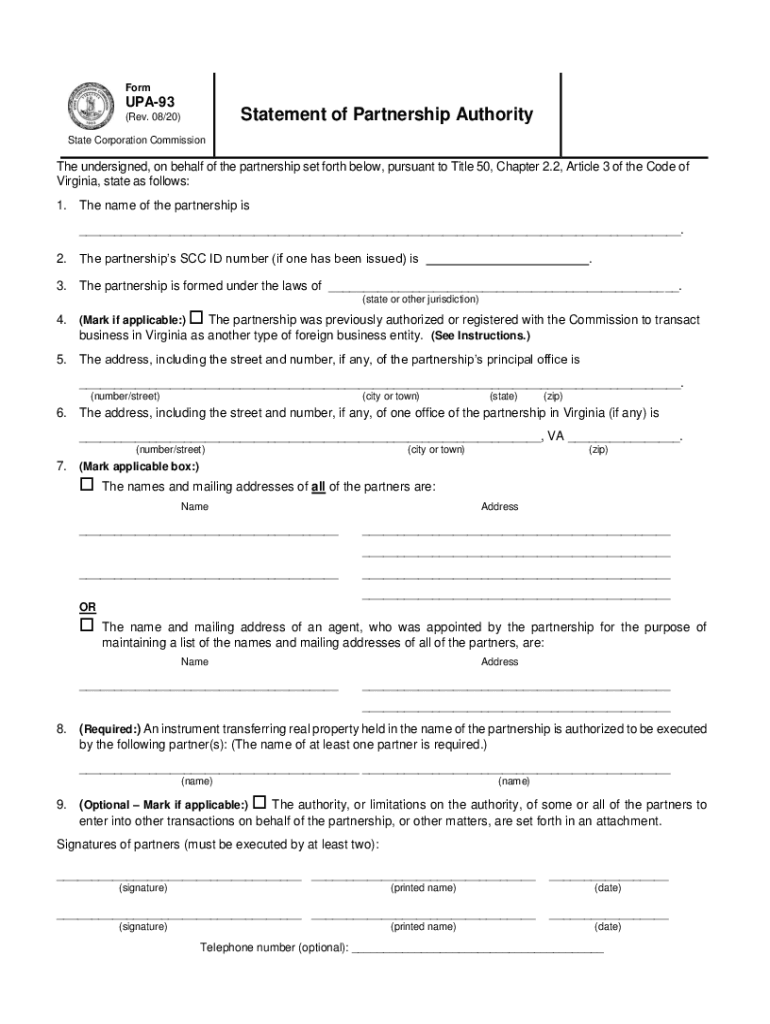
- Locate and fill out the appropriate form for your business needs, such as Articles of Incorporation or Statement of Partnership Authority.
-
Provide Accurate Information:
- Complete the forms with precise details about your business, including owners, managers, and registered agents.
-
Submit the Forms:
- Use the online system to submit forms electronically, or opt for mail submission if preferred.
-
Payment of Fees:
- Make payments for any associated filing fees through the CIS.
-
Receive Confirmation:
- Await confirmation and processing of your application, which is typically sent electronically.
Important Terms Related to VA State Corporation Commission
Understanding specific terms related to the SCC is crucial for effective navigation of its processes:
- Registered Agent: An individual or business entity designated to receive legal documents on behalf of the business.
- Articles of Organization/Incorporation: Formal documents required to legally recognize a business entity.
- Annual Report: A yearly filing that updates the state on business activities and information.
- Entity ID Number: A unique identifier assigned to each registered business by the SCC.
- Certificate of Good Standing: A certificate that verifies compliance with the requirements and authorizes the entity to conduct business.
These terms form the backbone of interactions and compliance with the SCC, aiding business owners in maintaining operational legitimacy.
Legal Use of the VA State Corporation Commission
The SCC provides the legal framework necessary for businesses to operate within Virginia, ensuring compliance with state and federal regulations. The SCC's legal authority extends to:
- Regulating Business Affairs: Both formation and ongoing operations of businesses, promoting fair trade practices.
- Mediating Disputes: Providing a platform for resolving disputes between business entities and their customers or among partners.
- Insurance Oversight: Monitoring and approving insurance policies and practices within the state.
Businesses working with the SCC must legally comply with all directives to maintain good standing and avoid legal challenges.
Filing Deadlines / Important Dates
Staying aware of filing deadlines is crucial to avoid penalties and ensure continued legality of business operations:
- Annual Report Filing: Typically due on the last day of the anniversary month of business formation.
- Franchise Tax Deadline: Payment due in the month of May each year.
- Renewal of Registration: Required for foreign entities authorized to operate in Virginia, typically on a yearly basis.
Failure to meet these deadlines can result in fines, penalties, or even revocation of business licenses. Therefore, businesses should establish robust systems for tracking and managing these important dates effectively.
Required Documents
The documentation required for proceedings related to the SCC primarily depends on the type of business entity and transaction:
- Articles of Incorporation/Organization: For initial registration of corporations and LLCs.
- Partnership Agreement: Required for partnerships and limited partnerships.
- Certificate of Good Standing: Often requested by financial institutions when applying for credit or opening business accounts.
These documents must be accurate, complete, and duly authenticated to ensure smooth processing by the SCC.
Penalties for Non-Compliance
Non-compliance with SCC regulations can result in a range of penalties, from fines to severe legal actions:
- Late Filing Fees: Imposed for overdue filings of annual reports or other required documents.
- Dissolution of Business Entity: Repeated non-compliance can lead to administrative dissolution.
- Monetary Fines: Issued to penalize false information or deliberate neglect of regulatory mandates.
Businesses should ensure compliance to avoid such repercussions, as persistent negligence could significantly disrupt operations and harm reputation.




