



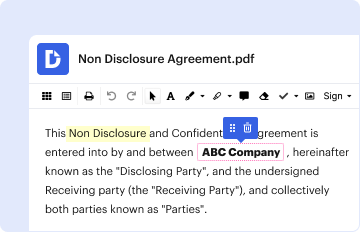
01. Edit your form online
Type text, add images, blackout confidential details, add comments, highlights and more.

Type text, add images, blackout confidential details, add comments, highlights and more.
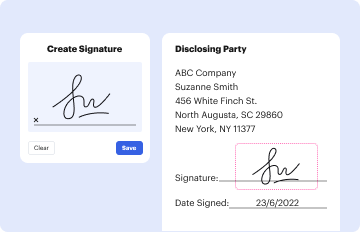
Draw your signature, type it, upload its image, or use your mobile device as a signature pad.
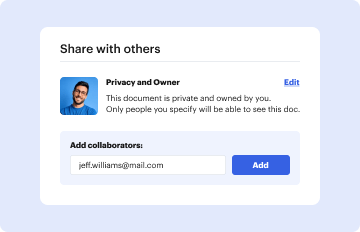
Send it via email, link, or fax. You can also download it, export it or print it out.
The "Authority for Release of Information - NSA" form is an official document utilized by the National Security Agency (NSA) as a mechanism to collect personal information. This form is particularly significant for those seeking access to NSA/CSS facilities. It authorizes the procurement of various records and personal data, including Social Security Numbers, to determine eligibility for secure facility clearance. This form emphasizes the voluntary nature of such disclosures while outlining the potential impact of non-compliance on access privileges. Understanding its purpose is crucial for individuals involved in processes requiring secure governmental facility access.
To effectively use the Authority for Release of Information - NSA form, individuals must ensure all requested sections are accurately completed. This involves providing detailed personal information, consenting to the release of records from stipulated sources, and acknowledging the rights and conditions stated in the form. Users typically use this document when undergoing background checks or security clearance processes. It is important to read all instructions carefully to ensure correct completion, thereby preventing delays in processing or access denials.
Completing each step carefully ensures the form is processed without issues, facilitating the necessary clearances for individuals.
Understanding the terminology associated with the form is essential:
Familiarity with these terms aids in comprehending the form's scope and requirements.
The Authority for Release of Information - NSA form is governed by specific legal frameworks which ensure that personal information is collected and used in compliance with federal laws. It is primarily utilized to authorize the NSA to gather personal information from various entities to assess suitability for facility access. Users must be made aware of their rights, the intended use of their information, and how it will be safeguarded. This transparency is mandated under the Privacy Act, emphasizing the form's legal integrity in protecting individual privacy.
Understanding these elements is vital to ensuring the form is used correctly and serves its intended purpose.
Consider a scenario where an applicant is seeking employment that requires access to NSA facilities. Prior to granting clearance, the NSA would require the individual to complete the Authority for Release of Information form, facilitating a comprehensive background check. This ensures that the individual meets security standards and can be trusted with sensitive information. This real-world application illustrates how the form operates in professional environments to maintain national security standards.
The Authority for Release of Information - NSA form is officially issued by the National Security Agency. This ensures that all administrative processes are aligned with federal security protocols and standards. The NSA, acting as a central point of administration, guarantees that the form and its processes follow strict security and privacy guidelines, providing a reliable framework for information collection pertinent to national security operations.
We've got more versions of the Authority for Release of Information - nsa form. Select the right Authority for Release of Information - nsa version from the list and start editing it straight away!
| Versions | Form popularity | Fillable & printable |
|---|---|---|
| 2011 | 4.8 Satisfied (196 Votes) |
With DocHub, it’s quite simple. The platform offers users an add-on called DocHub for Gmail, which you can locate in the Google Workspace Marketplace free of charge. Set it up and give it access to your Google account. Open your email with your Authority for Release of Information - nsa attached and click on the add-on button in the right-side panel. Log in to your DocHub account, and upload the file to our editor, where you can complete it and sign.
If you store your files in Google Drive, there is no need to download your Authority for Release of Information - nsa on the computer and upload it back to our editor. A significantly easier way is to set up a browser extension created by DocHub to streamline this flow. The extension allows editing PDFs in your browser. Alternatively, you may integrate your DocHub and Gmail accounts for more efficient modifying.
At DocHub, your data security is our priority. We follow HIPAA, SOC2, GDPR, and other standards, so you can work on your documents with confidence.
The Freedom of Information Act (FOIA) is a federal law that establishes the publics right to obtain information from federal government agencies.Read more
Security Guidelines. This handbook is designed to introduce you to some of the basic security principles and procedures with which all NSA employees mustRead more


