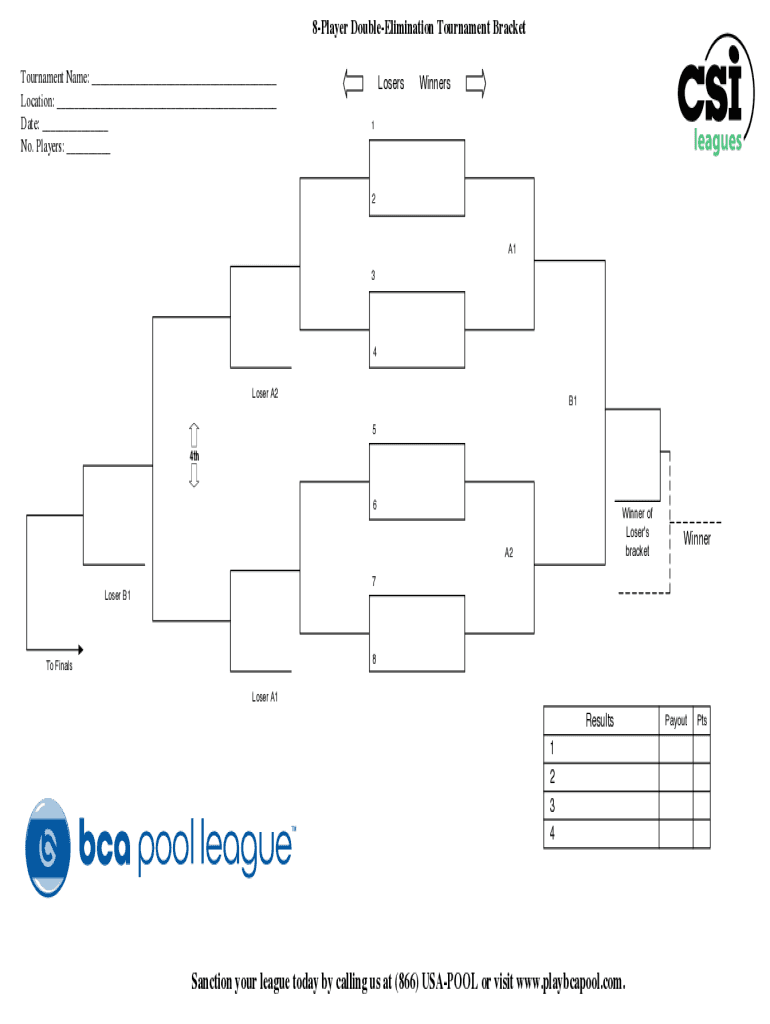







Definition & Meaning
A loser's bracket in a seeded double-elimination tournament refers to a secondary bracket designed for participants who lose in the main bracket. In a seeded system, teams or individuals are arranged based on their ranking or skill level, with higher seeds generally facing lower seeds in initial matches to ensure a balanced competition. The loser's bracket gives participants a second chance to compete for a spot in the finals, allowing them to advance even after an initial loss.
The primary purpose of constructing a loser's bracket is to provide a comprehensive competition structure where each participant has an opportunity to demonstrate their capabilities fully. This method not only enhances the competitive nature of the event but also ensures that a single loss does not eliminate competitors, thereby maintaining engagement and interest throughout the tournament.
How to Use the Constructing a Loser's Bracket in a Seeded Double
Using a loser's bracket in a seeded double-elimination tournament involves understanding the structure and flow of matches. Start by setting up the main bracket where seeded participants compete. Once a participant loses a match, they are moved to the loser's bracket, where they have the chance to advance by winning subsequent matches.
- Initial Setup: Arrange participants in the main bracket according to their seed. Higher-seeded participants face lower-seeded ones in the first round.
- Transfer to Loser's Bracket: After a participant loses in the main bracket, they move to the corresponding position in the loser's bracket.
- Advancement: Participants continue to compete in the loser's bracket, with winners moving forward and losers being eliminated from the tournament.
- Final Rounds: The winner of the loser's bracket typically faces the winner of the main bracket. Depending on the rules, the loser's bracket winner may need to beat the main bracket winner twice to claim the championship.
This structure promotes competitiveness and fairness, ensuring that skill and persistence are key factors in determining the tournament's overall winner.
Steps to Complete the Constructing a Loser's Bracket in a Seeded Double
Constructing a loser's bracket requires careful planning and understanding of participant seeding. Follow these steps to create a comprehensive and fair competitive environment:
- Seed Participants: Determine the ranking of participants based on performance, reputation, or previous results.
- Design the Main Bracket: Organize participants in a bracket where higher seeds face lower seeds.
- Create the Loser's Bracket: Design a parallel bracket to accommodate participants who lose in the main bracket.
- Establish Rules: Clearly outline rules and progression criteria for both brackets.
- Conduct Matches: Begin the tournament, updating the brackets as matches conclude.
- Monitor Progress: Ensure accurate and timely updates of both brackets to maintain clarity and transparency.
- Conclude with Finals: After determining winners in both brackets, organize the final to decide the overall champion.
These steps help manage a smooth and efficient tournament, providing a positive experience for both participants and organizers.
Key Elements of the Constructing a Loser's Bracket in a Seeded Double
Several key elements are essential to successfully constructing a loser's bracket in a seeded double-elimination tournament:
- Seeding: Accurate participant ranking is crucial for fairness and balance.
- Bracket Structure: Clear visualization of the main and loser's brackets facilitates understanding of progression.
- Match Scheduling: Well-organized match schedules prevent delays and enhance tournament flow.
- Rule Clarity: Detailed rules regarding match progression and bracket advancement are essential.
- Participant Communication: Ongoing communication ensures that all participants understand the tournament structure and rules.
- Scoring and Results: Accurate match result recording is vital for maintaining bracket integrity.
These elements ensure the tournament runs smoothly and maintains its competitive integrity.
Examples of Using the Constructing a Loser's Bracket in a Seeded Double
To better understand the practical application of a loser's bracket in a seeded double-elimination tournament, consider the following examples:
- Regional Esports Tournament: In a competitive multiplayer game tournament, teams are seeded based on previous performance, ensuring stronger teams don't face off early, preserving interest and balance.
- High School Wrestling Meet: Wrestlers are ranked according to skill and past results. Those who lose initial matches compete in the loser's bracket for a chance to redeem themselves.
- Local Tennis Club Competition: Players are seeded based on their league rankings. After a first-round loss, players continue in the loser's bracket, maintaining opportunities to compete.
Each example illustrates the versatility and fairness of incorporating a loser's bracket, making it a popular choice for various competitive events.
Software Compatibility
While constructing a loser's bracket might seem complex, software solutions can streamline this process:
- Tournament Management Software: Many platforms, such as Tournament Manager or Challonge, offer features to design and manage double-elimination brackets easily.
- Spreadsheet Tools: Applications like Microsoft Excel or Google Sheets can be used to create and update brackets manually, offering flexibility for customization.
- Sports Specific Platforms: Certain sports have dedicated tools that accommodate unique rules and structures, integrating seamlessly with other management systems.
Choosing the right software enhances efficiency and accuracy in tournament management, especially for complex formats like seeded double-elimination with loser's brackets.
Who Typically Uses the Constructing a Loser's Bracket in a Seeded Double
Various organizers and participants favor the loser's bracket structure for its fairness and engagement properties:
- Sports Leagues and Clubs: Particularly popular in community or amateur sports, where maximizing participation and offering second chances is valued.
- Esports Organizations: These often employ double-elimination formats to maintain audience interest and player engagement throughout the event.
- Educational Institutions: Schools and universities might use this format for internal competitions, fostering a constructive competitive environment.
Understanding the users of such a tournament structure highlights its broad applicability and advantages in various settings.