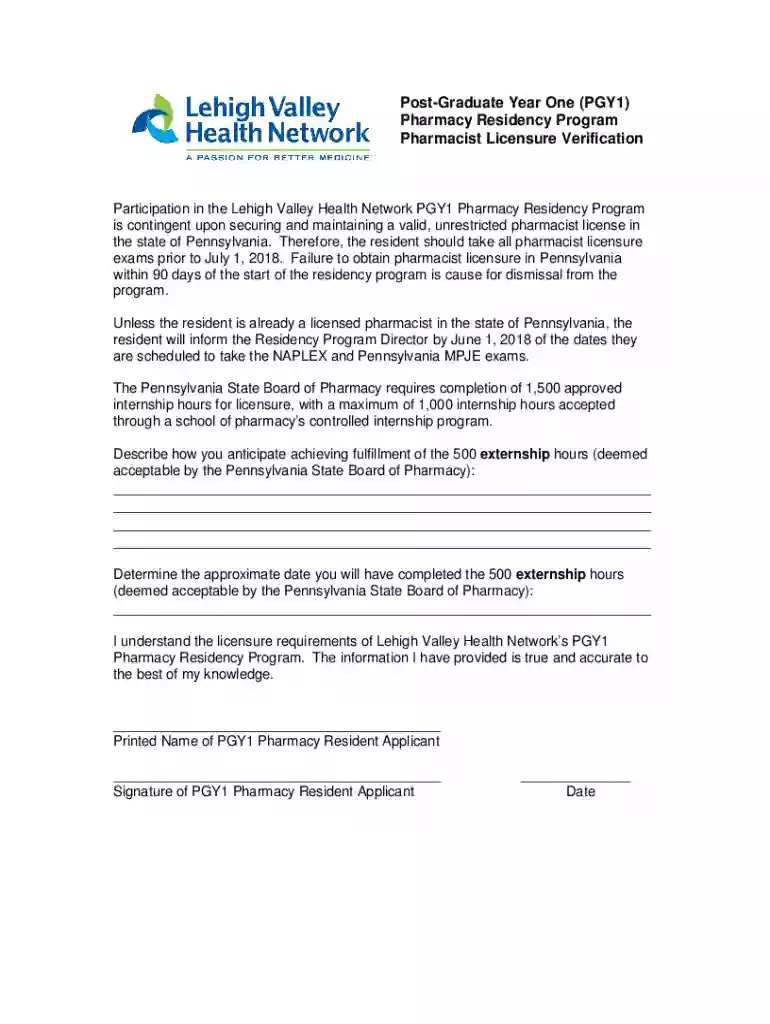
Definition & Meaning
The "Department of Pharmacy PGY1 Pharmacy Residency" refers to a postgraduate year one (PGY1) program designed for pharmacists who wish to advance their clinical competence and professional skills after obtaining their PharmD degree. The residency typically focuses on integrated patient care services and developing practice management strategies. This program is essential for those pursuing career opportunities in hospital and clinical settings, emphasizing patient-focused care and evidence-based medication management.
Objectives of PGY1 Pharmacy Residency
- Develop advanced competencies in clinical pharmacy practice.
- Enhance skills in patient-centered medication therapy management.
- Cultivate leadership and communication skills necessary for healthcare settings.
- Foster abilities to conduct research and apply evidence-based practices.
Examples of Residency Activities
- Participating in multidisciplinary healthcare teams.
- Conducting medication therapy reviews and creating treatment plans.
- Engaging in ongoing clinical studies to improve patient outcomes.
Application Components
- Curriculum Vitae (CV) that highlights relevant experience and skills.
- A personal statement outlining career goals and interest in the residency program.
- Letters of recommendation from academic or professional references.
Steps to Complete the Department of Pharmacy PGY1 Pharmacy Residency
Participating in a PGY1 Pharmacy Residency involves several key steps:
- Application and Interview Process: Submit required documents and participate in interviews to demonstrate suitability for the program.
- Orientation and Training: Begin the program with an orientation period, becoming familiar with the institution's patient care philosophy.
- Clinical Rotations: Engage in various rotations through different clinical settings, gaining comprehensive exposure to different areas of pharmacy practice.
- Project and Research Component: Complete a research project, including data collection, analysis, and presentation of findings.
- Evaluation and Feedback: Receive ongoing assessments to refine clinical skills and professional development.
Practical Scenarios in Clinical Rotations
- Managing acute care situations in collaboration with other healthcare professionals.
- Developing patients' pharmacotherapy plans and monitoring clinical responses.
Benefits for Participants
- Expanded career opportunities in advanced clinical practice roles.
- Enhanced understanding of healthcare systems and interdisciplinary teamwork.
- Strengthened qualification for PGY2 specializations or academic careers.
Important Terms Related to Department of Pharmacy PGY1 Pharmacy Residency
Understanding key terms relevant to the PGY1 Pharmacy Residency is essential for participants:
- Preceptorship: A mentorship arrangement where experienced pharmacists guide residents through their training.
- Clinical Rotation: A period where residents gain exposure to various specialty areas within a healthcare setting.
- Residency Project: A research activity conducted by the resident to contribute original findings to pharmacy practice.
Legal Use of the Department of Pharmacy PGY1 Pharmacy Residency
Legal considerations for the PGY1 Pharmacy Residency focus on compliance and accreditation:
- Licensure Requirements: Residents must obtain licensure in the program's state to participate fully in patient care activities.
- Accreditation Standards: Programs must meet standards set by accrediting bodies like ASHP (American Society of Health-System Pharmacists).
Compliance Considerations
- Adhering to institutional policies and procedures during residency.
- Obtaining necessary approvals for research activities involving human subjects.
Required Documents
Applicants to the Department of Pharmacy PGY1 Pharmacy Residency must prepare and submit a range of documents, including:
- Curriculum Vitae (CV): Highlighting academic achievements, internships, and relevant experiences.
- Personal Statement: Outlining motivations for residency and future career ambitions.
- Transcripts: Providing academic records from the pharmacy school attended.
- Letters of Recommendation: Obtained from mentors or supervisors who can attest to the candidate’s competencies and character.
Document Submission Format
- Digital submission through residency application platforms (e.g., PhORCAS).
- Ensuring documents are formatted according to program guidelines.
Penalties for Non-Compliance
Failure to comply with the requirements of the PGY1 Pharmacy Residency may result in penalties such as:
- Dismissal from the Program: Non-compliance with academic or professional conduct standards can lead to removal.
- Licensure Issues: Incomplete licensure can impede the ability to practice in clinical settings within the program.
Ensuring Compliance
- Regularly reviewing residency guidelines and seeking clarification when needed.
- Maintaining open communication with program directors and preceptors.