




01. Edit your form online
Type text, add images, blackout confidential details, add comments, highlights and more.

Type text, add images, blackout confidential details, add comments, highlights and more.

Draw your signature, type it, upload its image, or use your mobile device as a signature pad.

Send it via email, link, or fax. You can also download it, export it or print it out.
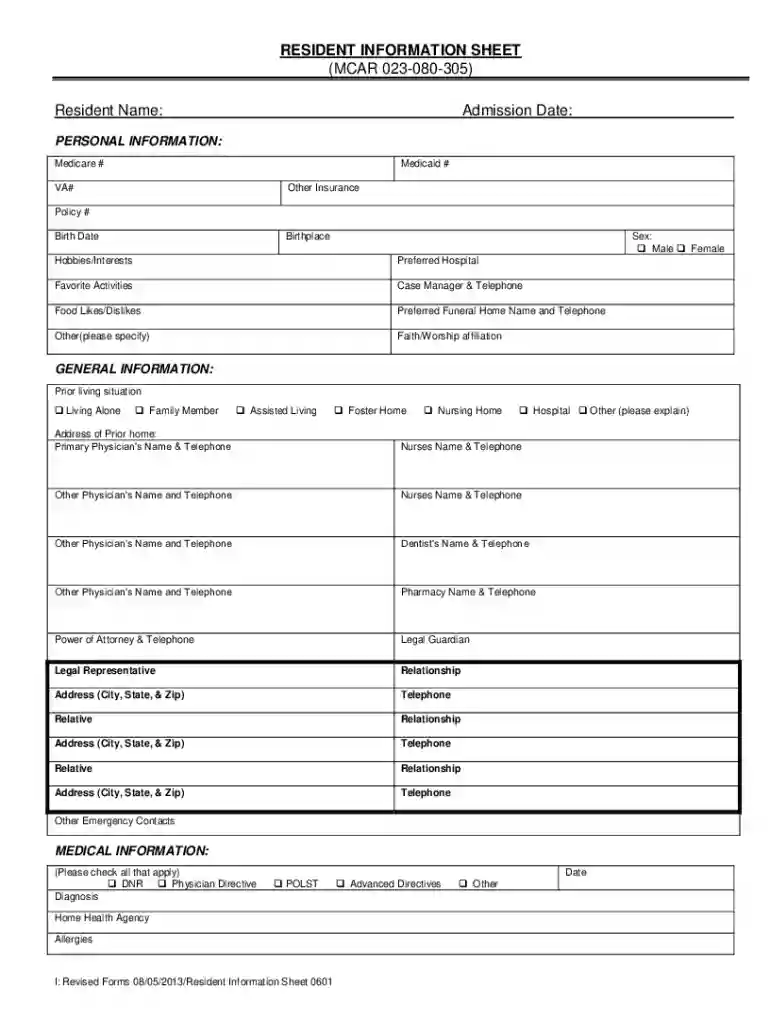
The Resident Information Sheet is a form designed to collect and organize vital information about residents in various living situations, such as assisted living facilities, long-term care homes, or apartment complexes. This document typically encompasses personal, general, and medical details about the resident. Common elements include the resident's name, admission date, insurance information, prior living status, emergency contacts, healthcare providers, and any medical preferences or directives. The purpose of this sheet is to maintain a comprehensive profile that aids in the efficient management of resident health and safety needs.
Gather Required Information: Prior to filling out the Resident Information Sheet, amass all necessary details, including personal identification, insurance documents, and medical records. This preparation will streamline the process and ensure the completeness of the form.
Personal Details Section: Begin with basic information about the resident, such as full name, birth date, gender, and contact information. Exact details may vary but often include social security number and marital status.
Medical Information: Accurately outline any medical needs, conditions, or medications. This section typically requires the resident's primary care doctor's contact information, preferred hospital, and any known allergies.
Emergency Contacts: List one or more emergency contacts. Providing alternatives ensures a rapid response in urgent situations if the primary contact cannot be reached.
Insurance Information: Enter all relevant insurance details, including policy number and provider name. This area is crucial for ensuring the resident has immediate coverage access.
Review and Verify: After filling out the form, double-check each section for accuracy. Verification by a third party, such as a family member or healthcare provider, is often advantageous to confirm correctness.
Residents or their representatives can typically obtain this form through their housing management office or healthcare facility. It's often distributed during the admission process. Some facilities may offer digital versions accessible through their websites, allowing for convenient online completion and submission.
The form is primarily used by administrative and healthcare teams within assisted living facilities, nursing homes, rehabilitation centers, and residential communities. It is also useful for caretakers and family members who manage a resident's affairs, ensuring all involved parties have up-to-date information for decision-making and emergency situations.


The Resident Information Sheet serves a vital legal function by documenting the resident's medical needs and preferences. It is crucial for ensuring that services are delivered in accordance with the resident’s health directives and legal requirements. Legal considerations include ensuring compliance with privacy laws, such as HIPAA, and proper authorization for sharing sensitive medical information.
Both digital and paper versions of the Resident Information Sheet are common. Digital versions allow for easy updates and distribution, while paper copies can be beneficial in settings where technology access is limited or for residents who prefer physical documentation. Facilities often maintain both formats to accommodate various needs and preferences, ensuring they can provide optimal care irrespective of technological proficiency.
Consider a resident moving into an assisted living facility. The staff uses the Resident Information Sheet to organize their basic personal information, emergency contacts, and health care directives. In case of a medical emergency, the sheet is immediately accessible to provide first responders or healthcare providers with critical information. Similarly, in daily operations, this form aids caregivers in understanding each resident's medical and personal preferences, ensuring personalized and precise care.
We've got more versions of the RESIDENT INFORMATION SHEET form. Select the right RESIDENT INFORMATION SHEET version from the list and start editing it straight away!
At DocHub, your data security is our priority. We follow HIPAA, SOC2, GDPR, and other standards, so you can work on your documents with confidence.
Resident Information sheet. Provide residents with information that helps them to understand and adhere to the policy. Understanding the smoke-free policy.Read more
You must have a system to maintain confidential resident records so you can provide the needed care to the residents.Read more
(b) In addition, such records shall contain the following information for each controlled substance: (1) Name of substance. (2) Each finished form (such as 10Read more


