




01. Edit your form online
Type text, add images, blackout confidential details, add comments, highlights and more.

Type text, add images, blackout confidential details, add comments, highlights and more.

Draw your signature, type it, upload its image, or use your mobile device as a signature pad.

Send it via email, link, or fax. You can also download it, export it or print it out.
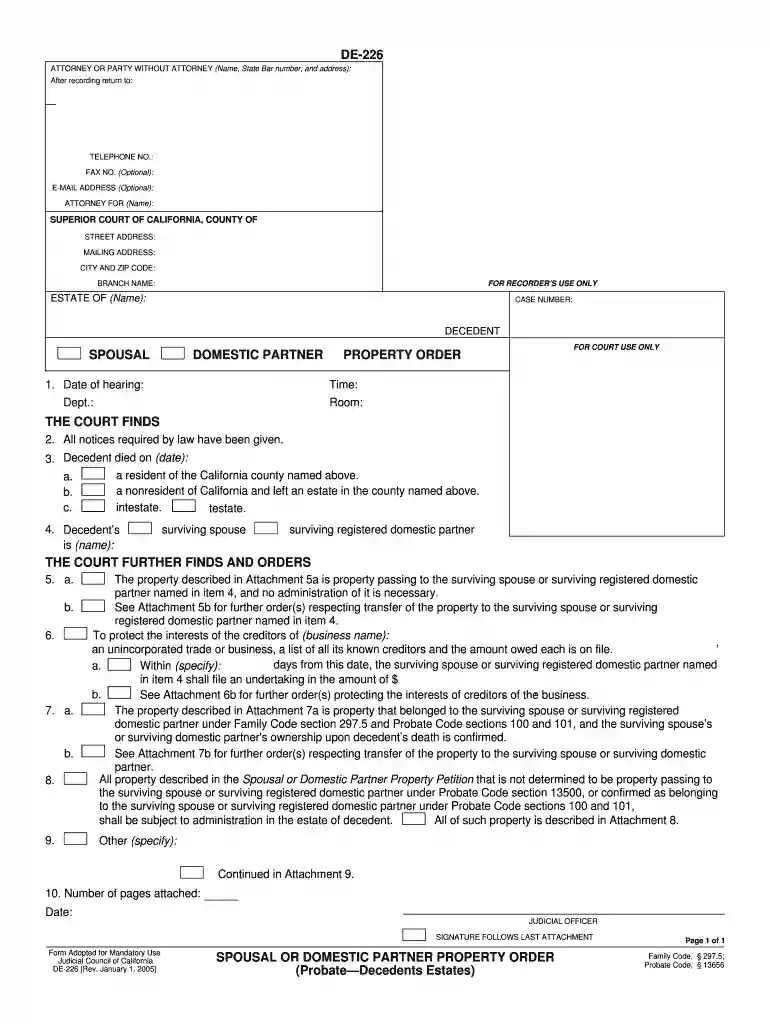
The DE-226 fillable form is a legal document used within the Superior Court of California to facilitate the handling of spousal or domestic partner property orders during probate cases. This form is designed to ensure that the court has a comprehensive record of the necessary findings and orders pertaining to a decedent’s estate. It plays a crucial role in confirming property ownership for surviving spouses or registered domestic partners and addresses issues related to creditor protection and the administration of property.
Utilizing the DE-226 fillable form effectively involves understanding its structure and requirements. This form is typically used in cases where the estate involved requires formal judicial intervention to transfer assets to a surviving spouse or domestic partner. Begin by carefully reviewing the form instructions, ensuring all relevant information about the decedent’s estate, property details, and any cohabitating arrangements are clearly documented. Ensure every section is completed accurately to avoid delays or rejections.
Acquiring the DE-226 fillable form is relatively straightforward. It can be downloaded directly from the official website of the California Courts or accessed through legal document service providers like DocHub. Ensure you select the latest version of the form to comply with the most current legal standards.
Completing the DE-226 form requires attention to detail. Follow these steps to ensure a comprehensive submission:
The DE-226 form is commonly used by legal professionals, such as estate attorneys or probate specialists, on behalf of their clients. Additionally, individuals representing themselves in probate matters in California may also utilize this form. The form is crucial for those seeking to legally confirm the distribution of property from a deceased individual’s estate according to probate law.


Understanding the critical components of the DE-226 form is essential for proper completion:
The legal application of the DE-226 form involves its submission during probate proceedings. This form serves as an official record, guiding the court in decisions about property distribution. It must be used in compliance with California probate laws to ensure recognition and enforceability in court.
Adhering to timelines is critical when dealing with probate-related documents. Filing the DE-226 form must align with any relevant state deadlines, particularly those tied to estate administration and claims made against the estate. Check the Superior Court of California’s rules for timing requirements to avoid penalties or disputes arising from late submissions.
While the DE-226 is a standardized form for use in California, certain aspects may vary based on jurisdictional specifics within the state. Local probate rules might influence exact filing procedures, required additional documentation, or interpretations of property orders, making it vital to consult local legal resources or court administrative offices for guidance.
Familiarity with key legal terms can ease the use of the DE-226 form. Important terms include:
We've got more versions of the de 226 fillable form form. Select the right de 226 fillable form version from the list and start editing it straight away!
At DocHub, your data security is our priority. We follow HIPAA, SOC2, GDPR, and other standards, so you can work on your documents with confidence.
by U Insurance Cited by 1 Mail: Complete, sign, and mail the Continued Claim (DE 4581) form to us. Note: For faster processing, DocHub through UI Online or EDD Tele-Cert. Payments.Read more
This thesis is the result of my own work and includes nothing which is the outcome of work done in collaboration except as declared in the Preface andRead more
Spousal or Domestic Partner Property Order (ProbateDecedents Estates) (DE-226). States the courts decision (order) about whether all or part of a deceasedRead more


