




01. Edit your sea waybill example online
Type text, add images, blackout confidential details, add comments, highlights and more.

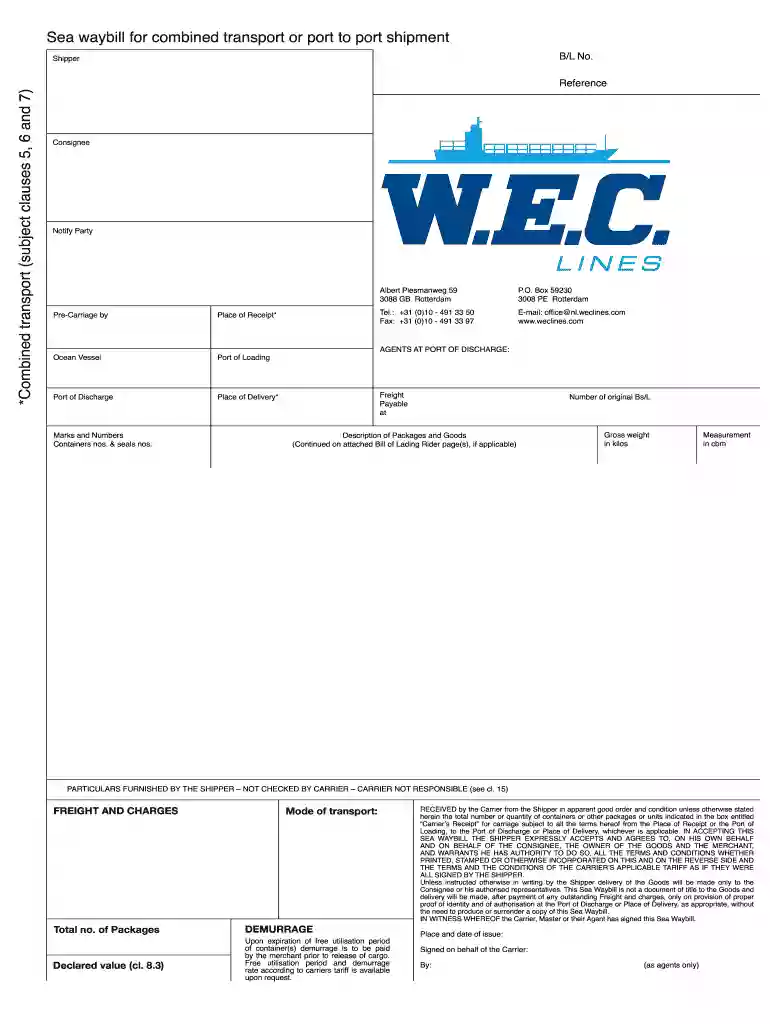
Type text, add images, blackout confidential details, add comments, highlights and more.

Draw your signature, type it, upload its image, or use your mobile device as a signature pad.

Send sea waybill sample via email, link, or fax. You can also download it, export it or print it out.
The WEC Sea Waybill is a document used in the shipping industry specifically for cargo transportation. It outlines the terms and conditions that govern the carriage of goods by sea. Unlike a traditional bill of lading, a sea waybill does not convey title to the goods being shipped. Instead, it serves primarily as a receipt for the cargo and provides details such as the description of the goods, total weight, and the parties involved in the shipment, including the shipper and the carrier.
Specific considerations include:
The WEC Sea Waybill includes several important elements that are crucial for both shippers and carriers:
These components ensure that the WEC Sea Waybill serves its purpose as a comprehensive document for both logistical and legal requirements in cargo transport.
Utilizing the WEC Sea Waybill effectively involves several critical steps:
Understanding and following these steps can enhance the efficiency of shipping operations and improve communication between all parties involved in the logistics chain.
Practical examples showcase how the WEC Sea Waybill functions across various shipping scenarios:
These examples underline the versatility and importance of the WEC Sea Waybill in facilitating various shipping arrangements.
Familiarity with specific terminology is vital for understanding the context and implications of a WEC Sea Waybill:
Understanding these terms enriches the legal and operational comprehension of the WEC Sea Waybill, ensuring that all parties meet their obligations correctly.
The WEC Sea Waybill is legally binding under certain conditions, which are essential for regulating international trade:
This legal framework strengthens the reliability and accountability of using the WEC Sea Waybill in commercial shipping activities.
We've got more versions of the sea waybill example form. Select the right sea waybill example version from the list and start editing it straight away!
At DocHub, your data security is our priority. We follow HIPAA, SOC2, GDPR, and other standards, so you can work on your documents with confidence.
The Crew Chief will determine when weather or sea conditions are unsafe for trawling. In the event of net hang-ups on bottom obstructions, the Crew Chief mustRead more
Jun 30, 2020 But as in WEC Carolina, there is no dispute that Drab was authorized to access those files. Following the Fourth Circuits holding in. WECRead more


