




01. Edit your form online
Type text, add images, blackout confidential details, add comments, highlights and more.

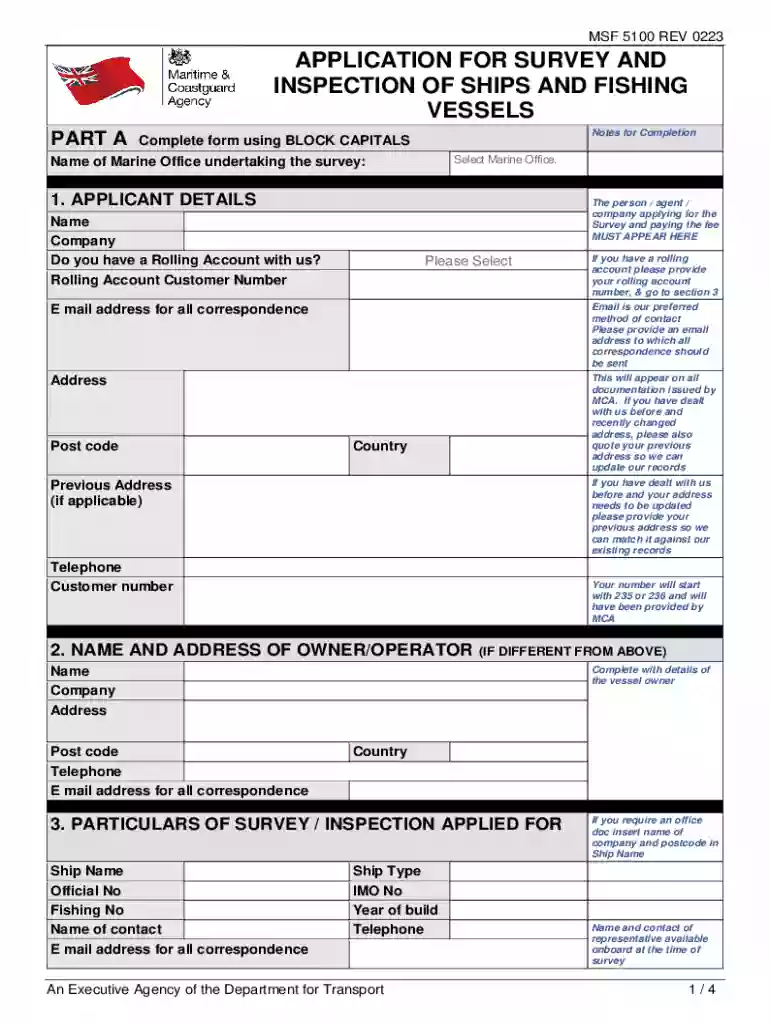
Type text, add images, blackout confidential details, add comments, highlights and more.

Draw your signature, type it, upload its image, or use your mobile device as a signature pad.

Send it via email, link, or fax. You can also download it, export it or print it out.
The "application for survey and inspection of ships and fishing" is a formal document used to request an official examination of vessels to ensure they comply with safety and regulatory standards. This application typically includes comprehensive details about the vessel, such as its size, function, and ownership. The goal is to certify that the ship is structurally sound, properly equipped, and maintained to operate safely under current maritime laws. Without proper inspection, vessels may not be granted the necessary certification to function legally, impacting their operational capabilities.
A comprehensive application for the survey and inspection of ships includes several critical components. Among them are:
These key elements help ensure that the process is thorough and the ship meets all necessary legal and safety requirements.
Completing the application for a survey and inspection of ships involves several methodical steps:
Following these steps ensures a smooth application process, minimizing the risk of delays or rejections.
Obtaining the application for a survey and inspection of ships can be done through several channels:
These options provide flexibility for applicants based on their preferences and resources.
The correct and legal use of the application for survey and inspection emphasizes compliance with maritime laws and safety regulations. By submitting this application, ship owners are committed to upholding standards set forth by regulatory authorities. Legal usage includes:
Compliance with the legal framework mitigates risks and enhances safety for both vessel operators and maritime environments.
Understanding the terminology in the application for the survey and inspection of ships is crucial for accurate completion:
Familiarity with these terms ensures clarity and precision during the application process.
Failing to submit or improperly completing the application can result in significant penalties, including:
Understanding these possible repercussions emphasizes the importance of compliance with application requirements and deadlines.
Submitting the application for survey and inspection is flexible, offering several methods:
These varied submission methods ensure accessibility and convenience, catering to diverse applicant needs.
We've got more versions of the application for survey and inspection of ships and fishing form. Select the right application for survey and inspection of ships and fishing version from the list and start editing it straight away!
At DocHub, your data security is our priority. We follow HIPAA, SOC2, GDPR, and other standards, so you can work on your documents with confidence.
Applications for inspection of new vessels must be preceded by the submission of applicable drawings or prints in accordance with the specific requirements inRead more
by DZO zayir 2009 Cited by 5 7. Inspections are generally unannounced. 8. In general, ships will not be inspected within six months of a previous inspection in an MOU portRead more


