
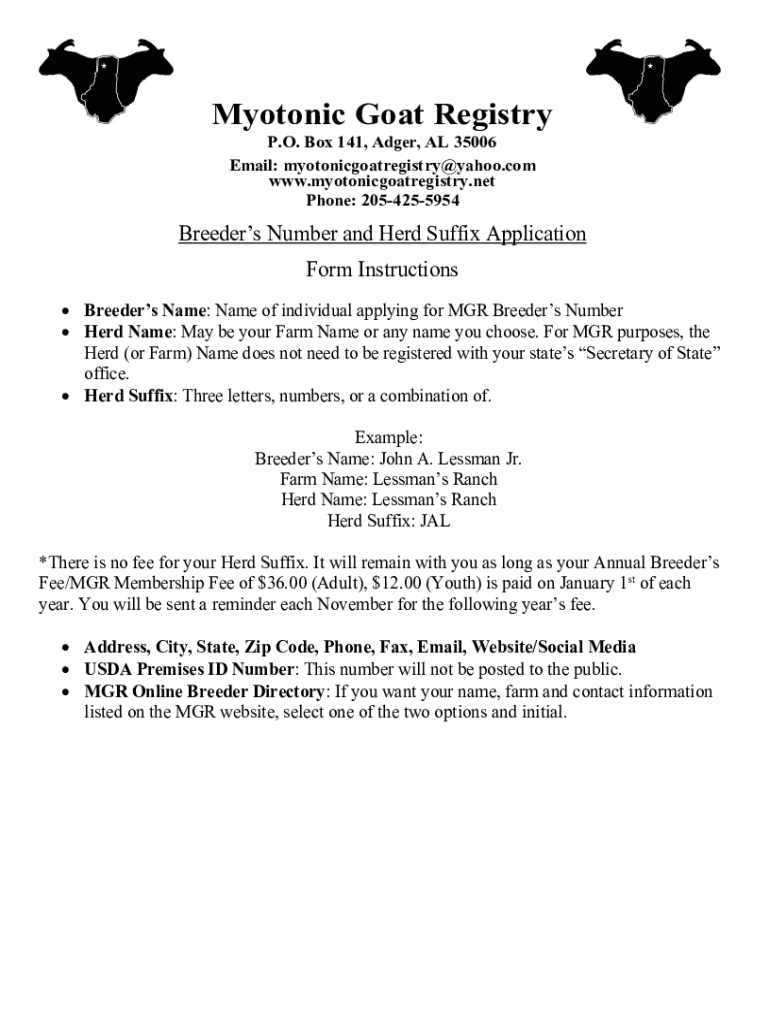







Definition and Importance of the Myotonic Goat Registry Database Search Page
The Myotonic Goat Registry Database Search Page serves as a pivotal tool for breeders, owners, and enthusiasts of Myotonic goats, providing access to crucial registry information. Users can conduct searches to find registered goats, breeders, and specific herd details. This database ensures that breeders have access to up-to-date pedigree information, enabling informed breeding decisions to enhance the quality and health of their herds. By maintaining accurate records, the registry helps preserve the integrity of the Myotonic goat breed.
Using the Myotonic Goat Registry Database Search Page
To effectively utilize the Myotonic Goat Registry Database Search Page, users should follow these steps. First, navigate to the registry's official page. Once there, look for the search function, usually prominently displayed for easy access. Users can enter specific criteria, such as goat registration numbers, breeder names, or herd names, to retrieve relevant information. The search functionality often allows for filtering results based on additional parameters, ensuring precise information retrieval tailored to user needs.
Obtaining Access to the Myotonic Goat Registry Database Search Page
Accessing the Myotonic Goat Registry Database Search Page may require certain steps, especially for new users. Initially, prospective users should contact the Myotonic Goat Registry to request access. This might involve completing an application form and paying any associated fees. Existing members or registered breeders typically have direct access as part of their membership benefits. It's crucial to confirm any related guidelines and eligibility criteria with the registry to facilitate a smooth access process.
Completing the Myotonic Goat Registry Database Search Page
Completing a search involves understanding the key elements necessary for an efficient query. Users should gather specific identifiers such as registration numbers or precise breeder names before conducting their search. Once the search parameters are input, the database typically returns a list of entries that match the criteria. Users can then click on individual entries for detailed information, including pedigree data, ownership history, and any pertinent health records.
Benefits of the Myotonic Goat Registry Database Search Page
Using the Myotonic Goat Registry Database offers numerous benefits. For breeders, it provides critical access to lineage records, helping to make informed breeding choices that promote genetic diversity and health. Owners can confirm the registration status of their goats, ensuring they meet registry standards. The tool is also vital for enthusiasts and researchers interested in studying breed characteristics and trends over time. Overall, the database plays a key role in maintaining and promoting the integrity of the Myotonic goat breed.
Typical Users of the Myotonic Goat Registry Database Search Page
The database is primarily used by Myotonic goat breeders, registry members, and goat enthusiasts. Breeders rely on the registry for up-to-date lineage and genetic information critical for breeding decisions. Educational institutions and researchers may also utilize the database for academic and scientific purposes, particularly in studies related to animal genetics and agriculture. Additionally, prospective goat purchasers might use the database to verify the pedigree and registration status of goats before making purchases.
Legal Considerations for Using the Myotonic Goat Registry Database
Usage of the Myotonic Goat Registry Database Search Page is bound by certain legal guidelines to protect the privacy and integrity of the data. Access might require adherence to specific terms and conditions stipulated by the Myotonic Goat Registry. Users should ensure that they operate within these guidelines to avoid unauthorized data usage or distribution. The registry may also require users to agree to terms that prevent the misuse of data for commercial purposes.
Key Elements of the Myotonic Goat Registry Database Search Page
Several key elements define the Myotonic Goat Registry Database. These include a user-friendly search interface, filters for precision searches, and comprehensive records for each registered goat. Each entry typically includes pedigree information, herd names, owner details, and breed characteristics. It's essential that the database maintains current information to ensure its usefulness for breeders and owners. As such, users can typically update or report discrepancies through official channels provided by the registry.
Examples of Utilizing the Myotonic Goat Registry Database Search Page
Practical examples of using the database include a breeder seeking to verify the pedigree of a potential breeding goat. By checking the database, they can confirm genetic lineage and health history. Another example could be a prospective buyer who uses the database to validate the registration status of a goat they intend to purchase. Both scenarios illustrate the database's critical role in ensuring informed decisions that uphold the breed’s standards.
Document Requirements for Accessing the Myotonic Goat Registry Database
Access to the database often requires submission of specific documents, which could include proof of membership with the Myotonic Goat Registry or documents verifying breeder status. Potential users might also need to provide identity verification and payment for any associated fees. Ensuring all required documentation is submitted accurately can streamline the process for accessing the database services.
Filing Information: Deadlines and Important Dates
While the database itself does not typically involve filing deadlines, users affiliated with the Myotonic Goat Registry should stay informed about related deadlines, such as registration renewal dates or membership fee payments. Adhering to these timelines is essential to maintaining uninterrupted access to the registry's resources. Users should regularly check with the registry for any updates to deadlines or procedures that might affect their access or data use privileges.


