







Definition & Meaning
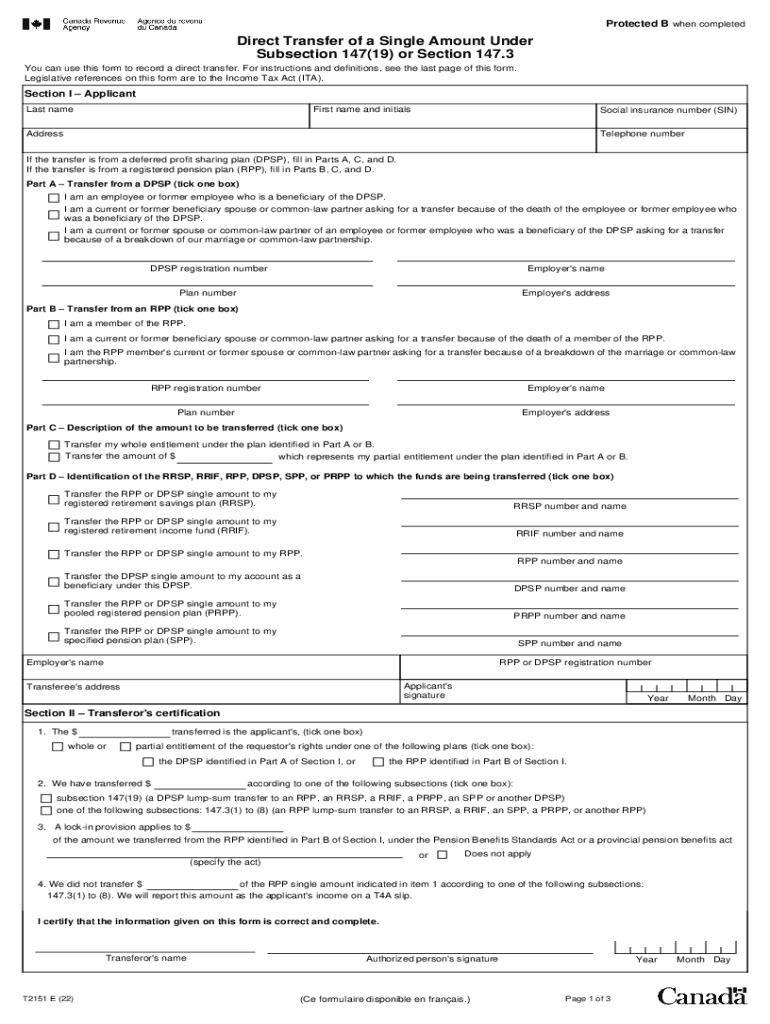
Canada Form T2151, also known as the "Direct Transfer of a Single Amount," is used to record the transfer of a single payment from a Registered Pension Plan (RPP) or a Deferred Profit Sharing Plan (DPSP) under specific subsections of the Income Tax Act. This form is crucial for individuals looking to transfer funds from one registered account to another, ensuring the transaction complies with Canadian tax regulations. By using the T2151, individuals can facilitate transfers without triggering immediate tax implications, which is vital for those seeking to defer and manage their retirement savings effectively.
Steps to Complete the Canada Form T2151
Completing the Canada Form T2151 involves several steps to ensure accurate processing:
-
Start with the identification section by entering the applicant’s full name, Social Insurance Number (SIN), and contact information. This information is critical for the Canada Revenue Agency (CRA) to verify the individual's identity.
-
Proceed to the details of the transferor section. Here, you need to input the plan identifier number, the name of the transferring financial institution, and the specific details of the plan from which the funds are being transferred.
-
In the section for transfer details, specify the amount to be transferred and the type of receiving plan. The transferring amount should be clearly stated to avoid discrepancies.
-
The receiving plan details require the identification number and name of the institution where the funds will be deposited. Ensure that the receiving plan can legally accept the transferred amount under Canadian tax laws.
-
Complete any certifications and authorizations as stipulated, which may include signatures from both the plan member and representatives from both the transferring and receiving institutions. This step is essential for legal compliance and official processing.
Legal Use of the Canada Form T2151
The legal use of Form T2151 ensures compliance with Canadian tax regulations when transferring funds between registered plans. This form is specifically designed to prevent tax liabilities that may arise during inter-plan transfers under the Income Tax Act. Form T2151 is primarily used by individuals who wish to consolidate their retirement savings or move funds due to specific life events, such as marriage breakdowns or job changes. The accurate completion and submission of this form help individuals avoid potential penalties and maintain the tax-deferred status of their retirement savings.
Key Elements of the Canada Form T2151
Form T2151 is composed of several key sections that gather necessary data for the transfer process:
-
Applicant Information: This includes personal details such as the applicant's full name, SIN, and contact information.
-
Transferor Plan Details: Information about the plan from which funds are being transferred, including institution name and plan number.
-
Receiving Plan Information: Details of the receiving institution and plan, ensuring it is eligible to receive the transferred for tax-deferral purposes.
-
Transfer Amount: The specific amount being transferred must be documented for accurate financial and tax records.
-
Required Signatures: Authorization by the applicant and representatives of both financial institutions involved in the transfer process.
Who Typically Uses the Canada Form T2151
Form T2151 is primarily used by individuals looking to manage their retirement savings more effectively through the consolidation of funds or transitioning between employment-based pension plans. Those who are in the process of life changes such as divorce or relocation that may impact their pension plans also use this form extensively. Financial advisors and tax professionals often assist clients in completing T2151 to ensure the transactions comply with compliance and tax regulations.


Important Terms Related to Canada Form T2151
Understanding the terminology associated with Form T2151 is critical. Terms like "Registered Pension Plan (RPP)" refer to employer-sponsored retirement savings plans, while "Deferred Profit Sharing Plan (DPSP)" outlines arrangements where employers share profits with employees. The "Direct Transfer" term signifies the non-taxable movement of funds from one registered plan to another. Lastly, "Income Tax Act" refers to the legislation under which these transfers are regulated, ensuring they are tax-compliant.
Software Compatibility
Form T2151 can be managed using various document management platforms such as DocHub, which provides digital tools for filling and signing the form online. This compatibility is beneficial for individuals and financial institutions seeking efficient and accurate methods of handling documentation. Additionally, various tax software, including TurboTax and QuickBooks, can offer guidance or integration features for managing compliance with Form T2151 requests seamlessly.
Penalties for Non-Compliance
Failure to accurately complete and submit Form T2151 may result in several penalties, including potential taxation on the transferred amount, interest charges, and fines from the CRA. It is critical that individuals adhere strictly to the regulations and requirements set out in the Income Tax Act to avoid these penalties. Ensuring all necessary information is complete and accurate, and all signatures are acquired, is essential in mitigating any legal or financial risk associated with non-compliance.




