
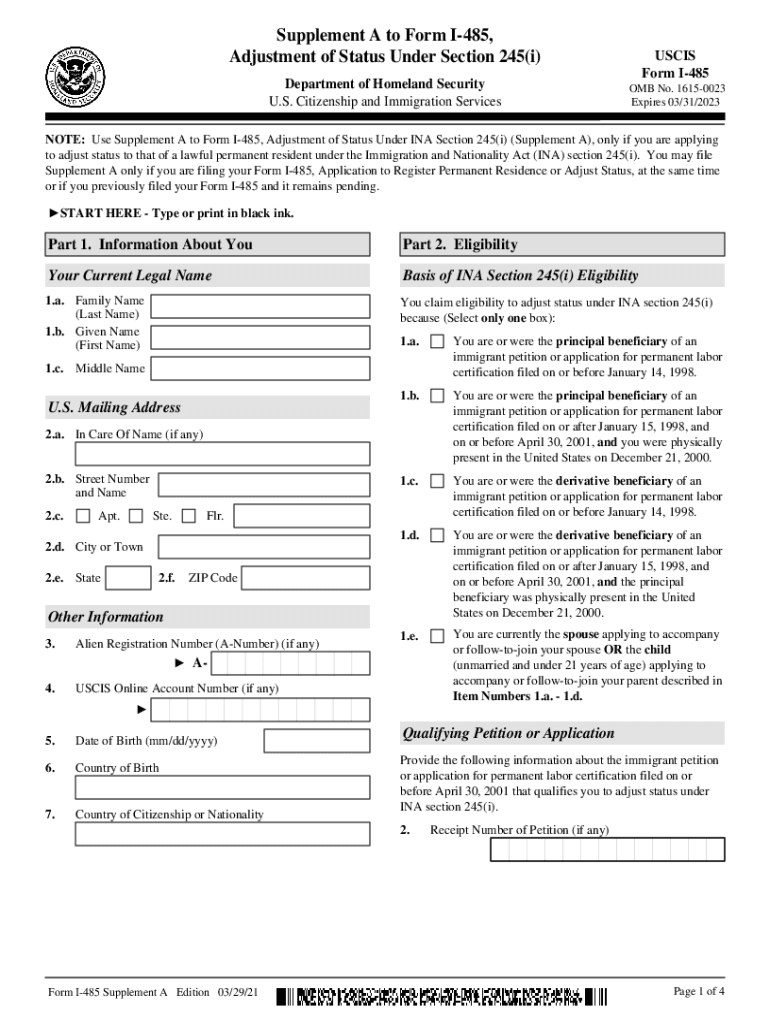







Understanding the DHS I-485
The DHS I-485, officially known as Form I-485, Application to Register Permanent Residence or Adjust Status, is a critical document used primarily by non-citizens who wish to adjust their status to that of a lawful permanent resident in the United States. This form is part of the immigration process under U.S. Citizenship and Immigration Services (USCIS) guidelines, allowing eligible individuals to gain a Green Card and reside permanently in the U.S.
How to Obtain the DHS I-485
To obtain the DHS I-485, applicants can access the form online through the USCIS website. It is crucial to download the most recent version to ensure compliance with current filing requirements. Applicants can also request a paper copy by contacting USCIS directly or visiting a local USCIS office. It's important to gather all necessary supporting documents before beginning the application process.
Steps to Complete the DHS I-485
Filling out the DHS I-485 involves several precise steps.
-
Personal Information: Begin by providing accurate personal details, including full name, date of birth, and contact information.
-
Eligibility Status: Clearly indicate the basis for your eligibility to adjust status, such as family sponsorship or employment.
-
Background Information: Complete sections related to your background, including previous immigration history and any criminal records.
-
Declarations: Review and sign the required declarations, confirming the authenticity of the information provided.
-
Fee Payment: Include the appropriate filing fee as per the USCIS fee schedule.
Who Typically Uses the DHS I-485
The DHS I-485 is primarily used by foreign nationals already in the United States who qualify to adjust their status. Common users include family members of U.S. citizens or permanent residents, employees sponsored by their U.S.-based employers, and special immigrant categories such as refugees or those seeking asylum. Each applicant must meet specific criteria pertinent to their immigration category.


Required Documents for the DHS I-485
Applicants need to submit several supporting documents alongside the DHS I-485. These include:
-
Evidence of Eligibility: Such as sponsorship letters or employment verification.
-
Identification Documentation: Valid passport copies, visa details, and previous I-94 forms.
-
Medical Examination Report: Completed by a USCIS-designated civil surgeon.
-
Financial Support: Affidavit of support or proof of financial independence.
Eligibility Criteria for the DHS I-485
Eligibility for filing the DHS I-485 depends on the specific immigration pathway and current legal status within the U.S. Applicants must be physically present in the U.S. and have maintained lawful status since their last admission or parole. Exceptions exist under certain humanitarian categories, where specific provisions under the Immigration and Nationality Act (INA) allow applications despite status violations.

Important Terms Related to the DHS I-485
-
Adjustment of Status: Transitioning from a temporary non-immigrant status to permanent legal residence.
-
Priority Date: The date an applicant’s relative or employer properly filed the immigrant petition on their behalf.
-
Biometrics Appointment: A required appointment for collecting fingerprints, photographs, and signatures for background checks.
Application Process & Approval Time
The I-485 application process entails submitting the form and supporting documents, followed by a USCIS biometrics appointment. After submission, the processing time can vary greatly, often ranging from several months to over a year, depending on the applicant's category and USCIS's current workload. Applicants can check their case status through the USCIS online portal.
Legal Use of the DHS I-485
Using the DHS I-485 legally requires strict adherence to USCIS guidelines, including timely and accurate submission of the form and supporting documentation. Providing false information or omitting critical details can lead to application denial or legal repercussions, emphasizing the importance of accurate and honest reporting throughout the process.


