






Definition & Meaning
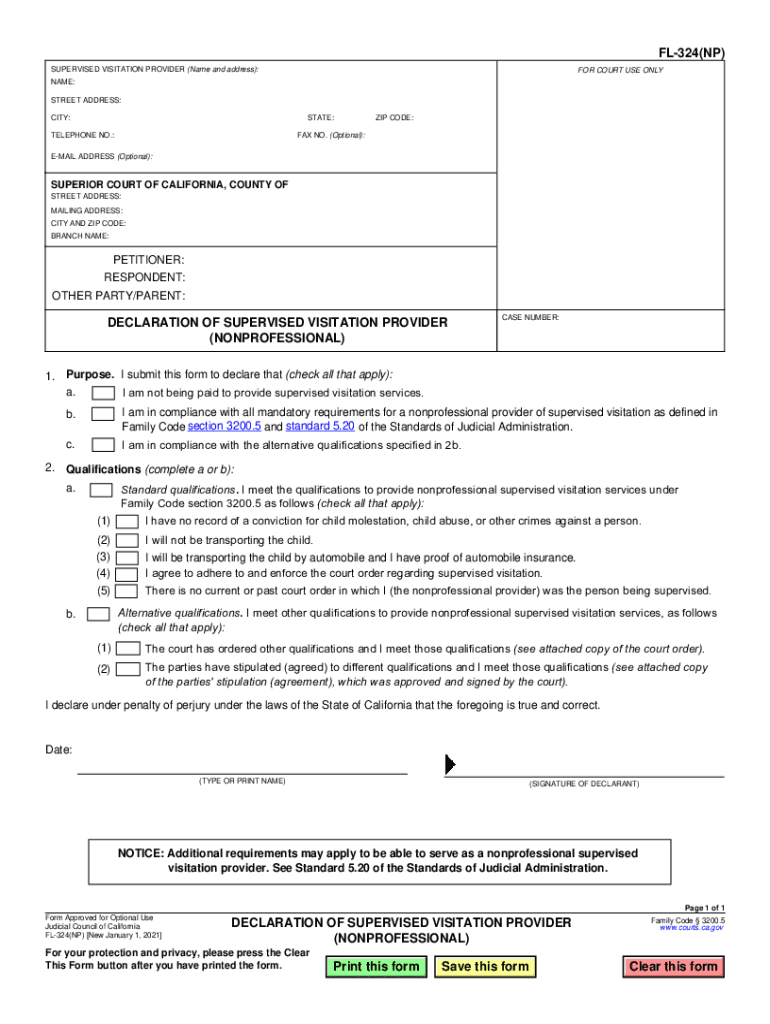
The FL-324 is a document used for declarations by nonprofessional supervised visitation providers in California. It is essential in legal contexts involving child custody and supervised visitations. Nonprofessional providers using this form are typically unpaid individuals such as family members or friends who ensure the safety and compliance of supervised visitation sessions. The document establishes that the individual providing supervision meets the necessary qualifications and adheres to relevant legal standards.
How to Obtain the FL-324
The FL-324 form can typically be obtained through several channels. It is available on the California court system's official website, where it can be downloaded and printed. Some legal aid organizations and family law attorneys might also provide access to the form. For those without internet access, visiting a local courthouse or legal aid office can be an alternative way to obtain a hard copy of the form. It is crucial to ensure that you have the most recent version of the form to comply with any updates or changes in legal requirements.
Steps to Complete the FL-324
-
Fill in Personal Information:
- Start by entering personal details such as your full name, address, and contact information.
-
Declaration of Qualifications:
- Provide a declaration of your qualifications as a nonprofessional supervised visitation provider. This includes affirming that you do not have any criminal history related to child abuse or neglect.
-
Compliance Acknowledgment:
- Acknowledge compliance with Family Code section 3200.5, which outlines the standard requirements for supervised visitations.
-
Signature Verification:
- Verify the information with your signature. By signing, you assert that all information provided is accurate and complete to the best of your knowledge.
-
Submission:
- Submit the completed form to the relevant court or legal authority overseeing the custody case.
Why Use the FL-324
Using the FL-324 form is vital for ensuring that supervised visitations are handled legally and responsibly. It serves as an official record that the provider is qualified and compliant with legal standards, which helps protect the interests and safety of the children involved. By using this form, nonprofessional providers demonstrate their commitment to upholding legal and ethical guidelines, thus facilitating trust among all parties in a custody arrangement.
Key Elements of the FL-324
-
Provider Information:
- Detailed personal and contact information of the supervised visitation provider.
-
Qualification Assurance:
- Declaration of lack of criminal history related to child abuse and agreement with court directives.
-
Compliance Statement:
- Statement confirming adherence to legal requirements under Family Code section 3200.5.
-
Signature:
- Signature field to authenticate the form and information provided.
State-Specific Rules for the FL-324
California's legal framework governs the use of the FL-324 form. The state mandates that participants in child custody cases adhere to specific requirements when it comes to supervised visitation. It is important that the form accurately reflect all compliance elements as dictated by California law. Any omissions or inaccuracies could impact the legal proceedings or result in the inadmissibility of the form. Therefore, familiarizing oneself with state-specific guidelines ahead of submission is crucial.
Important Terms Related to FL-324
-
Nonprofessional Supervised Visitation Provider:
- An individual who oversees a child's visitation with a parent or guardian, often without financial compensation.
-
Family Code Section 3200.5:
- The legal provision detailing qualifications and compliance protocols for supervised visitation in California.
-
Qualifications Statement:
- A declaration within the form attesting to the provider's eligibility and reason for overseeing visitations.
Who Typically Uses the FL-324
The FL-324 is primarily used by nonprofessional supervised visitation providers, such as family members or acquaintances, who meet specific eligibility criteria in California. The courts or legal authorities involved in child custody cases might request this form to ensure that the individuals involved in supervised visitation situations meet the necessary legal standards. Additionally, family law practitioners may work with clients to complete and submit the form accurately.