







Definition and Purpose of the BodyTalk Consent Form
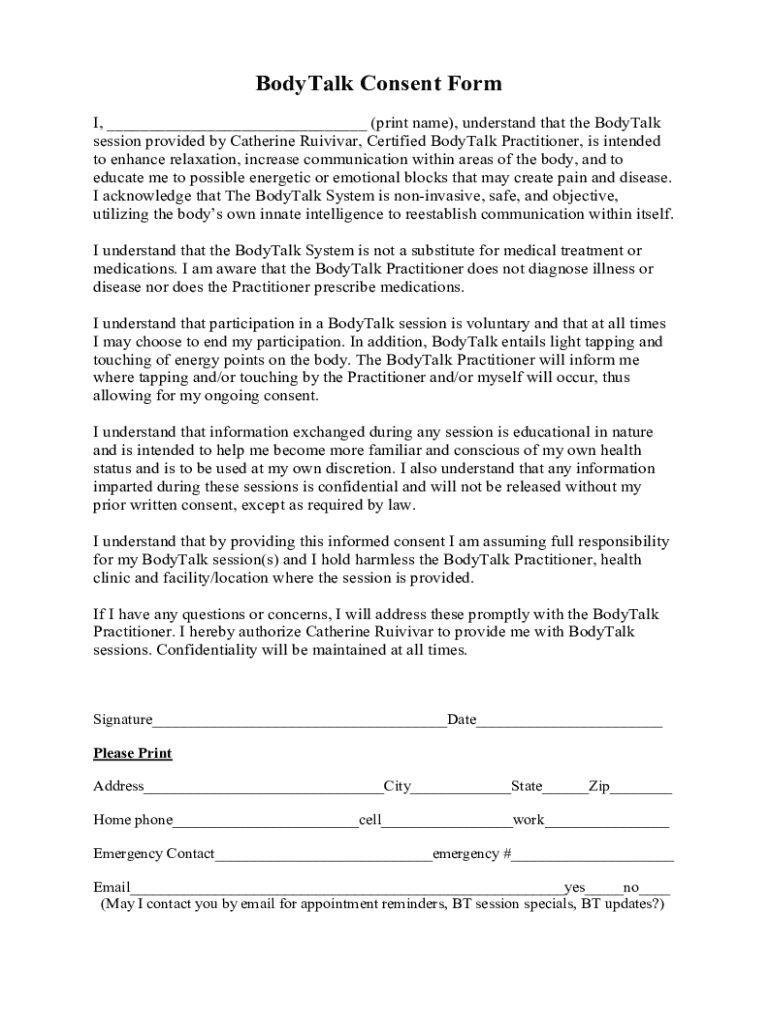
The BodyTalk Consent Form serves an essential purpose in BodyTalk sessions. It is designed to inform participants about the nature and scope of BodyTalk sessions provided by practitioners like Catherine Ruivivar. This document emphasizes that BodyTalk sessions are non-invasive alternatives focused on relaxation and the addressing of energetic or emotional blocks. As such, the form outlines that BodyTalk is not a replacement for any medical treatment, helping to set accurate expectations for the participant about the type of service they are consenting to.
Key Components Included
- Statement of Purpose: The form outlines the primary goals of BodyTalk sessions, highlighting its focus on enhancing relaxation and resolving energetic imbalances.
- Non-Medical Nature: It clarifies that the BodyTalk sessions do not serve as a substitute for professional medical treatment or advice.
- Voluntary Participation: Participants must acknowledge that their involvement is entirely voluntary, underscoring informed consent.
- Confidentiality Assurance: The form assures participants that any personal information shared during the sessions will be kept confidential, maintaining privacy and trust.
Steps to Complete the BodyTalk Consent Form
Filling out the BodyTalk Consent Form entails a straightforward yet essential series of steps to ensure that participants fully understand and agree to the terms of the sessions.
- Reading the Form Carefully: Participants should take their time to thoroughly read and understand each section of the consent form.
- Providing Personal Information: Fill out any required personal details accurately, as this information will be crucial for the session records.
- Acknowledgment of Terms: Participants should carefully check sections of the form that detail the non-medical nature of BodyTalk sessions and ensure they comprehend these terms.
- Consent Signature: Participants must sign the form to indicate their consent and agreement to the conditions outlined, validating their understanding and willingness to participate.
- Submission of the Form: Once completed, the form should be submitted to the practitioner or BodyTalk office as directed.
Additional Considerations
- Questions and Clarifications: Participants are encouraged to ask any questions before signing the form to clarify any uncertainties about the sessions or the consent process.
- Verification of Identity: Depending on the particular practices of the provider, participants might need to verify their identity through additional forms of identification.
How to Obtain the BodyTalk Consent Form
Acquiring the BodyTalk Consent Form can be done through multiple avenues, ensuring accessibility for potential participants seeking to join sessions.
Online Accessibility
- Practitioner Websites: Many practitioners, like Catherine Ruivivar, provide digital versions of their consent forms on their official websites for easy access.
- Email Requests: Potential participants can request a copy of the form via email from their practitioner, allowing for direct and personalized communication.
Physical Collection
- Office Visits: A visit to the practitioner’s office can also provide an opportunity to obtain a physical copy of the form, which can be filled out in person.
- Workshops and Events: Attendees at BodyTalk workshops or introduction events may also have access to these forms as part of the registration or orientation process.
Legal Considerations and Confidentiality
The BodyTalk Consent Form addresses important legal considerations, ensuring that participants are aware of their rights and the protections offered to them.
Compliance and Protection
- Legal Binding Signatures: The signed consent form serves as a legal agreement that participants understand and accept the terms of the sessions.
- Confidentiality Clauses: These clauses emphasize the practitioner’s commitment to ethical standards and privacy laws, protecting participant information.
Impacts of Non-Compliance
- Session Rescheduling or Cancellation: Without a signed consent form, participants may be unable to commence sessions, highlighting the importance of compliance.
- Potential Liability: Practitioners who fail to collect signed consent forms may face liability issues, emphasizing the necessity of obtaining legal consent.
Who Uses the BodyTalk Consent Form
The BodyTalk Consent Form is predominantly used by individuals seeking alternative wellness methods, along with practitioners who offer these sessions.
Typical Participants
- Individuals with Stress or Anxiety: Those looking for relaxation techniques and emotional block releases.
- Holistic Health Enthusiasts: Participants interested in exploring various complementary health practices.
- Clients with Energetic Imbalances: Individuals seeking to address specific energetic or spiritual concerns.
Practitioners' Use
- Certified BodyTalk Practitioners: Professionals who conduct sessions and require documented consent for ethical and legal protection.
- Alternative Health Clinics: Centers offering a range of holistic services alongside BodyTalk that necessitate participant consent documentation.
State-Specific Guidelines and Differences
Different states may have specific guidelines or requirements related to the use and content of the BodyTalk Consent Form, which must be adhered to by practitioners.
Variations Across States
- State Health Regulations: Some states may have additional health-related documentation requirements that practitioners need to include or attach to their consent forms.
- Licensing and Certification Standards: States requiring certain practitioner qualifications for conducting BodyTalk may influence the content or necessity of specific disclosures on the consent form.
Addressing State-Specific Needs
Practitioners are advised to stay informed about any regional legislative updates or changes in alternative therapy regulations to ensure compliance and maintain credibility within their practice.




