
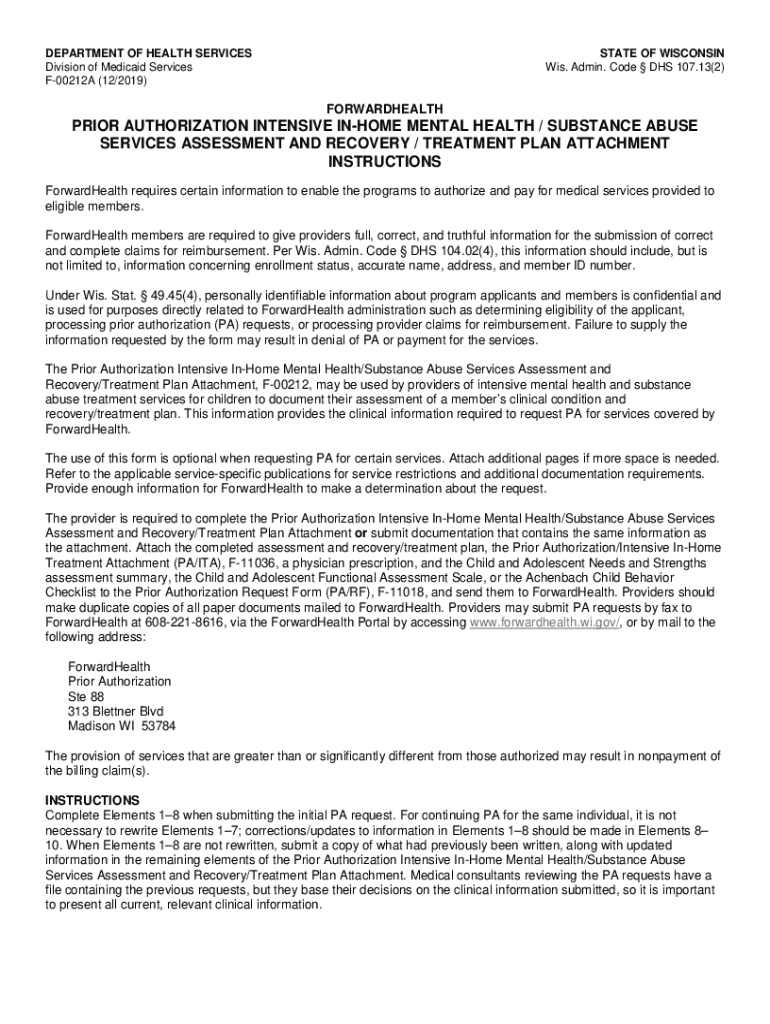







Definition and Purpose of the Prior Authorization Form
The Prior Authorization Intensive In-Home Mental Health/Substance Abuse Services Assessment and Recovery form is a document required by ForwardHealth in Wisconsin. It is designed to facilitate the authorization and reimbursement process for providers delivering mental health and substance abuse services. This form ensures that healthcare providers adhere to necessary regulations and standards when seeking approval for intensive in-home care services. It requires comprehensive details about the proposed treatment plans, making it vital for maintaining quality control and ensuring the appropriateness of prescribed services.
Steps to Complete the Form Accurately
-
Gather Member Information: Collect accurate and up-to-date details about the client, including name, contact information, and health identification numbers.
-
Provide Assessment Details: Include a thorough assessment of the patient’s mental health or substance abuse condition. Incorporate diagnostic codes and summaries of screenings done.
-
Outline Treatment Goals: Clearly define the objectives of the treatment plan, including expected outcomes. These should align with standardized healthcare objectives to aid in review processes.
-
Submit Multi-Agency Coordination: Document any multi-agency coordination efforts, highlighting how different healthcare providers will collaborate throughout the treatment process.
-
Ensure Treatment Plan Completeness: Double-check that treatment strategies, therapy schedules, and any adjunctive treatments are fully outlined.
How to Obtain the Prior Authorization Form
Providers looking to obtain the Prior Authorization form should visit the ForwardHealth portal or contact the Wisconsin Department of Health Services. Accessing the form online offers the advantage of electronic submission, which ensures quicker processing times compared to physical mail. Providers can also reach out to ForwardHealth customer support for guidance through the process.
Key Elements Included in the Form
-
Member Information: Requires detailed personal and insurance details of the scheduled recipient of services.
-
Professional Assessment: Documentation of health assessments undertaken by certified practitioners.
-
Treatment Plan: A detailed outline that specifies the treatments proposed, expected outcomes, duration, and methodologies.
-
Coordination with Other Providers: Information about collaborative efforts with other healthcare professionals or facilities.
Legal Considerations for Using the Form
Understanding the legal framework surrounding the Prior Authorization process is crucial for ensuring compliance. The form aligns with the regulations set by Wisconsin’s health authorities to guarantee that all service provisions meet stringent industry standards. Compliance with these legal requirements protects both the healthcare provider and patient’s rights, potentially impacting the authorization decision.
Required Documents for Submission
To ensure successful submission and processing of the Prior Authorization request, healthcare providers must attach:
- Diagnostic reports supporting the need for intensive services.
- Comprehensive records of past treatments and relevant medical history.
- Any additional documentation illustrating previous care assessments or health evaluations.
Importance of Prior Authorization for Services
Securing prior authorization is crucial for ensuring that services rendered are financially covered by healthcare benefits while aligning with healthcare policies. This process not only ensures that the provided care meets established medical necessity criteria but also helps manage resources efficiently within the healthcare system.
Who Typically Uses the Prior Authorization Form
The form is predominantly used by healthcare providers specializing in mental health and substance abuse services. Institutions such as hospitals, clinics, and private practitioners utilize this form to facilitate service delivery that involves insurance beneficiaries. These professionals rely on the authorization for reimbursement purposes and compliance with health service regulations.


State-Specific Considerations for Wisconsin
Given the focus on Wisconsin, providers must ensure that the documentation aligns with state-specific healthcare protocols and guidelines. Understanding regional regulations can significantly affect the approval prospects of the form, necessitating thorough knowledge of state health policies and practices. These guidelines might cover aspects such as service coverage, patient eligibility, and provider qualifications, all of which are crucial for successful authorization.




