
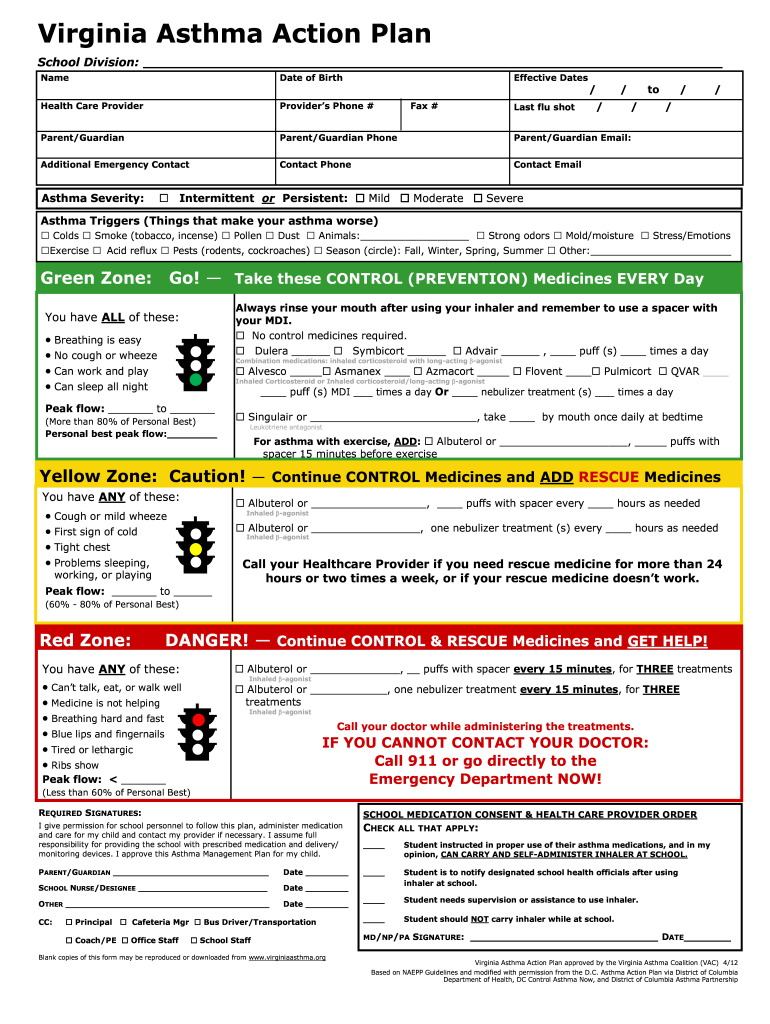







Definition and Purpose of an Asthma Action Plan Example
An asthma action plan example is a personalized written document developed to help individuals manage their asthma effectively. It serves as a clear guideline for how to control asthma symptoms, respond to worsening conditions, and ensure safety during emergencies. The primary components typically include:
- Personal Information: This includes the patient's name, date of birth, and emergency contacts.
- Asthma Severity Assessment: An evaluation of the individual's asthma condition, classifying it as mild, moderate, or severe based on symptom frequency and peak flow measurements.
- Triggers Identification: A list of common asthma triggers, such as allergens, pollutants, or specific activities, that the patient should avoid.
- Daily Control Medications: A detailed outline of daily medications, including dosage and frequency to maintain optimal asthma control.
- Rescue Treatments: Clear instructions on what actions to take in case of an asthma attack, including when to use rescue inhalers and how to recognize severe symptoms.
The purpose of using an asthma action plan is multi-faceted. It empowers individuals with asthma to take charge of their health, enhances communication between patients, caregivers, and healthcare providers, and minimizes the risk of an asthma attack by providing clear management strategies.
Steps to Complete the Asthma Action Plan Example
Creating an effective asthma action plan involves several systematic steps that ensure all critical components are addressed.
- Assessment and Diagnosis: Consult with a healthcare provider to assess the individual's asthma condition and determine its severity.
- Identify Triggers: Work with the healthcare provider to identify specific triggers that could exacerbate asthma symptoms. This could include environmental factors such as pollen, pet dander, or strong odors.
- Medications Review: Discuss current medications with the provider to outline a regimen that includes daily control medications and rescue medications, as well as their proper use.
- Symptom Tracking: Establish criteria that define mild, moderate, and severe symptoms. This helps in recognizing when to follow specific protocols outlined in the action plan.
- Emergency Contacts: Provide a list of emergency contacts, including family, healthcare providers, and local emergency services, in case of an acute situation.
When these steps are followed, the resulting document offers thorough guidance tailored to the individual's asthma management needs.
How to Use the Asthma Action Plan Example
An asthma action plan example is a practical tool to manage daily life with asthma. Proper usage ensures that the individual can effectively respond to asthma-related challenges.
- Daily Review: It is advisable for the individual to review the plan daily, particularly before engaging in activities that could provoke asthma symptoms. This review includes understanding which medications to take for regular control and how to manage triggers.
- Symptom Check: Individuals should monitor their symptoms using the provided criteria to gauge their condition. If symptoms worsen or if peak flow measurements fall into the red zone, it may be time to follow the emergency protocols included in the plan.
- Involvement of Caregivers: It is essential for family members and caregivers to understand the action plan thoroughly. This ensures they can assist the individual in following the prescribed management strategies, especially during an emergency.
- Regular Updates: The action plan should be reviewed and updated regularly, particularly after any change in health status, medication, or identifiable triggers. Routine check-ups with healthcare providers can facilitate these updates.
By integrating these practices, individuals can enhance their capacity to manage asthma effectively, reducing the likelihood of emergency incidents.
Key Elements of an Asthma Action Plan Example
An effective asthma action plan example includes several essential elements designed to provide clarity and direction in managing asthma.
- Color-Coded Zones: The plan often utilizes a traffic light system—green, yellow, and red—to indicate different levels of asthma control:
- Green Zone: Indicates good control and describes the medications to take under normal circumstances.
- Yellow Zone: Indicates caution, with instructions for increased medication dosages or the need to contact a healthcare provider.
- Red Zone: Signals a medical emergency requiring immediate action, such as using a rescue inhaler and contacting emergency services.
- Medication Schedule: Clear instructions on prescribed daily control medications, including dosage and intervals, along with details on when to use rescue medications.
- Monitoring Tools: Instructions for using peak flow meters or symptom diaries to help individuals track their asthma status over time, thereby aiding in recognizing patterns.
- Emergency Procedures: Specific actions to take during asthma attacks, including when to contact a physician or go to an emergency facility.
These elements are designed to ensure that users can swiftly assess their condition and respond appropriately, which is vital for maintaining health.
Who Typically Uses the Asthma Action Plan Example
The asthma action plan example is designed for a variety of users who play critical roles in asthma management.
- Patients: Individuals diagnosed with asthma utilize the action plan to navigate their daily health management needs. This applies to different age groups, from children to adults, with adjustments made based on developmental considerations.
- Parents and Caregivers: Parents of children with asthma rely on the action plan to understand their child's health needs and effectively manage symptoms, especially in school or public settings.
- Healthcare Providers: Clinicians, including doctors, nurses, and asthma specialists, use the action plan to educate patients about their condition and treatment options, tailoring the plan to each individual’s specific circumstances.
- School Personnel: Teachers and school nurses depend on the asthma action plan to support students with asthma, ensuring the appropriate protocols are followed during school hours and in emergency situations.
This multifaceted usage underscores the plan's role in fostering communication and collaboration among all parties involved in asthma care.






