Definition and Meaning of Occupational Tax Certificate
An Occupational Tax Certificate, often referred to as a business license or business tax certificate, is a document issued by a local government agency that authorizes a business to operate within a particular jurisdiction. This certificate serves as proof that a business has registered with the local authority, allowing it to conduct its operations legally. In many regions, obtaining this certificate is a prerequisite for starting a business, and its renewal is necessary to continue operating lawfully. The process of acquiring or renewing an occupational tax certificate can involve several steps, including the payment of fees and providing proof of compliance with local ordinances.
Steps to Complete the Renewing Your Occupational Tax Certificate
Renewing your occupational tax certificate involves a series of steps that ensure compliance with local regulations.
- Gather Required Documents: Begin by collecting necessary documentation, such as your previous occupational tax certificate, proof of address, tax identification number, and any other specific documents required by the issuing authority.
- Review Current Information: Verify that all business information, such as address and ownership details, are current. Update any changes to avoid delays in processing.
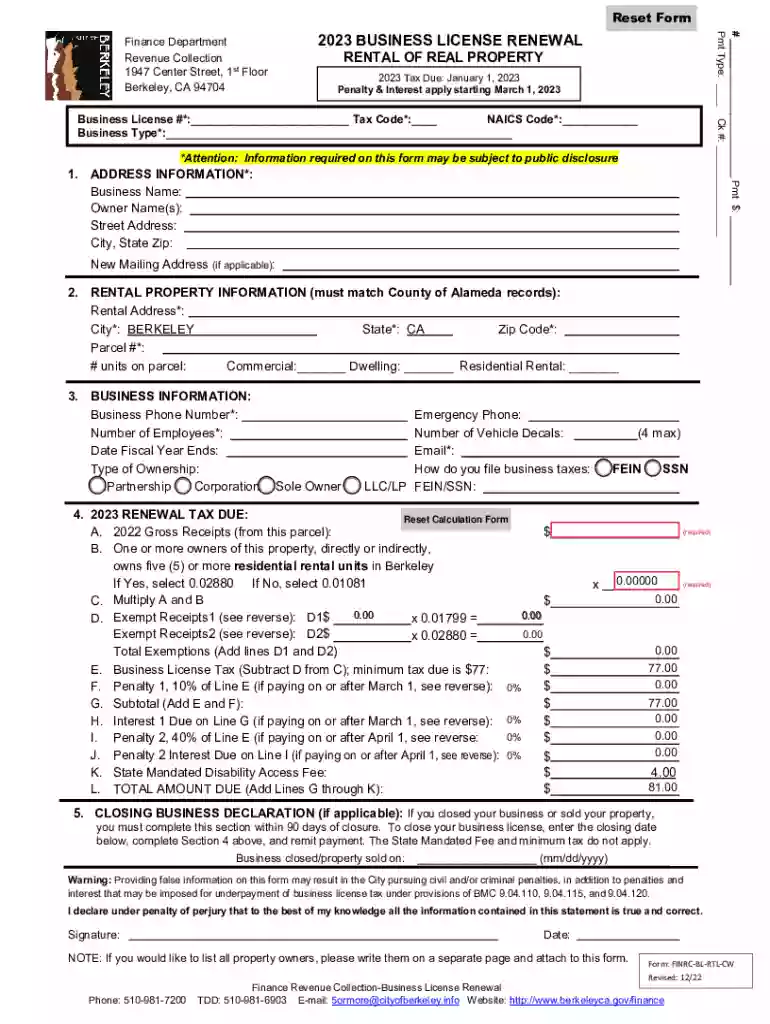
- Complete the Renewal Form: Fill out the renewal form provided by your local government. Ensure accuracy in all entries, as discrepancies can lead to rejection or penalties.
- Calculate and Pay Fees: Calculate the renewal fees based on your business's gross receipts, business size, or type as required in your jurisdiction. Submit the payment via the specified method — often online, by mail, or in-person.
- Submit the Application: Once the form and payment are complete, submit your application within the stipulated deadline to avoid late fees.
Important Terms Related to Occupational Tax Certificate Renewal
Several key terms are associated with the renewal process for the occupational tax certificate, each crucial for understanding and completing the procedure effectively.
- Gross Receipts: This refers to the total amount of income generated by the business before deductions. Many jurisdictions use gross receipts as a basis for calculating the renewal fee.
- Renewal Fee: The fee required to renew the occupational tax certificate, which varies depending on the business's size or income.
- Issuing Authority: The local government body responsible for issuing and renewing the occupational tax certificate.
- Compliance: Ensuring that the business meets all local regulations, including zoning, health, and safety standards, which is necessary for successful renewal.
Filing Deadlines and Important Dates
The renewal of your occupational tax certificate must adhere to specific deadlines to avoid penalties or business interruptions. These dates vary widely depending on the local jurisdiction.
- Regular Renewal Deadline: Typically occurs annually, often aligned with the start of the fiscal year. Check with your local government for the exact date.
- Late Penalty Dates: If you miss the regular deadline, additional fees may apply, increasing costs and possibly affecting your business's standing.
- Grace Periods: Some jurisdictions provide a grace period after the deadline, during which time you can still renew without incurring a penalty.
Form Submission Methods: Online, Mail, In-Person
There are typically several ways to submit your occupational tax certificate renewal form, giving businesses flexibility in how they comply with renewal protocols.
- Online Submission: Many jurisdictions offer an online portal for business license renewals, streamlining the process and allowing for electronic payment.
- Mail Submission: If online submission is not available, you can mail the completed renewal form and payment to the designated government office.
- In-Person Submission: Submit your documents at the government office, which may provide immediate processing but requires visiting during business hours.
Penalties for Non-Compliance
Failing to renew your occupational tax certificate on time or at all can lead to significant penalties.
- Monetary Fines: Businesses may incur financial penalties that increase with the duration of non-compliance.
- License Revocation: Continued non-compliance can lead to the revocation of your business license, halting business operations.
- Legal Action: Prolonged failure to renew may result in legal actions, including lawsuits or business closure.
State-Specific Rules and Differences
Occupational tax certificate renewal rules can vary widely from state to state and even between local jurisdictions within a state.
- Fee Structures: The method of calculating the renewal fee often differs, with some states basing fees on gross receipts and others on business type or size.
- Additional Documentation: Certain states may require additional documentation, such as proof of insurance or compliance with specific state regulations.
- Service Fees: Some states may impose service fees for online submissions or expedited processing requests.
Software Compatibility for Processing
Using software solutions for occupational tax certificate renewal can streamline the process, and several platforms offer compatibility features for these requirements.
- Intuit QuickBooks: Useful for financial record-keeping, QuickBooks can track gross receipts and facilitate calculations necessary for filling out renewal applications.
- TurboTax for Business: Although typically focused on tax preparation, TurboTax can provide useful insights into business income that align with renewal form requirements.
- DocHub Document Management: A platform like DocHub can aid in organizing and completing digital forms efficiently, providing features like electronic signatures and document sharing to ensure thorough and timely submissions.