
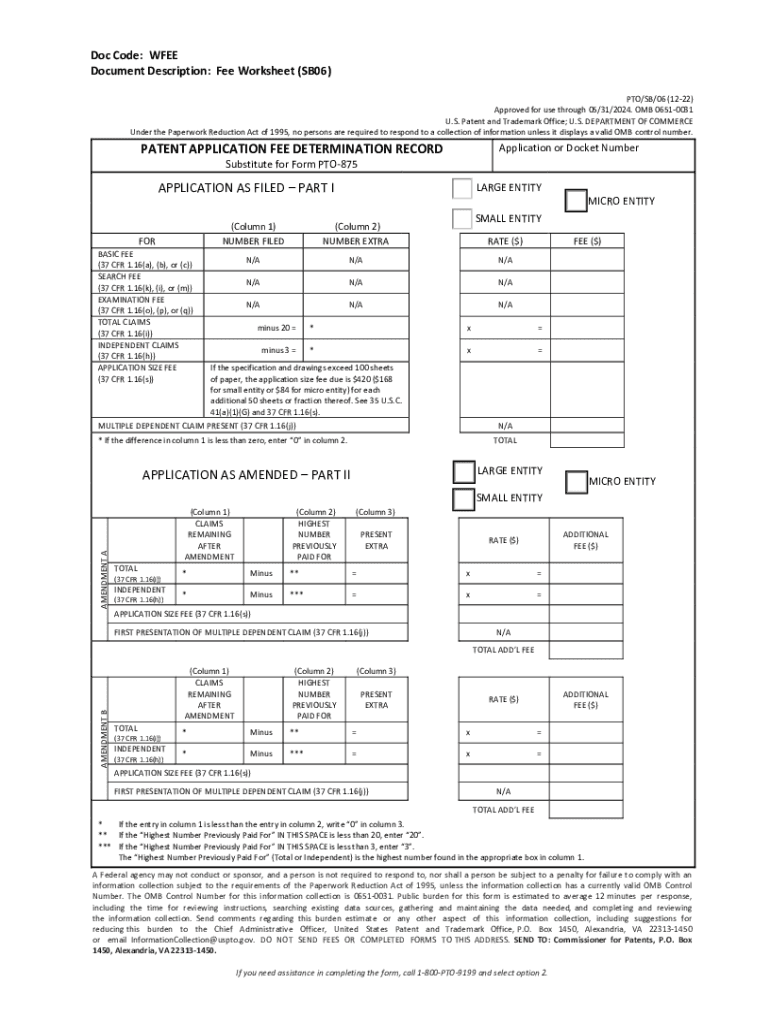







Definition and Purpose of Patent Application Forms
Patent application forms are official documents used to submit a request for a patent to the appropriate intellectual property office, like the U.S. Patent and Trademark Office (USPTO). These forms are essential for detailing the invention, defining its uniqueness, and outlining why it warrants patent protection. They include sections for specifications, claims, and drawings, enabling inventors to formally protect their innovations under intellectual property law.
Key Components of a Patent Application
- Specifications: Detailed descriptions of the invention, including how it works and its advantages.
- Claims: Specific legal statements that define the scope of the patent protection.
- Drawings: Visual representations that provide additional clarity and assist in explaining the invention.
Who Typically Uses Patent Application Forms
Patent application forms are predominantly used by inventors, companies, and patent attorneys. Inventors use them to protect their innovations, companies may submit them to secure competitive advantages and intellectual assets, and patent attorneys often complete these forms on behalf of clients, ensuring accuracy and compliance with legal requirements.
How to Use Patent Application Forms
To use patent application forms effectively:
- Understand the Requirements: Read all instructions carefully to comprehend the necessary details needed for each section of the form.
- Gather Required Documents: Prepare all supporting materials, including technical drawings, descriptions, and claims.
- Complete the Form Accurately: Fill out each section with precise and comprehensive information about the invention.
Step-by-Step Guide
- Start with the Specifications: Write a detailed narrative of the invention, focusing on its necessity and operational principles.
- Draft the Claims: Specify what the patent will cover, ensuring clarity and legal accuracy.
- Include Drawings: Attach relevant diagrams and illustrations of your invention for better comprehension.
Steps to Complete the Patent Application Form
Completing a patent application form involves several critical steps:
- Research Existing Patents: Conduct a thorough search to ensure your invention is novel.
- Prepare Documentation: Gather technical details, drawings, and any previous research or development logs.
- Fill Out the Application Form: Follow each section's instructions precisely, ensuring no information is omitted.
- Review for Accuracy: Double-check all entries and attached documents for errors before submission.
Important Considerations
- Consult a Patent Attorney: Because patent laws are complex, consulting a professional can help navigate the intricacies.
- Clear Communication: Ensure that the invention’s description is clear and understandable to non-experts.
Legal Use and Compliance of Patent Application Forms
Forms for patent applications must comply with specific legal standards to ensure validity:
- Adhere to Patent Laws: Follow all applicable intellectual property regulations, including those regarding novelty, non-obviousness, and utility.
- Ensure Full Disclosure: Provide all necessary information to meet legal obligations and avoid subsequent disputes or rejections.
Key Legal Terms
- Non-disclosure: Protect the invention’s details until the publication stage to maintain confidentiality.
- Provisional vs. Non-provisional Applications: Understand the difference; provisional applications are less formal and provide a filing date.
Required Documents for Patent Application Submission
Submitting a patent application requires various documents:
- Patent Application Form: The completed official form from the patent office.
- Specification and Claims: Written details and legal claims of the invention.
- Drawings and Illustrations: Visual aids to supplement text descriptions.
- Filing Fees: Payment to the patent office; varies based on application type and entity size (e.g., large, small, micro).
Form Submission Methods
Patent application forms can be submitted via multiple methods:
- Online: Most efficient submission through the patent office's electronic filing system.
- Mail: Traditional paper submissions; may take longer for processing.
- In-Person: Less common, but possible for certain exceptions or clarifications.
Tips for Submission
- Ensure Correct Format: Follow specific guidelines provided by the patent office regarding document formatting.
- Confirm Receipt: Obtain confirmation from the office that your application has been received and is under consideration.
Importance of Patent Application Forms
Submitting a patent application is critical for securing legal protection for inventions. It allows inventors to:
- Protect Intellectual Property: Gain exclusive rights to manufacture, sell, or license the invention.
- Establish Market Advantage: Prevent competitors from using similar innovations.
- Enhance Business Value: Patents can increase a company’s market value and attract investors.
Examples of Utilization
- Technological Advancements: Electronics companies frequently patent new technology to prevent replication.
- Pharmaceuticals: Drug companies secure patents for new formulas and treatments to protect research and development investments.




