
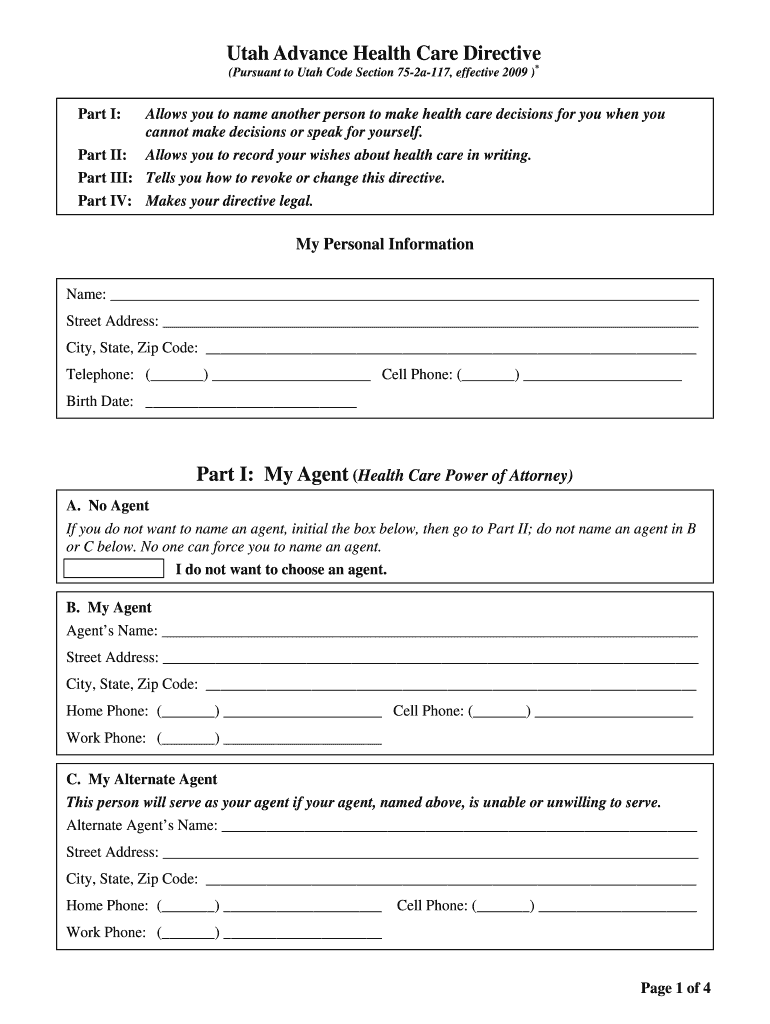







Definition and Purpose of the Utah Advance Directive Form
The Utah Advance Directive Form is a legal document that allows individuals to specify their health care preferences and appoint an agent to make medical decisions on their behalf if they become unable to communicate their wishes. This form empowers residents of Utah to maintain control over their medical care, even in situations where they cannot speak for themselves. Key sections include designating an agent, outlining specific health care instructions, and establishing guidelines for end-of-life care decisions. These directives can be crucial in ensuring that your health care preferences are understood and respected by medical professionals and family members.
How to Use the Utah Advance Directive Form
Utilizing the Utah Advance Directive Form involves several steps to ensure it is completed accurately and reflects your wishes. Begin by downloading a fillable version of the form from a reliable source like DocHub. You can then use DocHub’s editing tools to fill in the necessary details, including personal information, health care agent appointments, and specific medical wishes. As you complete the form, make sure to tailor each section to your particular needs and preferences. This includes specifying treatments you want to receive or avoid, instructions for revoking or changing the directive, and any additional instructions that might pertain to your specific situation.
Steps to Complete the Form
-
Download and Fill In Personal Details: Start by downloading the fillable Utah Advance Directive Form from a trusted platform. Input your name, address, and other required personal details.
-
Appoint a Health Care Agent: Designate a primary agent who will have the authority to make medical decisions on your behalf. Include contact information and specify any alternates if the primary agent is unavailable.
-
Outline Health Care Preferences: Detail your wishes regarding medical treatments, life-sustaining measures, and terminal care. Use bullet points for clarity where needed.
-
Signal Authorization and Intent: Sign the form before two witnesses or have it notarized, following state requirements to make it legally binding.
-
Inform Relevant Parties: Share copies with your health care agent(s), family members, and your physician to ensure they are aware of and can access your directive if necessary.
Legal Considerations for the Utah Advance Directive Form
The Utah Advance Directive Form is governed by specific legal parameters to ensure its validity and enforceability. It must be completed while you are mentally competent and must comply with Utah state laws. The document requires either two witnesses or a notary to attest to your signature. It's crucial that the appointed health care agent is someone who understands and respects your values and wishes, as they will be legally empowered to make decisions on your behalf. This form also allows for modifications or revocation, offering flexibility if your circumstances or wishes change over time.
Key Elements of the Utah Advance Directive Form
- Health Care Agent Designation: Identifies the individual appointed to make medical decisions if you are incapacitated.
- Treatment Preferences: Details specific medical interventions you wish to accept or refuse.
- Life-Sustaining Treatment Options: Specifies preferences for treatments like resuscitation, ventilation, and artificial feeding.
- Revocation Instructions: Provides instructions on how to modify or revoke the directive if needed.
State-Specific Rules
The Utah Health Care Decision Act governs the creation and use of advance directives within the state. It outlines who can serve as a health care agent, the witnessing requirements for the document, and the procedures for enforcing the directive in medical scenarios. It’s essential to understand these rules to ensure that your directive will be honored by health care providers in Utah.
Examples of Using the Form
Consider several scenarios to illustrate the use of a Utah Advance Directive Form:
-
Sudden Incapacitation: If an individual is suddenly incapacitated due to an accident and cannot communicate, the appointed agent uses the advance directive to guide medical staff according to the individual's specified wishes.
-
Chronic Illness Management: A person with a chronic illness uses the directive to outline care preferences to reduce ambiguity later on in their health journey.
-
End-of-Life Care: Personalized instructions guide the approach to end-of-life care, ensuring the individual's religious and personal preferences are respected.
Practical Scenarios and Clarifications
-
Emergency Situations: Explain the type of immediate decisions an agent might make, like refusing invasive surgery if it does not align with the documented wishes.
-
Ongoing Medical Treatment: Using the directive to guide decisions for treatments that could extend life but may also impact quality of life negatively.
Understanding and effectively implementing an advance directive can profoundly impact your medical care and ease the burden on loved ones who otherwise might have to make challenging decisions without guidance.




