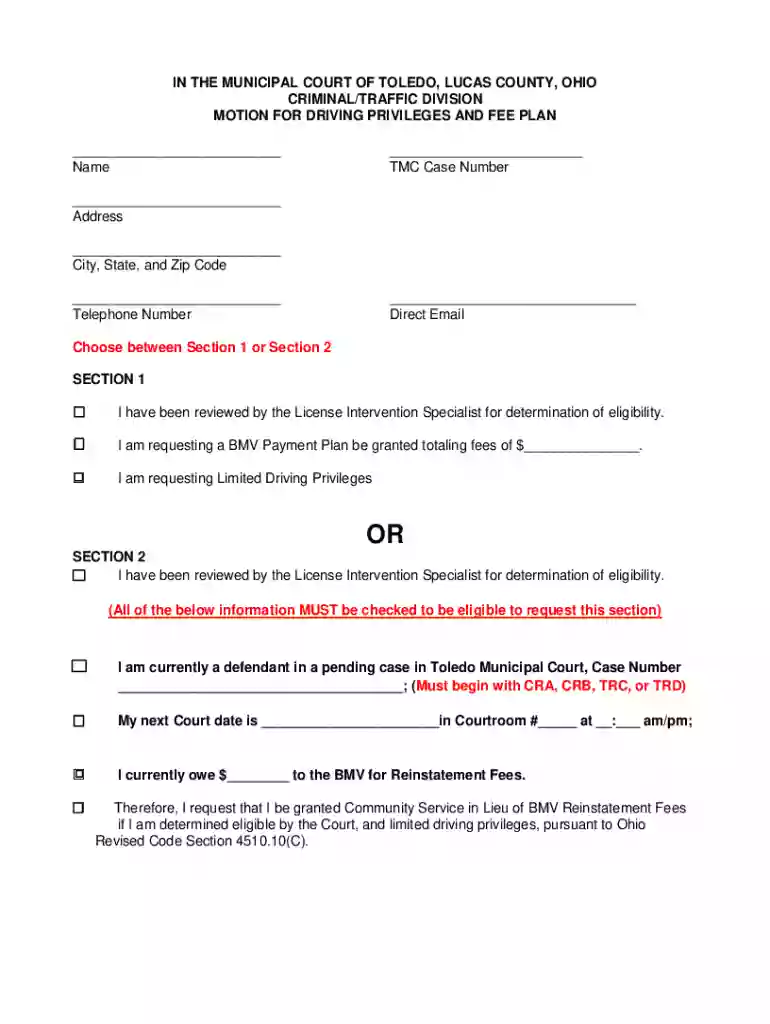
Definition of Ohio Traffic Tickets & ViolationsDMV
Ohio Traffic Tickets & ViolationsDMV is an official document related to traffic infractions and legal penalties issued by the Department of Motor Vehicles (DMV) in Ohio. This document governs the protocol for handling traffic violations, registration of fines, and the administrative processes that individuals must follow in such cases.
How to Use the Ohio Traffic Tickets & ViolationsDMV
To effectively use the Ohio Traffic Tickets & ViolationsDMV, individuals should:
- Identify the Violation: Confirm the specific traffic infraction, such as speeding, illegal parking, or running a red light.
- Review the Ticket: Check details on the ticket, including the date, time, location, and officer's notes.
- Calculate Fines: Determine the required payment by reviewing the fines associated with the particular violation.
- Determine Response Options: Decide whether to plead guilty, no contest, or request a court hearing.
Paying the Fine:
- Payments can often be made online, via mail, or in person at the courthouse, depending on the jurisdiction.
Requesting a Hearing:
- Complete necessary forms as indicated, and submit to the appropriate court.
Steps to Complete the Ohio Traffic Tickets & ViolationsDMV
Completing tasks related to Ohio Traffic Tickets & ViolationsDMV involves a series of carefully structured steps:
- Read the Full Instructions: Understand the details provided on the ticket regarding deadlines and obligations.
- Gather Required Information: Collect personal identification, vehicle registration, and ticket details.
- Choose Your Plea:
- Guilty: Pay the stated fine by the deadline.
- No Contest: Similar to guilty, but not contesting the charge.
- Not Guilty: Request a court date for a hearing.
- Complete Supporting Documentation: If necessary, fill out any additional forms or letters required.
- Submit the Document: Use indicated methods to submit forms and payment, if applicable.
Key Elements of the Ohio Traffic Tickets & ViolationsDMV
- Violation Identification: Each ticket includes specific information about the alleged violation.
- Penalty Assessment: Details the financial penalties, points on a driving record, and potential legal consequences.
- Response Deadline: Indicates the date by which a response is required to avoid further penalties.
- Jurisdiction-Specific Instructions: Reflects local court processes and accepted payment methods.
Important Terms Related to Ohio Traffic Tickets & ViolationsDMV
- Citation Number: The unique identifier for each traffic ticket.
- Plea Options: Legal choices for responding to the ticket—guilty, no contest, or not guilty.
- Fine Payment: Monetary penalty associated with the citation.
- Entitled Defenses: Potential legal defenses or explanations one might present in court to contest the ticket.
Common Terms:
- Civil Infraction: A non-criminal violation that often results in a fine.
- Driving Record: A history of a person's driving violations and points assessed by the DMV.
State-specific Rules for Ohio Traffic Tickets & ViolationsDMV
Ohio mandates specific regulations and penalties for traffic violations:
- Driver Points System: Assigns penalty points to a driver’s record based on traffic infractions, influencing insurance rates and driving privileges.
- Suspensions and Revocations: Repeated violations can lead to suspension or revocation of a driver's license.
- Defensive Driving Courses: Some cases allow for course completion to reduce points or penalties.
Legal Use of the Ohio Traffic Tickets & ViolationsDMV
Legal measures surrounding Ohio Traffic Tickets & ViolationsDMV ensure fair treatment and proper administration:
- Representation by Attorney: Individuals have the option to hire a lawyer for court representation.
- Appeals Process: Legal paths to contest or appeal a court's decision are available if a not guilty plea proceeds to trial and is unsuccessful.
Examples of Using Ohio Traffic Tickets & ViolationsDMV
When dealing with practical cases:
- Example 1: A driver receives a speeding ticket and decides to pay the fine online using the ticket number and personal information.
- Example 2: Another driver disputes a traffic light violation and requests a court hearing by submitting a plea of not guilty.
Each of these cases involves different procedures based on the nature of the violation and the individual's response strategy.