







Definition and Purpose of the Certificate of Offence
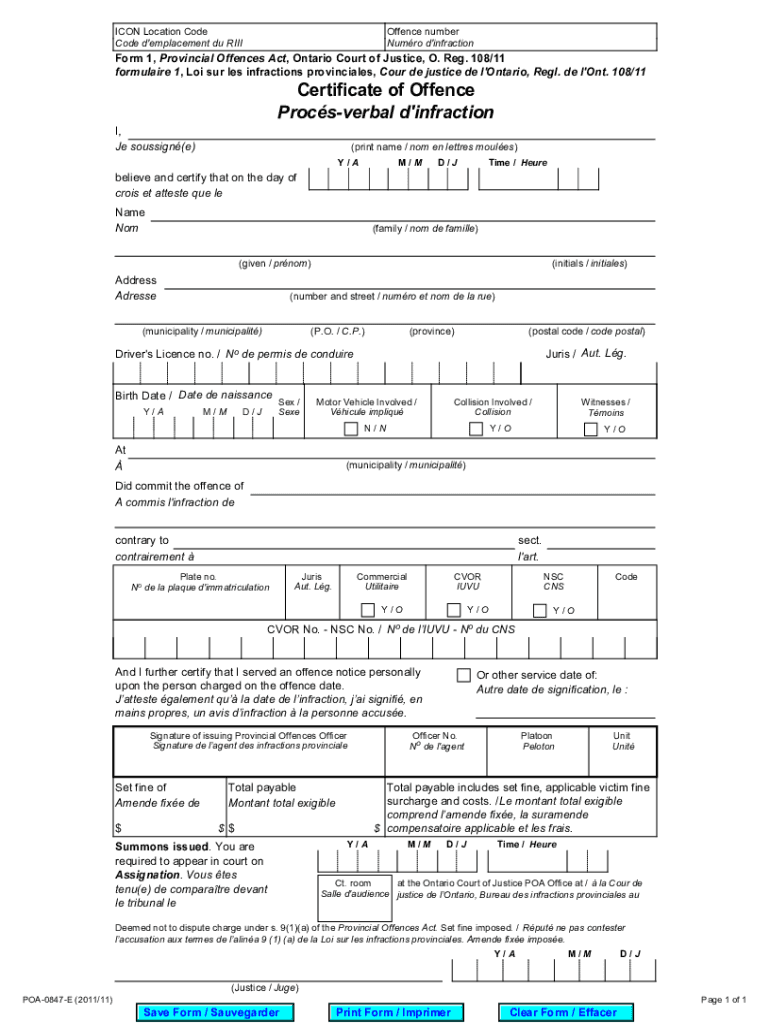
The Certificate of Offence is a crucial legal document used to record details of an offence under the Provincial Offences Act in Ontario, Canada. It provides comprehensive specifics about the charge, the alleged offender, and any related vehicle information. This document is primarily used by law enforcement officers to initiate the legal process against an individual accused of committing a provincial offence.
-
Offence Details: The form contains explicit details about the alleged offence, including the nature and description of the violation, date, time, and location.
-
Offender Information: It mandates the inclusion of personal information such as the name, address, and driver’s license number of the accused individual.
Key Elements of a Certificate of Offence
Several essential components are included within a Certificate of Offence form, each serving a specific purpose:
-
Certification and Signature: The form requires an officer's certification, confirming the accuracy and validity of the information provided, followed by their signature.
-
Court Instructions: There are sections specifying the offender's obligations regarding court appearances and instructions about fine payment.
Who Typically Uses This Form
The Certificate of Offence is predominantly used by:
-
Police Officers: For documenting infractions and launching formal proceedings.
-
Legal Personnel: Lawyers and judges utilize these documents within court settings to substantiate claims and organize defense strategies.
-
Civilians: Individuals accused of offences will receive and respond to these forms as part of their legal obligations.
Obtaining and Using the Certificate of Offence
How to Obtain the Certificate
Police officers in Ontario issue these forms directly upon identifying a provincial offence. The process follows strict protocols to ensure the legal framework is adhered to:
-
Issuance: Typically occurs at the scene of the offence or is mailed to the offender’s registered address.
-
Acknowledgment: Offenders must acknowledge receipt, either immediately or by mail, depending on the method of issuance.
How to Use This Certificate
For those who receive a Certificate of Offence, it is vital to understand how to proceed:
-
Review Details: Carefully check all information for accuracy, such as the offence date and location.
-
Legal Options: Explore available legal responses, including contesting the charge in court or paying the prescribed fine.
-
Deadlines: Adherence to specified deadlines for responding to the form is essential to avoid penalties.
Completing the Certificate of Offence
Steps to Complete the Form
For law enforcement officers, completion of the Certificate of Offence involves detailed procedures:
-
Information Collection: Gather all necessary details about the offence and the alleged offender.
-
Certification: The officer certifies their observations with a formal declaration and signature, ensuring the credibility of the documented offence.
-
Form Submission: Officers must submit the completed form to appropriate judicial entities to initiate legal processes.
Important Terms Related to the Form
Understanding the terminology associated with Certificates of Offence is imperative for correct usage:
-
Provincial Offences Act: The governing legal framework for infractions, detailing procedures and rights.
-
Crown Attorney: Legal representative responsible for prosecuting offences detailed in these certificates.
Legal Implications and Deadlines
Legal Use of the Certificate
The Certificate of Offence holds significant legal weight, serving as a preliminary step in the judicial handling of minor offences:
-
Evidence: It acts as a formal evidentiary document in court settings, outlining alleged breaches of provincial regulations.
-
Court Appearances: The offender is obligated to appear in court or file a plea by a specified date noted on the form.
Filing Deadlines
Responding to the Certificate of Offence involves strict deadlines:
-
Response Timeframes: Offenders typically have 15 to 30 days to enter a plea or settle fines post-issuance.
-
Consequences of Delay: Failure to respond promptly can result in additional penalties or automatic convictions.
Practical Examples and State-Specific Variations
Examples of Using the Certificate
To understand the application, consider these scenarios:
-
A driver issued a Certificate of Offence for speeding uses the form details to challenge the charge in court.
-
An individual assessed a fine for public disturbance can either pay the stipulated amount or file a notice of disagreement as outlined in the document.
State-Specific Rules
While the Certificate of Offence is used throughout Ontario, awareness of local jurisdictional rules is crucial:
-
Regional Differences: Variations can exist between different municipalities regarding fine amounts and response procedures.
-
Legal Representation: Some areas may offer additional support services for navigating these legal documents.
By providing these nuanced insights into the Certificate of Offence, individuals and enforcement agencies are better equipped to handle these forms within appropriate legal channels effectively.




