




01. Edit your pennsylvania appeal online
Type text, add images, blackout confidential details, add comments, highlights and more.

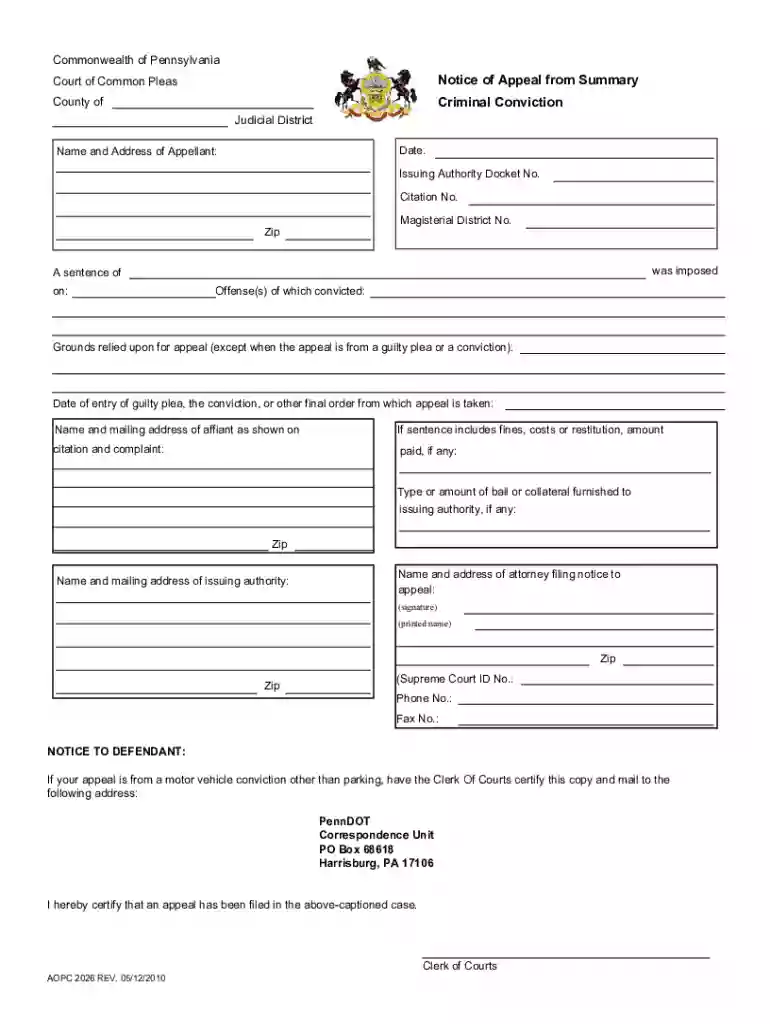
Type text, add images, blackout confidential details, add comments, highlights and more.

Draw your signature, type it, upload its image, or use your mobile device as a signature pad.

Send pennsylvania appeal form via email, link, or fax. You can also download it, export it or print it out.
A "Pennsylvania appeal" refers to the legal process by which a party requests a higher court to review and change the decision of a lower court within the state of Pennsylvania. This can occur in various types of legal cases, including civil, criminal, and administrative matters. The appeal process ensures that the legal proceedings were conducted fairly and that the law was applied correctly. In Pennsylvania, the appeal can be related to issues such as summary convictions or license suspensions, where a party believes a mistake was made in the initial ruling or that their rights were not adequately considered.
Obtain the Notice of Appeal Form: Obtain the necessary documentation, typically available from the Clerk of Courts in the relevant county.
Filling Out the Form:
Gather Supporting Documents:
Pay the Filing Fee: Understand the fee structure for filing an appeal, including any non-refundable costs.
Submission of the Appeal:
Legal resolutions in Pennsylvania can be subject to direct scrutiny and re-evaluation via an appeal. Specifically, the appeals are instrumental in handling cases of summary convictions where the appeal might seek to amend, reverse, or remand the decision. These appeals ensure due process is maintained and rectify potential errors. The outcome affects not only the appellant but also provides jurisprudential guidance for future similar cases.
Pennsylvania has distinct guidelines and procedural requirements for filing an appeal. Notably:
Each type of appeal under Pennsylvania law has designated filing deadlines. Typically, the notice must be filed within 30 days after the judgment or order being appealed. Missing these critical dates can result in the appeal being dismissed without consideration. Therefore, understanding and adhering to these deadlines is crucial for appellants to maintain their right to appeal.


Failure to follow correct appeal procedures or missing deadlines can lead to dismissal of the appeal or the enforcement of the original court’s decision, potentially resulting in penalties such as continued license suspensions, financial judgments, or civil liability. In severe cases, it may also result in a limitation on future legal remedies. Thus, strict compliance with timeline and form requirements is mandated.
The Pennsylvania appeal forms are typically issued by the Clerk of Courts in the relevant county where the initial decision was made. This ensures the appeal is processed within the jurisdiction of the original case and facilitates smoother communication between the appellant and court officials.
Consider a real-world scenario where an individual was convicted of a summary offense that they believe was wrongly adjudicated. Upon reviewing the trial records, they perceive critical evidence was overlooked. In this situation, they would file for a Pennsylvania appeal, presenting this overlooked evidence as a basis to potentially overturn or remand the decision for reconsideration.
We've got more versions of the pennsylvania appeal form. Select the right pennsylvania appeal version from the list and start editing it straight away!
| Versions | Form popularity | Fillable & printable |
|---|---|---|
| 2010 | 4.8 Satisfied (214 Votes) |
At DocHub, your data security is our priority. We follow HIPAA, SOC2, GDPR, and other standards, so you can work on your documents with confidence.
Pennsylvanias appellate courts form a two-tiered appeals system. The first, or intermediate, level has two courts: the Superior Court, which has 15 judges,Read more
Forms can be downloaded from the Boards Online Petition Center or obtained by calling 1-888-PATAXES (728-2937). Guidance on Original and AmendedRead more
Need to file an appeal now? Generate a printable appeal letter for your Pennsylvania denial in under five minutes. Free, no signup, your personal details


