







Definition & Meaning
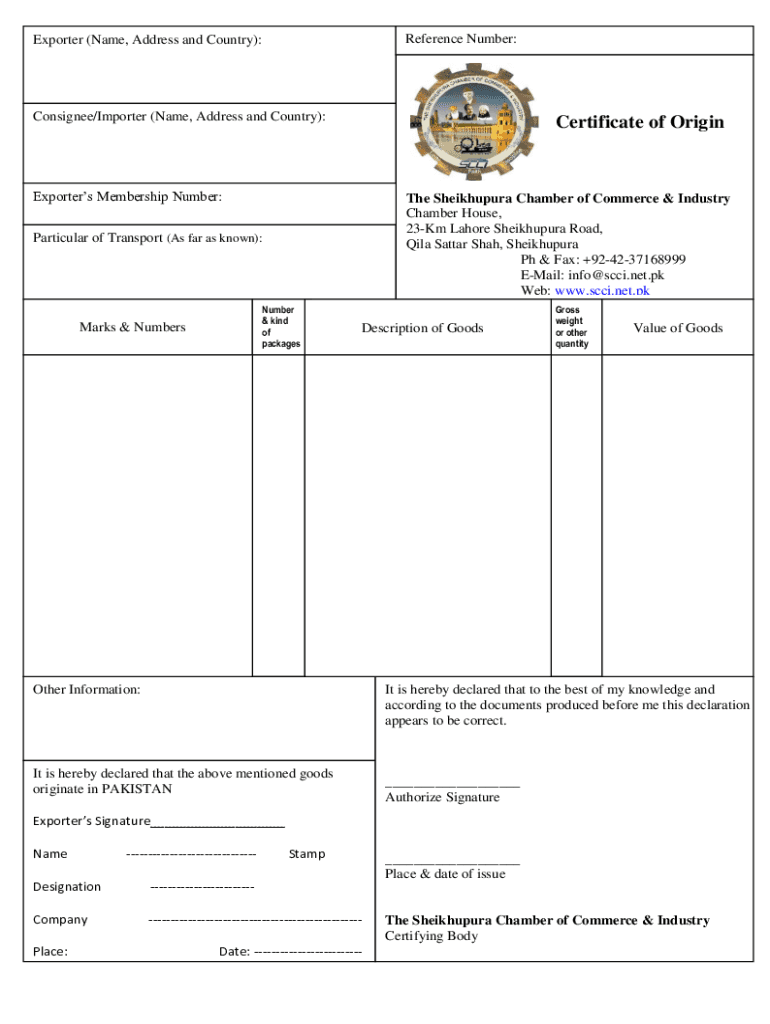
A Certificate of Origin issued by the Sheikhupura Chamber of Commerce & Industry validates the origin of goods being exported from Pakistan. This document confirms the exporter, consignee information, transport particulars, goods description, and value. It also contains declarations regarding the origin, which are essential for determining tariff treatments and meeting trade requirements in the destination country. The certificate is crucial in international trade as it influences import duty assessments and eligibility for trade agreements.
How to Obtain the Certificate of Origin
Obtaining a Certificate of Origin from the Sheikhupura Chamber of Commerce involves a series of steps to ensure that all goods comply with local and international trade regulations. The exporter must first gather all necessary documentation that verifies the origin of the goods, such as invoices, bills of lading, and manufacturing records. Next, these documents are submitted to the Chamber along with a filled-out application form. The Chamber reviews the submission for accuracy and completeness before certifying the origin. This process can often be expedited by using electronic systems that many chambers now offer.
Steps to Complete the Certificate of Origin
- Gather Information: Collect details on the exporter, consignee, and freight.
- Prepare Documentation: Prepare invoices, bills of lading, and any supporting documents.
- Fill Application Form: Provide details on the form including goods description, value, and signature.
- Submit for Verification: Submit the form and documents to the Sheikhupura Chamber of Commerce.
- Receive Certification: After verification, the Chamber will certify and issue the Certificate of Origin.
This structured process ensures compliance with both the guidelines of the issuing Chamber and the regulatory requirements of the importing country.
Key Elements of the Certificate of Origin
The Certificate of Origin contains several essential elements that collectively ensure its validity and utility in international trade. The document includes:
- Exporter’s Information: Name, address, and contact details.
- Consignee Information: Details of the importer or buyer.
- Transport Details: Mode of transport, route, and carrier data.
- Goods Description: Detailed description, including quantity, weight, and value.
- Origin Declaration: Statement affirming the goods’ origin.
- Authorized Signature: Signature from an authorized Chamber official.
Each element plays a critical role in the clearance of goods, the imposition of duties, and compliance with trade agreements.
Legal Use of the Certificate of Origin
The Certificate of Origin is a vital legal document in international trade. Its primary legal function is to serve as proof of the country of origin of the goods for customs authorities. The document is used to determine the rate of duty applied and whether the goods qualify for preferential treatment under trade agreements. In some instances, it can aid in resolving legal disputes about the origin in the case of trade disagreements. Additionally, it forms part of the vital documentation set required for the customs clearance process in many countries.
Who Typically Uses the Certificate of Origin
The Certificate of Origin is used by various stakeholders in the international trade ecosystem:
- Exporters: To certify the origin of their goods.
- Customs Officials: To assess duties and verify compliance with import regulations.
- Importers: To determine if the goods meet regulatory requirements and qualify for trade discounts.
- Freight Forwarders: To facilitate the shipment process by ensuring all documentation is in order.
Different players utilize the document for the seamless transfer and acceptance of goods across borders.


Important Terms Related to Certificate of Origin
Understanding certain terms is crucial for effectively using the Certificate of Origin:
- Consignee: The individual or business receiving the goods.
- Tariff: A tax imposed on imported goods, influenced by the country of origin.
- Preferential Tariff: Lower rates applied under specific trade agreements.
- Non-Preferential Origin: Goods not covered under trade agreements, affecting tariff rates.
- Pro Forma Invoice: A preliminary bill of sale sent to buyers in advance of a shipment or delivery.
These terms help provide clarity on various provisions in the certificate, promoting a more effective use of the document.
Software Compatibility
The use of digital platforms has streamlined the Certificate of Origin application process. Platforms like DocHub support various file formats like PDF, DOC, and XLS, making it easier to complete and manage the documentation involved in exporting goods. This compatibility ensures that exporters can easily convert and format documents as per the requirements of the issuing Chamber and importing country's regulations. Notably, the platform is accessible from both desktop and mobile devices, providing flexibility in managing trade documents irrespective of location.
Examples of Using the Certificate of Origin
Consider a Pakistani textile exporter shipping garments to the United States. The Certificate of Origin from the Sheikhupura Chamber of Commerce ensures that their goods can access preferential tariffs under relevant trade agreements. In another case, a machinery import into the European Union might require a Certificate of Origin to confirm compliance with both tariff and non-tariff regulations. These examples illustrate the certificate’s critical role in facilitating smooth trade procedures and compliance.




