
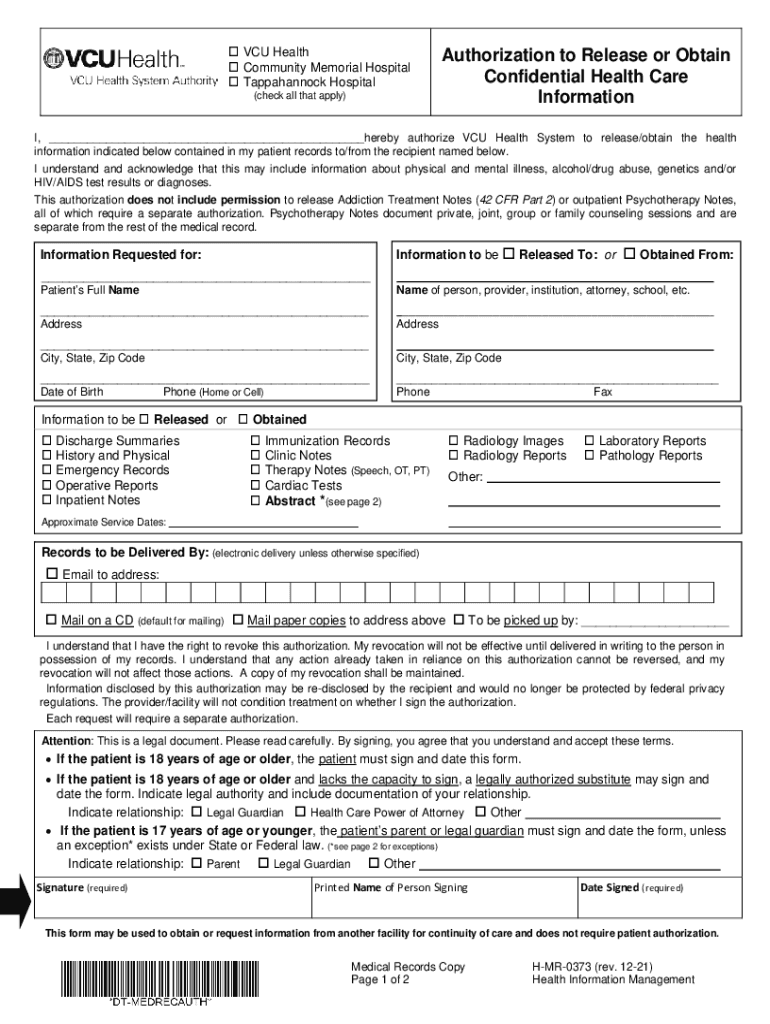







Definition and Importance of the VCU Health System and Riverside Tappahannock Hospital Authorization Form
The VCU Health System and Riverside Tappahannock Hospital authorization form is a legal document allowing patients to release or obtain their confidential health care information. Its primary purpose is to give explicit permission for the sharing of medical records between VCU Health System, the Riverside Tappahannock Hospital, and other relevant parties as identified by the patient. This form is crucial because it protects patient privacy while ensuring that necessary information can be provided to the right individuals or institutions, facilitating comprehensive care and informed medical decisions.
- Types of Information Released: Includes medical history, treatment records, laboratory results, and any other documents specified by the patient.
- Patient Rights: Patients have the right to specify exactly what information is shared and with whom.
- Sensitive Information: Certain information, such as psychiatric records or substance use details, may require additional authorization.
How to Use the Authorization Form
To properly use the authorization form, individuals need to be aware of the specific information that must be included and the process for submission.
- Fill Out Personal Information: Include the patient’s full name, date of birth, and contact information.
- Specify Information to Be Shared: Clearly outline what medical records or information are authorized for release.
- Identify Third Parties: List any third parties, such as another healthcare facility or a specific physician, who will receive the information.
- Set Time Frame: Indicate how long the authorization remains valid or specify if it is for a one-time release.
- Significance of Completion: Accurate completion ensures that the release and sharing of information occur smoothly and in compliance with regulations.
Steps to Complete the Authorization Form
A step-by-step guide ensures completion in accordance with required standards and legal stipulations.
- Download the Form: Obtain the form online from the VCU Health System or Riverside Tappahannock Hospital website.
- Enter Personal Details: Fill in the patient’s full legal name, date of birth, and contact information.
- Identify Medical Records: Specify which steps of medical records or specific documents are to be shared.
- Designate Recipients: Clearly list entities or individuals authorized to receive the information.
- Set Duration and Expiration: Determine and indicate the time period for which the authorization is valid.
- Provide Signature: The patient or legal guardian must sign and date the form.
- Submit the Form: Return the form to the health provider's records department or upload it via their secure portal.
Key Elements and Terms Within the Form
Understanding important terminology and elements within the form can help ensure proper completion and compliance with medical privacy laws.
- Authorization Scope: Defines the extent and limits of the information to be shared.
- Recipient of Records: Details who will receive the information and why.
- Revocation Rights: Patients can cancel the authorization at any time before the fulfillment unless records have already been shared.
- Expiration: The form's validity period, which might be limited to a certain date or event.
Legal Use of the Authorization Form
The authorization form must comply with all applicable laws and regulations related to patient confidentiality and medical record handling.
- Compliance with HIPAA: Ensures compliance with the Health Insurance Portability and Accountability Act, safeguarding against unauthorized sharing.
- Legal Authority Required: Only individuals with the legal authority, such as the patient or a designated representative, can complete and sign the form.
- Legally Binding Signature: A signature constitutes a binding acknowledgment of the terms within the authorization.
Who Typically Uses the Authorization Form
This form is primarily used by patients seeking to manage their health records and information. It is integral for:
- Patients Transitioning Care: Those moving between healthcare providers require transferring medical records to ensure continuity of care.
- Legal Guardians: Guardians or caregivers of minors or incapacitated individuals may utilize the form, following legal prerequisites.
- Medical Professionals: Professionals needing comprehensive access to a patient's records for treatment continuity and coordination.


Examples of Using the Authorization Form
Real-world scenarios show the practical use of the authorization form within the healthcare system.
- In Transitioning Care Settings: Patients in transition from the VCU Health System to another hospital might use the form to transfer their comprehensive health histories securely.
- In Legal Contexts: Patients involved in personal injury claims or workers’ compensation might authorize their health information's release to their legal counsel or insurance adjusters.
- For Referrals: When a specialist referral is made, sharing specific health details can be critical in evaluating a condition.
State-Specific Rules and Differences
While the form adheres to federal standards, state-specific rules might affect its use and handling.
- State Regulations: Different states may have varying requirements for medical record handling and patient authorizations.
- Mental Health Records: Some states have specific laws regarding the release of mental health records, requiring additional agreements or waivers.
- State Privacy Laws: While adhering to federal laws, state-specific privacy laws must also be understood and followed when completing and submitting the form.
Versions or Alternatives to the Standard Authorization Form
There might be different versions or alternatives to the standard form used by institutions associated with VCU Health System and Riverside Tappahannock Hospital.
- Digital Forms: Online versions can be completed and submitted through secure portals for added convenience.
- Hospital-Specific Forms: Some facilities might have their customized forms tailored to their processing and record management systems.
- Standardized Forms: For some procedures, generalized forms meeting state and federal prerequisites may suffice without needing a location-specific version.




