


Appendix C: Bail Bond Revocation Request Form - DocHub 2026

Get Form
bail bond release form Preview on Page 1

Here's how it works

01. Edit your bail bond release form online
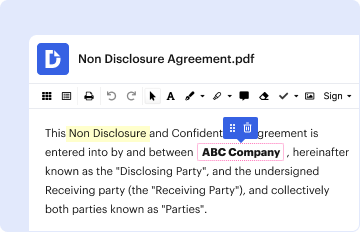
Type text, add images, blackout confidential details, add comments, highlights and more.
02. Sign it in a few clicks
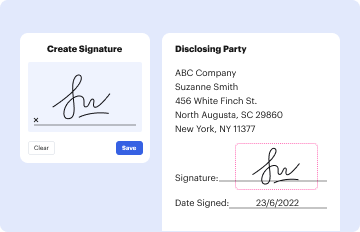
Draw your signature, type it, upload its image, or use your mobile device as a signature pad.
03. Share your form with others
Send bail bond format via email, link, or fax. You can also download it, export it or print it out.

How to use or fill out Appendix C: Bail Bond Revocation Request Form - DocHub

Form edit decoration
9.5
Ease of Setup
DocHub User Ratings on G2
9.0
Ease of Use
DocHub User Ratings on G2
  1. Click ‘Get Form’ to open the Appendix C: Bail Bond Revocation Request Form in our editor.
  2. Begin by entering the Defendant Name in the designated field. Ensure that the name matches official documents for accuracy.
  3. Next, input the Bail Bond Amount. This should reflect the total amount of the bail bond being revoked.
  4. If applicable, provide the Court Name and Court Case Number in their respective fields. This information helps identify the specific case related to the bail bond.
  5. In the request section, clearly print your name as either the Defendant or Indemnitor. Follow this with your signature and date to validate your request.
  6. Lastly, ensure that a Licensed Insurance Producer completes their printed name, signature, and date at the bottom of the form. This step is crucial for compliance.

Start using our platform today to fill out your forms online for free!

See more Appendix C: Bail Bond Revocation Request Form - DocHub versions

We've got more versions of the Appendix C: Bail Bond Revocation Request Form - DocHub form. Select the right Appendix C: Bail Bond Revocation Request Form - DocHub version from the list and start editing it straight away!
Versions Form popularity Fillable & printable
2020 4.5 Satisfied (45 Votes)
2017 4.6 Satisfied (21 Votes)
2013 4.6 Satisfied (45 Votes)
be ready to get more

Complete this form in 5 minutes or less

Get form

Got questions?

We have answers to the most popular questions from our customers. If you can't find an answer to your question, please contact us.
Contact us

Based on eSignature regulations, documents signed electronically have the same validity as traditionally approved ones. You can electronically sign almost any business and personal documentation. Four types of paperwork still call for wet signatures only - wills and testamentary trusts, court orders and other court forms, state statutes governing divorce, adoption, or other family law, and notice of cancellation of utility services. If you adhere to the regulations and use a secure and compliant software solution, like DocHub, you can eSign your Appendix C: Bail Bond Revocation Request Form - DocHub without printing it.

If you are searching for a state-specific Appendix C: Bail Bond Revocation Request Form - DocHub sample, you will find it in our DocHub Forms & Templates catalog. Use the search field, key in your form’s name, and search through the results for your state. You may also filter out irrelevant results while browsing our catalog by groups.

Fortunately, California law permits some circumstances where you can take your name off the bail bond. These include: When the defendant acts inappropriately or puts you in danger. When the bail bond agent cancels the bond because the defendant (or their family) doesnt pay it.
Failure to Appear in Court: One of the primary conditions of bail is that the defendant must attend all scheduled court appearances. Missing even one court date can be seen as a bdocHub of trust, leading the judge to revoke bail and issue a bench warrant for the defendants arrest.
What happens to the money if a court revokes bond? If a court revokes your bond, the court may keep your bail money. If a bondsman put up the money, they can send a bounty hunter after you to apprehend you and bring you to court. Once you are back in custody, the court can exonerate the bond back to the bondsman.

Security and compliance

At DocHub, your data security is our priority. We follow HIPAA, SOC2, GDPR, and other standards, so you can work on your documents with confidence.

Learn more
ccpa2
pci-dss
gdpr-compliance
hipaa
soc-compliance
be ready to get more

Complete this form in 5 minutes or less

Get form

People also ask

The defendant must pay the Court a designated amount of money or post security in the amount of the bail in order to be released. This security can be in the form of cash or property and may be posted by the defendant or by someone on his/her behalf, e.g., a relative or a bail bondsman.
Judges can revoke a bond if certain conditions are broken or new concerns arise. Whether missing a court date, violating release conditions, or getting re-arrested, each misstep could land someone back in custody.
Bail in South Dakota: What to Expect A bail bond is a cash, property or surety given to the court for a persons release from jail (Codified Law 58-22-1). If you are unable to post the cash amount yourself, you can hire a professional bondsman to post it on your behalf.
If you paid a bondsman, give them a call. If you paid the court cash bail or put up a property bond on your home, call the court. Tell them you want to revoke bail effective immediately, and tell them why. You need to have a good reason for this, not just second thoughts or cold feet.
If you get rearrested or face a new charge while out on bail, your bond may be revoked. New charges indicate a risk of non-compliance with the terms of the initial bond, and a judge may decide to revoke bail entirely until you resolve one or both of the cases you are facing.