




01. Edit your form online
Type text, add images, blackout confidential details, add comments, highlights and more.

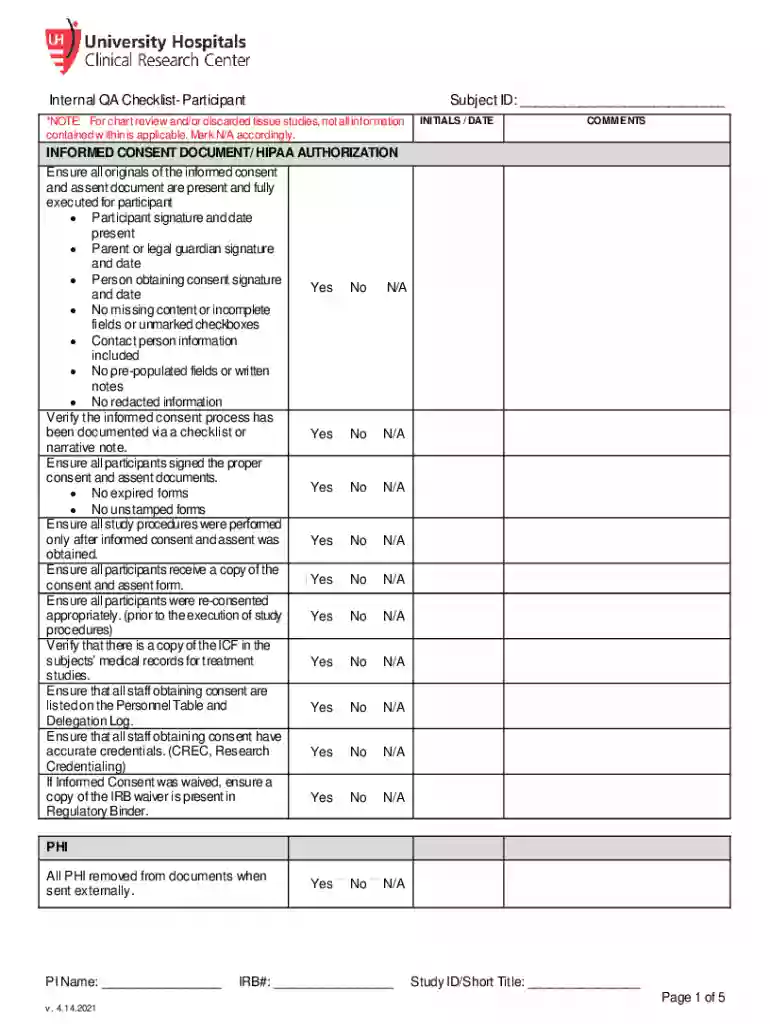
Type text, add images, blackout confidential details, add comments, highlights and more.

Draw your signature, type it, upload its image, or use your mobile device as a signature pad.

Send it via email, link, or fax. You can also download it, export it or print it out.
The "Internal QA Checklist - Regulatory Study ID: IRB#: PI Name:" is an essential document for maintaining compliance within research studies. It provides a structured approach to ensure that all research protocols meet required standards. The checklist is instrumental in verifying informed consent, eligibility, safety reporting, accountability for test articles, specimen handling, data collection, and financial documentation. By meticulously following this checklist, researchers can assure adherence to guidelines, safeguarding participant rights and data privacy, and maintaining the integrity of the study.
To effectively utilize the Internal QA Checklist, start by thoroughly reviewing each section to understand the parameters it covers. Here's a step-by-step guide:
The primary function of the Internal QA Checklist is to ensure compliance and quality assurance in research studies. Its benefits include:


Understanding the components of the Internal QA Checklist is critical for proper application:
The checklist plays a vital role in maintaining legal compliance throughout a research study. Ensuring adherence to the checklist can prevent legal implications related to:
A structured approach is necessary for thorough completion:
By understanding and implementing the Internal QA Checklist thoroughly, research teams can ensure their studies meet essential regulatory standards and maintain high-quality research conduct.
We've got more versions of the Internal QA Checklist - Regulatory Study ID: IRB#: PI Name: form. Select the right Internal QA Checklist - Regulatory Study ID: IRB#: PI Name: version from the list and start editing it straight away!
Microsoft Word doesn’t have signing tools to create legitimate eSignatures and enforceable paperwork. Fortunately, DocHub is an online eSignature-compliant editor that works with various file formats, such as .doc files. Sign in to your account and upload the Word version of your Internal QA Checklist - Regulatory Study ID: IRB#: PI Name: from your device and cloud, or URL - our editor will automatically convert it into an editable PDF. Make all essential adjustments in your form and click Sign to create your own legally-binding electronic signature. There are four signing options from which to choose.
If your go-to email service is Gmail, it is simple to incorporate your DocHub editor into your work. Edit your Internal QA Checklist - Regulatory Study ID: IRB#: PI Name: with DocHub instruments and connect it to your drafts in Gmail. See how easy it can be to exchange documents and work together with a swift PDF editing solution at hand.
At DocHub, your data security is our priority. We follow HIPAA, SOC2, GDPR, and other standards, so you can work on your documents with confidence.


