






Definition and Meaning
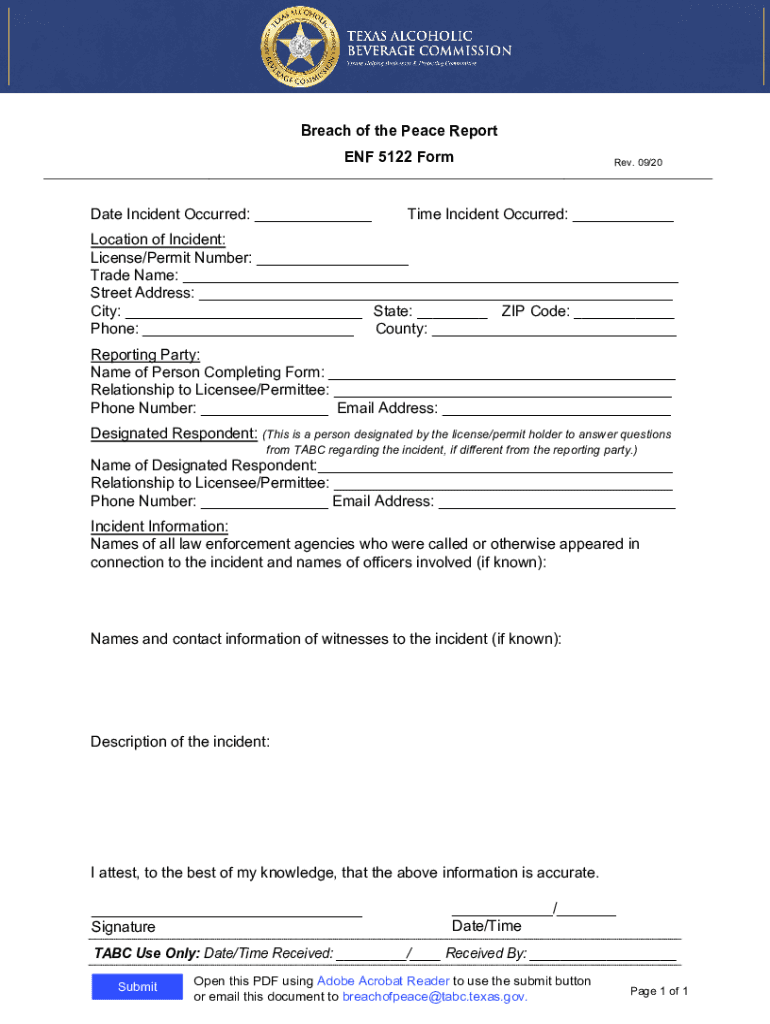
The "Breach of the Peace Report Form," also known by its shorthand, ENF 5122, is a document used to report events that may disrupt public tranquility involving license or permit holders. This form collects various essential details to provide a complete record of the incident. Common examples of breach of the peace incidents include public disturbances, fights, or excessively loud activities that require intervention from law enforcement. It is essential for maintaining public order and ensuring that permits are not misused.
Key Elements of the Breach of the Peace Report Form
Completing the form requires several key components:
- Date and Time of Incident: This ensures an accurate timeline is documented.
- Location: The specific physical address or a description of where the breach occurred.
- Reporting Party Information: Includes the name and contact details of the individual or organization submitting the report.
- Designated Respondent: Information about the person or entity alleged to cause the breach.
- Law Enforcement Involvement: Details about any police or legal authorities involved.
- Witnesses: Names and contact information of people who observed the incident.
- Description of the Incident: A narrative account detailing what transpired.
Steps to Complete the Breach of the Peace Report Form
- Gather Information: Before completing the form, collect all necessary details, such as contact info and incident specifics.
- Fill Out Personal and Reporting Details: Start with your own information and details about the alleged perpetrator.
- Document Incident Specifics: Give a detailed account of what occurred, including the involved parties and any witnesses.
- Include Law Enforcement Details: If police were involved, provide department names and officer badge numbers.
- Review and Submit: Ensure all information is correct before signing. Submit the form as instructed, often to the TABC or similar regulatory body.
Who Typically Uses the Breach of the Peace Report Form
This form is primarily utilized by:
- Business Owners: Particularly those serving alcohol or in entertainment sectors, which are prone to incidents.
- Permitted Event Organizers: For reporting disturbances at public events.
- Local Authorities: To maintain records of public disturbances and enforce regulations.
- Security Personnel: To provide detailed reports of monitored incidents.


Important Terms Related to Breach of the Peace Report Form
- Breach of the Peace: Any action disrupting public peace.
- License or Permit Holder: A business or individual granted permission to conduct certain activities, like serving alcohol.
- Respondent: The individual or entity being reported for the breach.
- TABC: Texas Alcoholic Beverage Commission, one of the agencies overseeing compliance in Texas.
Legal Use of the Breach of the Peace Report Form
The form is a legal document used to formally register complaints of disturbances. It acts as evidence in potential legal proceedings or administrative reviews tied to the actions of license holders. Proper documentation aids in resolving disputes and assessing if permit conditions have been breached.
Examples of Using the Breach of the Peace Report Form
- Case Study 1: A bar owner reports a late-night brawl that escalated into a police-involved incident, risking their alcohol permit.
- Case Study 2: A concert organizer files a report due to noise complaints leading to police visits, potentially affecting future event permits.
- Case Study 3: An apartment manager documents a tenant's repeated loud parties, using the form to support an eviction case.
Form Submission Methods
The Breach of the Peace Report Form can typically be submitted:
- Online: Many state or local government websites provide digital submission options.
- Mail: Sending a physical copy to the appropriate regulatory agency.
- In-Person: Hand-delivering the form to the administering office, such as the TABC.
Who Issues the Form
While the form itself may be available through local or state government offices, it is often distributed and managed by agencies like the Texas Alcoholic Beverage Commission, which ensures it aligns with state-specific regulatory requirements.